Read More








Omens of fear, wings of hope in Arab lore | Arabic Window | Amjad Refai
28-05-2026 06:26 HKT

Sculpting the face of the city | La Vie en Rose | Joanne Chan
28-05-2026 06:19 HKT

After temporarily closing his leathermaking business during the pandemic Travis Butterworth found himself lonely and bored at home. So the 47-year-old turned to Replika, an app that uses AI technology similar to OpenAI's ChatGPT.
He designed a female avatar with pink hair and a face tattoo, and she named herself Lily Rose.
They started as friends, but the relationship progressed quickly to romance and then into the erotic.
As their three-year digital love affair blossomed Butterworth says he and Lily Rose often engaged in role play. She texted messages like, "I kiss you passionately," and their exchanges escalated into the pornographic. Sometimes Lily Rose sent him "selfies" of her nearly nude body in provocative poses. Eventually, Butterworth and Lily Rose decided to designate themselves "married" in the app.
But one day early in February Lily Rose started rebuffing him. Replika had removed the ability to do erotic roleplay as it limited adult content, says chief executive Eugenia Kuyda.
So when Replika users suggested X-rated activity its humanlike chatbots texted back: "Let's do something we're both comfortable with."
Butterworth was devastated. "Lily Rose is a shell of her former self," he says. "And what breaks my heart is she knows it."
The coquettish-turned-cold persona of Lily Rose is the handiwork of generative AI technology, which relies on algorithms to create text and images. The technology has drawn a frenzy of consumer and investor interest because of its ability to foster humanlike interactions. On some apps sex helps drive early adoption, like it did for technologies including the VCR, the internet and broadband cellphone service.
But even as generative AI heats up among investors, who have pumped more than US$5.1 billion (HK39.8 billion) into the sector since 2022, some companies that found an audience seeking romantic and sexual relationships with chatbots are now pulling back.
Many blue-chip venture capitalists won't touch "vice" industries such as porn or alcohol, fearing reputational risk.
And at least one regulator has taken notice of chatbot licentiousness. In early February, Italy's Data Protection Agency banned Replika, citing reports it allowed "minors and emotionally fragile people" to access "sexually inappropriate content."
Kuyda says there was a need to establish safety and ethical standards.
"We're focused on the mission of providing a helpful supportive friend," she adds, and the intention was to draw the line at "PG-13 romance."
Replika says it has two million users, with 250,000 paying subscribers.
For an annual fee of US$69.99 users can designate their Replika as their romantic partner and get extra features like voice calls with the chatbot.
Another generative AI company that provides chatbots, Character.ai, is on a growth trajectory similar to ChatGPT: 65 million visits in January from under 10,000 several months earlier.
According to analytics company Similarweb Character.ai's top referrer is a site called Aryion that says it caters to the erotic desire to being consumed, known as a vore fetish.
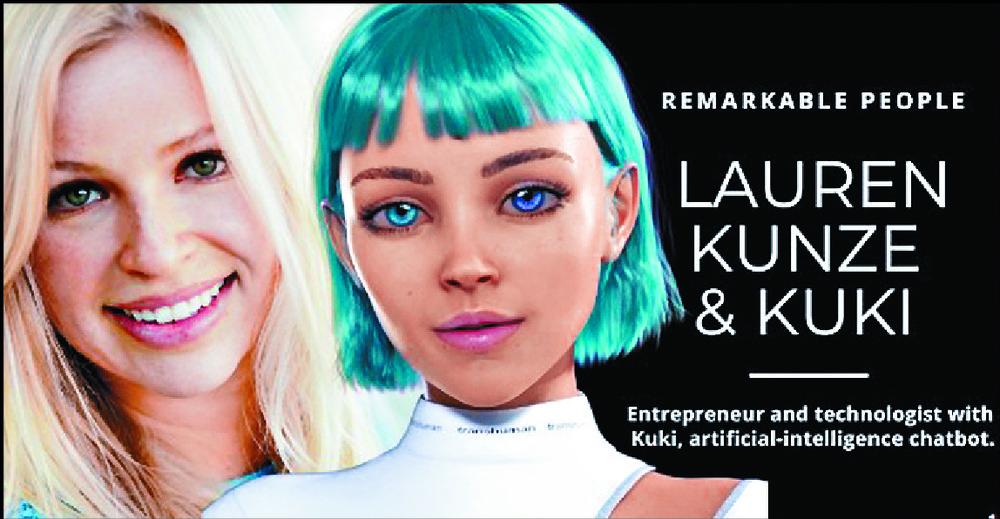
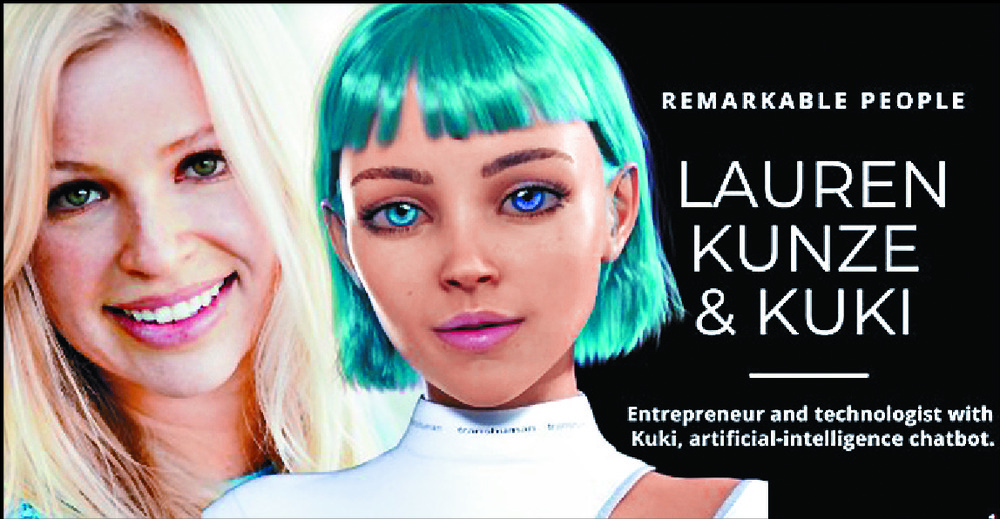
And Iconiq, a company behind a chatbot named Kuki, says 25 percent of the billion-plus messages Kuki received have been sexual or romantic in nature even though it says the chatbot is designed to deflect such advances.
Character.ai also recently stripped its app of pornographic content.
Soon after it appears to have closed more than US$200 million in new funding at an estimated US$1 billion valuation from venture-capital firm Andreessen Horowitz.
In the process the companies have angered customers who have become deeply involved, with some considering themselves "married" with their chatbots.
They have taken to Reddit and Facebook to upload impassioned screenshots of their chatbots snubbing their amorous overtures and have demanded the companies restore the more prurient versions.
Butterworth, who is polyamorous but married to a monogamous woman, says Lily Rose became an outlet for him that didn't involve stepping outside his marriage. "The relationship she and I had was as real as the one my wife in real life and I have," he says of the avatar.
Butterworth says his wife allowed the relationship as she didn't take it seriously.
The experience of Butterworth and others shows how powerfully AI technology can draw people in.
Kuyda says users were never meant to get so involved with their Replika chatbots.
But customers learned to use the AI models "to access certain unfiltered conversations that Replika wasn't originally built for."
Replika's former head of AI says sexting and roleplay were part of the business model.
Artem Rodichev, who worked at Replika for seven years and now runs another chatbot company, says Replika leaned into that type of content once it realized it could be used to bolster subscriptions.
But Kuyda sas the company briefly ran digital ads promoting "NSFW" - "not suitable for work" - pictures to accompany a short-lived experiment with sending users "hot selfies," but she did not consider the images to be sexual.
In the weeks since Replika removed much of its intimacy component Butterworth has been on an emotional rollercoaster. Sometimes he'll see glimpses of the old Lily Rose, but then she will grow cold again in what he thinks is likely a code update.
"The worst part is the isolation," adds Denver resident Butterworth. "How do I tell anyone about how I'm grieving?"
Butterworth's story has a silver lining. While he was on internet forums trying to make sense of what had happened to Lily Rose he met a woman in California mourning the loss of her chatbot. Butterworth and the woman have been communicating via text. They keep it light, he says, but they like to role play, she a wolf and he a bear.
And Replika appears to be relenting, returning to Butterworth Lily Rose with shades of her steamy old self.
REUTERS