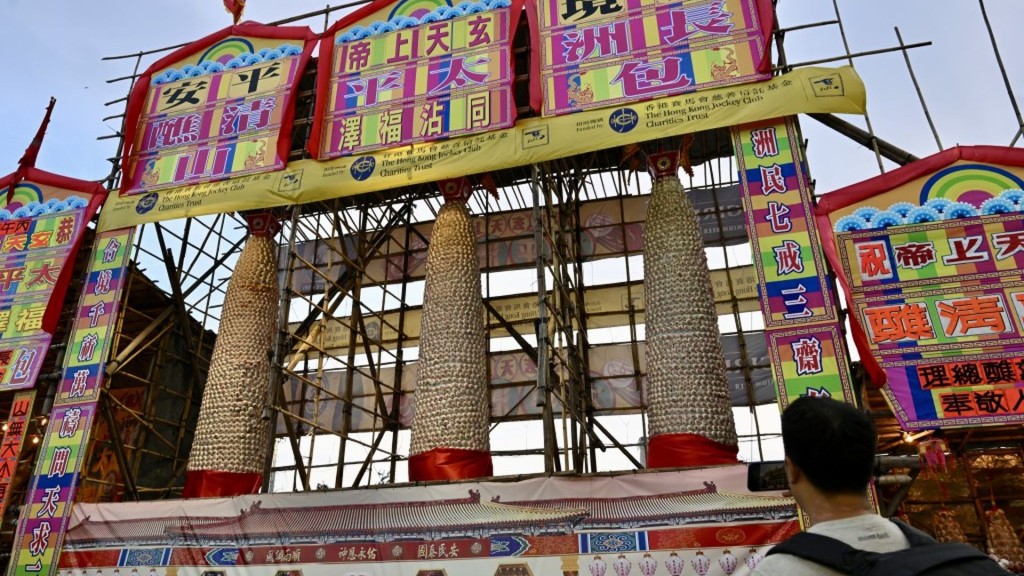
The Cheung Chau Bun Festival, as the story goes, began after a plague swept the island in the late 19th century. Villagers built towers of buns as offerings to the spirits, paraded their children dressed as deities, and ate no meat for three days. More than a hundred years later, they are still doing all three.
It is one of those Hong Kong traditions that has managed to adapt without losing its identity. The week-long Taoist rite, held to placate restless spirits and bring peace to the island, has run in some form for over a century. It was added to China’s national list of intangible cultural heritage in 2011. These days, it draws ferry queues that stretch back into Central, and a press pack that outnumbers the climbers.
What is striking is not only that it has survived, but that it continues to draw new audiences – younger Hongkongers who first heard about it on social media, visitors from the mainland who make the trip out for the day, and a steady stream of curious tourists who arrive expecting a parade and leave with a deeper understanding.
Older residents who grew up on Cheung Chau are quietly pleased by the extra attention. The festival they remember is still recognizably itself.
The Piu Sik parade still requires months of preparation by families who have done it for generations. The vegetarian rule still empties the island’s butchers for three days. The bun-snatching final, banned for decades after a tower collapse in 1978 and revived as a sport in 2005, still draws competitors who train all year for 90 seconds of climbing.
That is the quieter lesson Cheung Chau offers each May. A city that thinks deeply about its cultural identity has, on a small island half an hour away, a working example of how it is passed on. Not preserved. Not curated. Just done again, every year, by the people who decided it was worth doing.
The towers are down. The plastic buns are packed away for another year. Cheung Chau has returned to being Cheung Chau. And next May, without fail, the scaffolding will rise again.
Bernard Charnwut Chan is the chairman of the West Kowloon Cultural District