In the last few weeks, Darren Cronian has noticed a trend: a listing for a fully remote role will go up on a job board, drawing thousands upon thousands of applications. Within 48 to 72 hours, it will be gone.
"That's because of the sheer demand for that job," said Cronian, who's built a small business guiding job seekers through the process of landing a remote role.
"From a company perspective, they're thinking, 'Oh my God, we've got like 10,000 applications, there's no way we can deal with all of those.'"
The share of fully work-from-home roles has dwindled as companies that went remote during the pandemic increasingly request staff return to in-person work as the hot job market of the past couple of years cools.
But going back to the commute, cubicles and fluorescent lighting isn't always popular. According to data from LinkedIn, jobs advertising full-time remote work still attracted almost half of all applications on the platform in May, even though those jobs made up only around 11 percent of all listings.
By removing geographic barriers, remote jobs open up the applicant pool far beyond that of location-specific listings.
"What people don't realize is that you're not just up against people locally. You're up against people all over the country, or the world," Cronian said. "The competition is definitely there, and it's huge."
This harsh supply-and-demand imbalance has become the new reality for hundreds of thousands of job seekers who are determined to land a job that allows them the freedom and flexibility to work entirely remotely.
In a competitive market where one can send out hundreds of applications and get radio silence in reply, many are turning to self-styled remote-job coaches like Cronian for guidance and support.
Even with a coach, landing a gig isn't guaranteed. Cronian said his success rate has gone down as the competition has intensified.
"Toward the end of the pandemic about 80 percent of my clients were getting a job, just because we were going through best practices," he said.
"But now I would say it's about 60 percent and people are getting incredibly frustrated. I've had clients who are literally crying because they hate going to the office and they are struggling to get a job."
Kate Smith, another remote career coach, traded the daily office grind for the digital nomad life back in 2015, long before the pandemic hit.
Smith booked a one-way ticket to Prague after getting laid off from her job as a project manager at a web design company. There she was able to snag a remote role in marketing after much trial and error.
"When I started career coaching, so many people didn't know what I was doing. They didn't really understand it," said Smith, who's now based in Canada.
"Not a lot of people were even on board with this idea of remote jobs - like, what do you mean you're helping people land remote jobs?"
Though there is a greater number of remote-work opportunities now than before the pandemic, these days it can feel even more challenging to land one.
"Before, not a lot of people were familiar with remote work. But now everybody is, so the competition is really high," she said.
More than their conventional counterparts, remote job coaches also tend to be wary of scam job postings, since they've become ubiquitous in the market.
While helping someone land their dream job can be rewarding, it's a tricky business.
People may be unemployed or miserable in their current jobs and are often looking for a silver bullet.
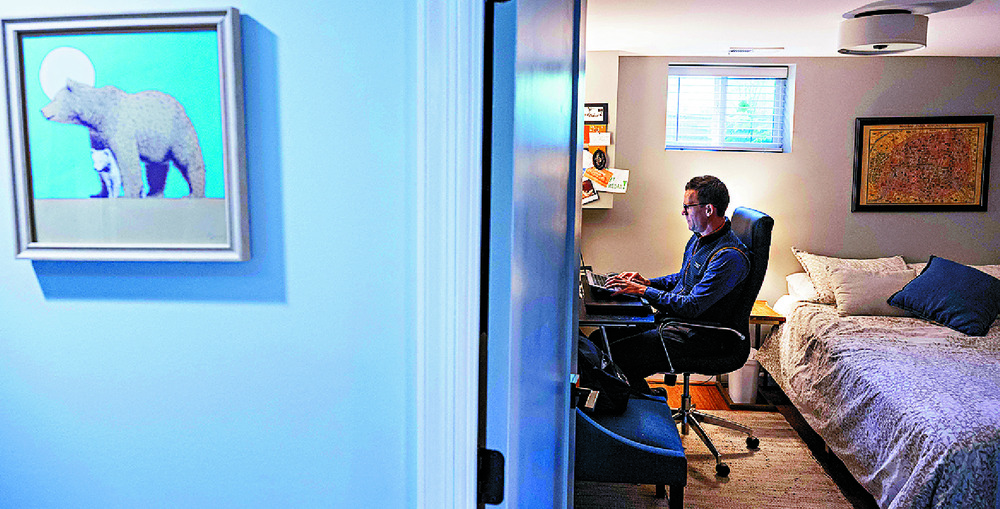
Listings for work-from-home jobs are usually gone within 48 to 72 hours because of the sheer damand. AFP