Read More
With the fifth wave of the pandemic causing Ocean Park to close its doors to the public, its small team of marine researchers is turning its attention to studying dolphins' behavior and evaluating how creative they can be in problem solving.
ADVERTISEMENT
SCROLL TO CONTINUE WITH CONTENT
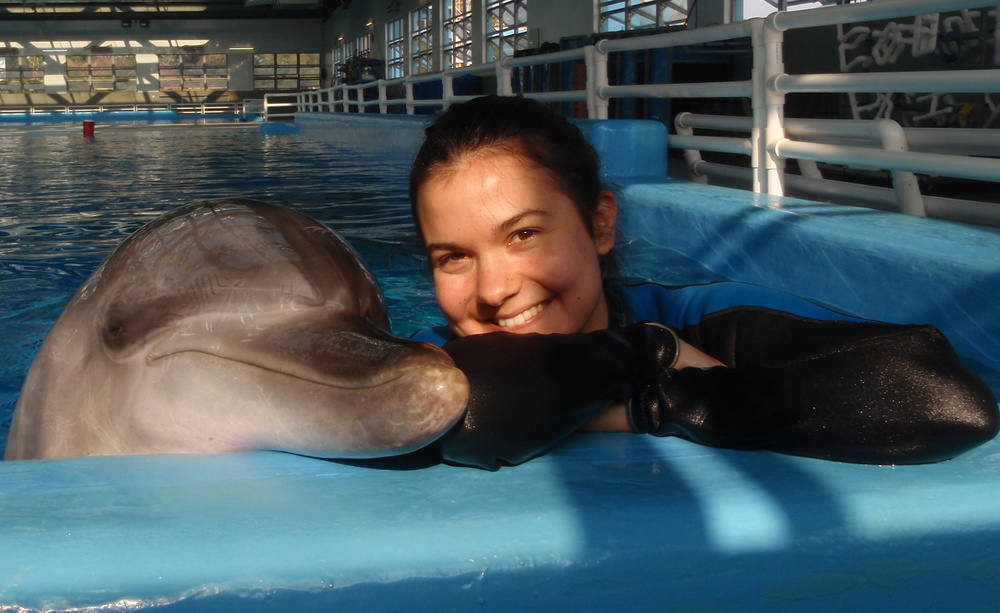
Research fellow Eszter Matrai and research assistant Rick Kwok Shaw-ting are the only full-time staff in research - the park's smallest department.
Their latest study looks at cooperation in dolphin pods using a large plastic tube filled with fish and ice that is covered and thrown into the dolphin pool.
To get to the fish, the dolphins need to work together to pull on the ropes attached to the cover on both ends of the tube.
The tubes can also be modified into more complex configurations to test the limits of the dolphins' cooperative and creative problem solving abilities, according to the researchers.
One of their videos shows two dolphins swimming and coming up for air in perfect synchronicity, then diving back down to pull on the two opposite ends of the T-shaped tube, while a third firmly holds on to the remaining rope.
"Think of it like a football team," says Matrai, who has been caring for animals since she was a young girl.
The fact that the researchers have years of experience caring for dolphins behind them also helps them derive results from the studies.
"Our research is as qualitative as it is quantitative," Kwok said. "By observing their behavior, we can figure out which ones are more friendly and more willing to partner up."
The duo is assisted by a handful of student interns for their in-house studies.
There's Rick Lui Shu-ho, who took a gap year at Hong Kong University of Science and Technology, and his senior Fung Ming-leung, a recent graduate.
"There's a lot of hands-on work, unlike what I'm used to at university," Lui said, "from hikes in the 30-degree [Celsius] heat, to carving ice blocks in minus 30 degrees."
Paolo Matelli, the park's director of veterinary services, said while the team works hard to educate the public about conservation, he doesn't think it's enough.
"Recycling your Coke cans isn't going to cut it, because they're still being produced," he said.
"The natural world is not a linear structure, but our legal and economic systems are not able to serve nature. Corporations and administrations are not equipped to solve these problems."
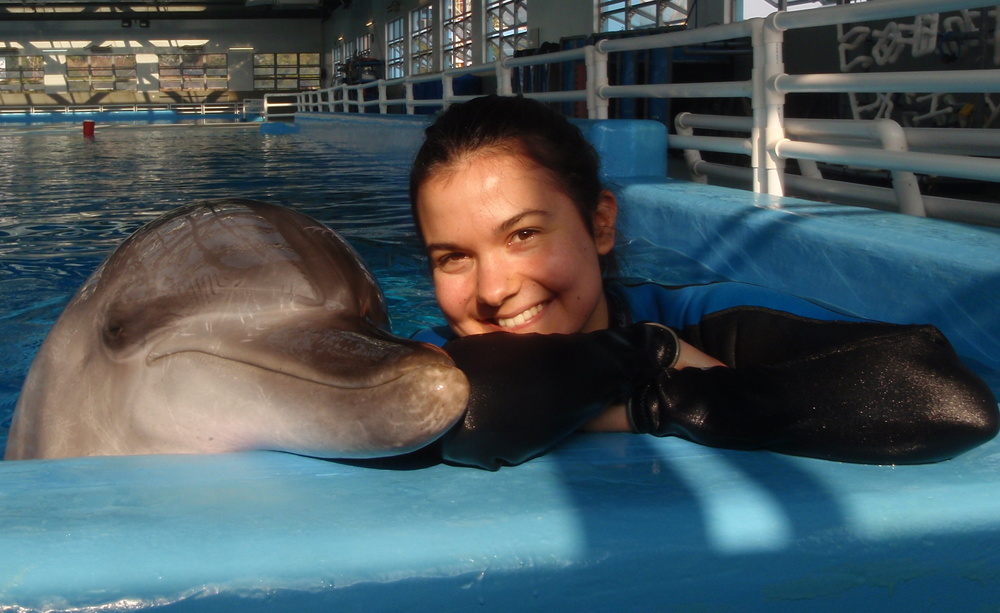
Eszter Matrai has been working with animals since a young age.