Read More
University medical experts have suggested the government take more drastic measures to prevent the spread of the epidemic, as a study has shown that it takes nearly a week to identify patients.
ADVERTISEMENT
SCROLL TO CONTINUE WITH CONTENT
A study by a Chinese University medical school team found that asymtomatic patients could be moving around freely before they were identified and isolated due to the time needed for diagnosis.
After analyzing the first 56 of the current 61 cases in Hong Kong, the team found it took around six days on average for patients to be isolated after showing symptoms,with the worst case taking 14 days.
The school's team suggested the government take further and more drastic measures to reduce the chance of the epidemic spreading.
"Covid-19 patients showed rather mild symptoms at the onset which may lead to delayed diagnoses and isolation, and increase the risk of transmission to close contacts and in the hospitals," said Kwok Kin-on, assistant professor of the Jockey Club School of Public Health and Primary Care.
"Hence, if more cases with unknown sources are identified, the government may have to consider more drastic approaches on social distancing, including closing malls and public services," he said, adding people should reduce social gatherings and avoid mass gatherings.
David Hui Shu-cheong, head of the school's department of medicine and therapeutics and a professor of respiratory medicine, said the public should "stay alert" as he warned that the Wuhan coronavirus can spread more rapidly than SARS.
"The viral load of patients with the novel coronavirus reaches its peak on the second or third day after the onset, which means it is highly infectious at the early stage and that is why family groups are more vulnerable," he said.
"Considering the incubation period is about 14 days, we have to observe at least double the time of incubation period in case of any new case before we say the epidemic is under control."
The medical school also did an online survey with 1,168 people between January 24 and February 5 on risk perception.
Although around 90 percent of respondents have stepped up personal hygiene practices, such as wearing masks, washing hands and better coughing and sneezing etiquette, measures to minimize social contact such as reducing one's presence in mass gatherings and use of public transport were harder to adopt.
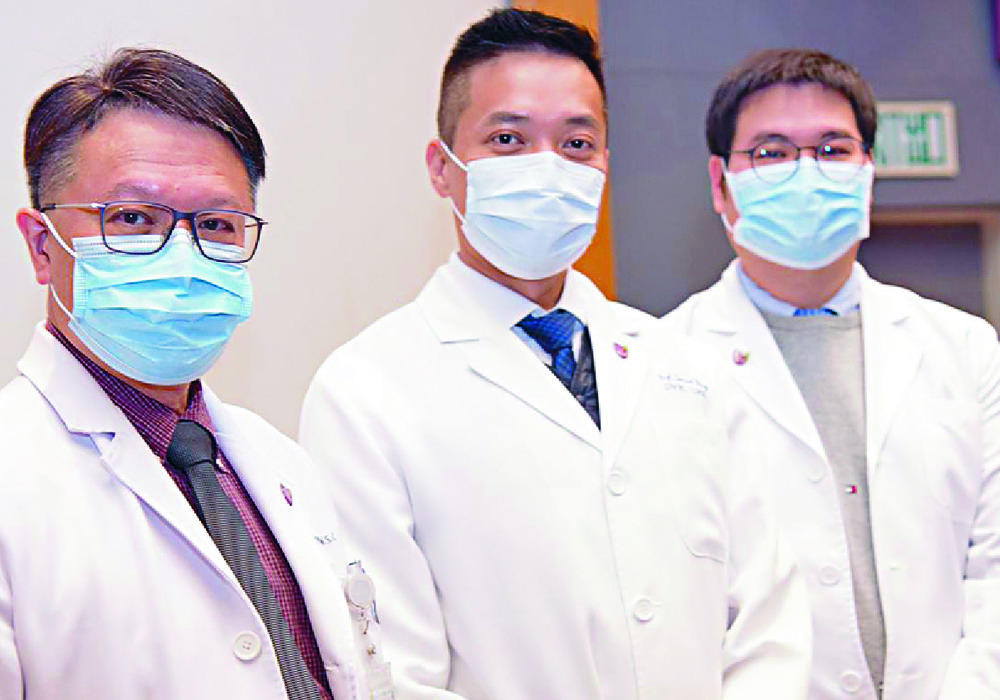
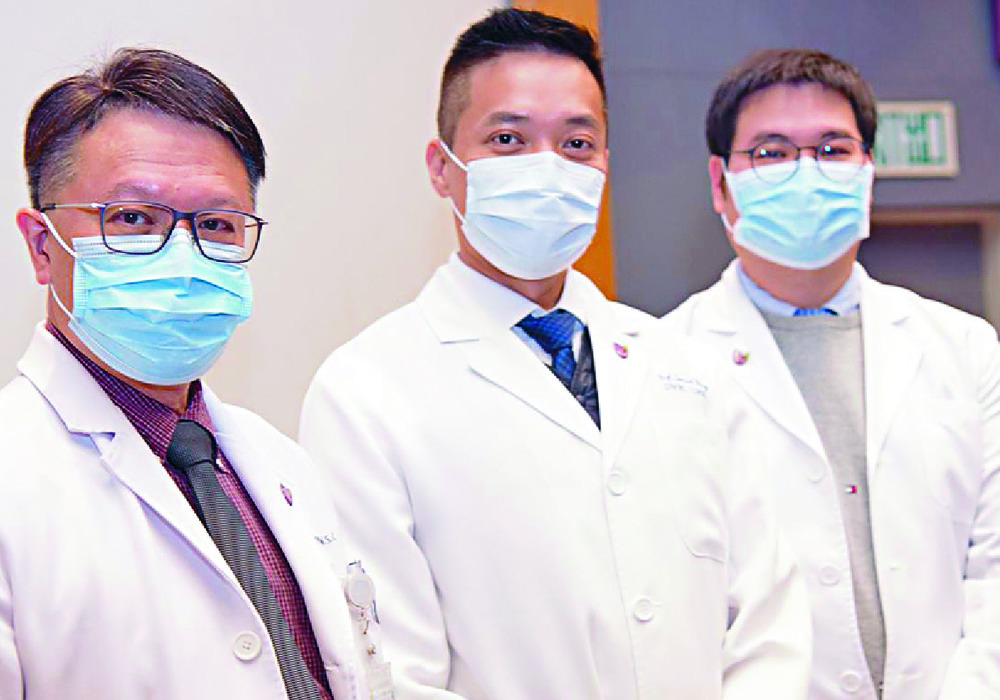
Calling for more stringent epidemic control measures are, from left, David Hui, Simon Wong and Kwok Kin-on.