Read More










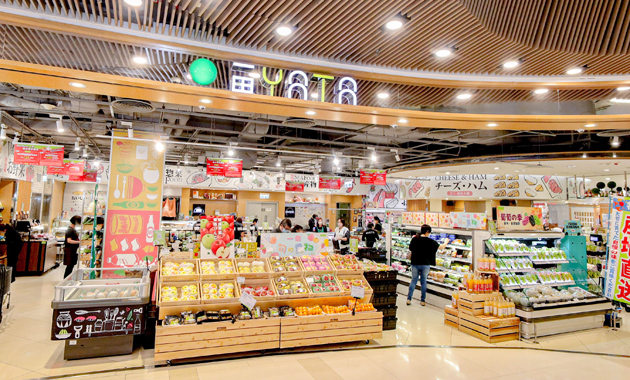
Yata's announcement that it is closing certain middle-class-oriented services at its Sha Tin and Tai Po department stores has come as a shock to many Hongkongers.
The retailer, owned by Sun Hung Kai Properties, has specialized in selling Japanese lifestyle products not commonly found in other local stores.
As a result, Yata is popular among the local population fond of Japanese goods.
Yata has over 10 branches in the city but only the three - in New Town Plaza, Tai Po Mega Mall and Tsuen Wan Plaza - are department stores. The rest are supermarkets.
According to the announcement, the cosmetic counter, casual and sportswear, and underwear departments at the Sha Tin branch will close from February 14 - the first working day after the Lunar New Year holiday.
What irony.
A few days later, the cosmetic counter, casual and sportswear, children's clothing, underwear, luggage, home appliances and toys departments at the Tai Po branch will also close.
Both stores will retain their supermarket units - in other words, Yata will largely become a supermarket brand with minimal department-store functions.
Restructuring of services is normal commercial practice that takes into account changes in the business environment - and Yata is no exception to this.
Had it thought otherwise, it would have likely retained a business model that has proved successful over the years.
On second thoughts, I may be wrong to say Yata is popular among Hongkongers - perhaps was would be more appropriate.
I am not saying that Yata is not delivering quality products and services, only that local consumer habits have changed - and these changes are having a profound impact on the retail sector.
What has changed?
Of course, factors like large numbers of residents preferring to shop in the mainland, a steady shift from the High Street to online shopping, and residents - mostly middle-class families - emigrating can be blamed for precipitating the changes.
But a factor no less significant is that people are feeling poorer than before.
They may not have less cash in savings, but are alarmed at sinking property prices and a lukewarm Hang Seng Index.
The middle class - which provides the greatest support to domestic consumption - is affected the most.
A similar pattern is also observed in the north, where the mainland middle class is being hugely battered by a plummeting property market.
It may be noted that the product lines that Yata is closing mainly serve the needs of the middle class.
If Taikoo Shing is the blue-chip housing estate representative of the middle class, then Yata and Sogo are its retailing counterparts.
What will Sogo do now that Yata is scaling down its department operations? It is expected to launch a new flagship store in The Twins in Kai Tak in the middle of the year after closing its store in Tsim Sha Tsui last year.
Will the new store be as grand as had been widely anticipated?
When Lifestyle International, which owns the Sogo brand here, formally launches the supposedly flagship store, its size will help gauge local consumer sentiment.