Read More
As the global energy crunch threatens stagflation and a new financial crisis, Hong Kong’s resilience lies in a stronger motherland and a smarter energy transition.
ADVERTISEMENT
SCROLL TO CONTINUE WITH CONTENT
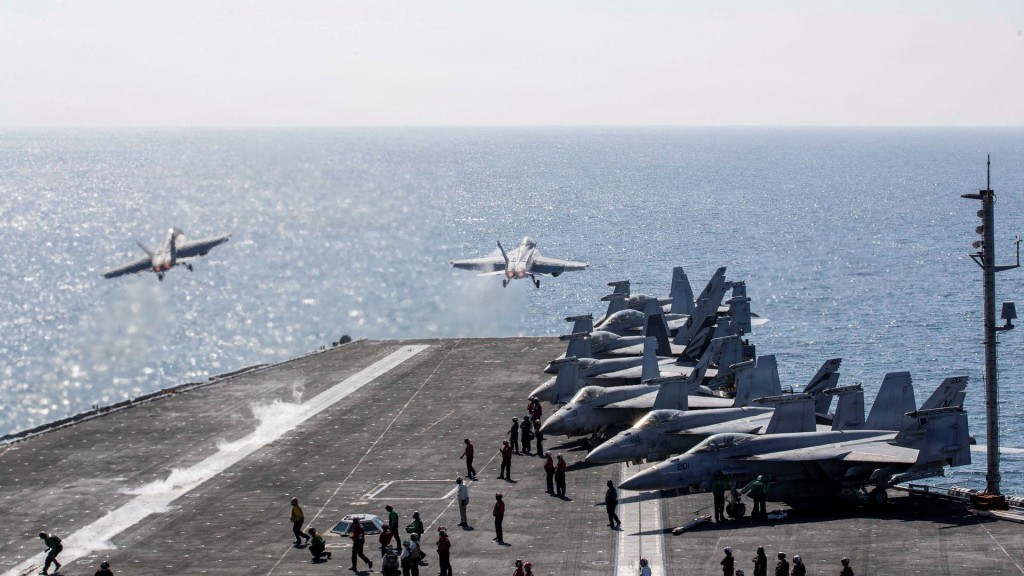
The Iran war would not be just another geopolitical conflict.
Some worry that it could be a black swan event – a sudden, unpredictable shock with devastating global reach.
The resulting energy crunch has sent unimaginable ripples through daily life, from the price of toilet paper to the cost of food.
The International Monetary Fund’s Kristalina Georgieva has warned that the Iran war will permanently scar the global economy.
Now, many fear the return of stagflation – an economic recession paired with stubbornly high inflation.
Even worse, with global debt at record highs and some Asian currencies weakening, another full-blown financial crisis cannot be ruled out.
Why Hong Kong should be cautious, not panicked
As a small, open economy, Hong Kong has never been immune to global turmoil.
Past financial crises have hit hard.
But today, Hongkongers have a reason to be cautious yet confident.
The difference is China.
In the past, China was not as strong. Today, the motherland is far more resilient.
In 2025, China’s exports rose 5.5 percent year-on-year, led by booming exports to non-US markets, while imports remained unchanged, resulting in a trade surplus of US$1.19 trillion (HK$9.28 trillion). In the first two months of 2026, China’s exports jumped 21.8 percent, the biggest gain in four years.
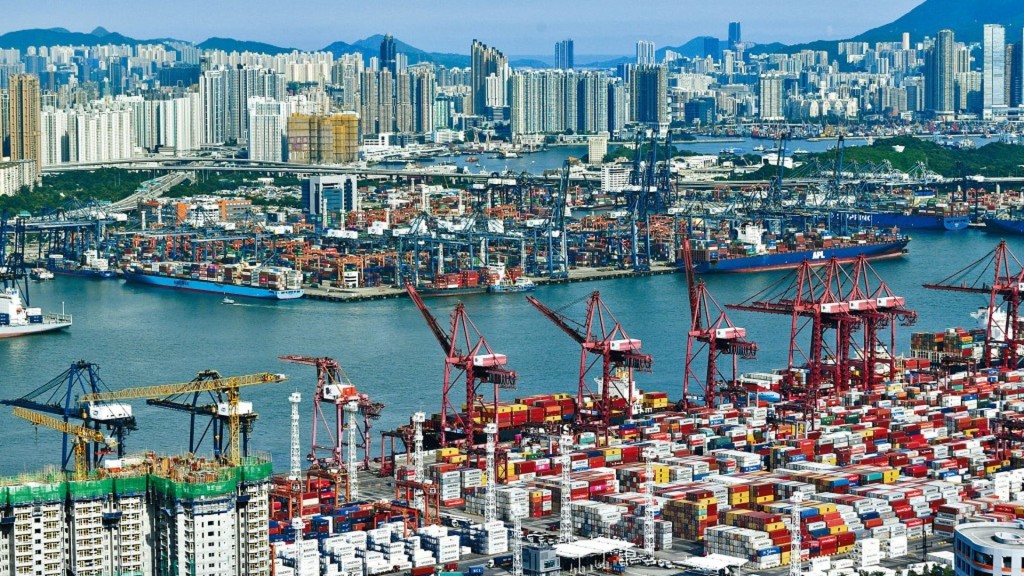
Hong Kong, as a premier entrepot, has directly benefited.
Secretary for Commerce and Economic Development, Algernon Yau Ying-wah, recently called Hong Kong’s rise to become the world’s fifth-largest trading hub a surprise.
Amid the global energy crunch, even some Western media have described China as a relative winner, citing the low-carbon energy it has developed – which accounts for 30 percent of its energy mix – to meet its 2060 net-zero goal as well as its strong domestic demand.
China produces 80 percent of its energy.
Hong Kong, which already imports nuclear energy and natural gas from mainland China such as from Daya Bay, is far better off than many of its peers – even as local petroleum and gasoline prices rise.
That said, Hong Kong still has room to do more on its own energy transition, from solar to energy storage.
Stability as a talent magnet – with real proof
With relative stability and security, Hong Kong is now well-positioned to attract global tech talent and corporations.
Chief Executive John Lee Ka-chiu yesterday made this case in front of young scientists and Nobel Prize laureates, emphasizing Hong Kong’s attractive environment.
The proof is already emerging: a Japanese professor has recently joined a Hong Kong university with three times his previous pay – a clear sign that the city’s offer is competitive on a global scale.
A more resilient Hong Kong
All these developments point to one conclusion: Hong Kong is becoming more resilient than in the past, when it relied too heavily on a single financial pillar.
By leveraging China’s strength, diversifying its economic pillars, attracting top global talent, and maintaining openness, Hong Kong cannot only survive a black swan but emerge stronger.