Read More
Three terms have regularly emerged in the context of the Sino-US relationship of late: "decoupling," "small yard, high fence" and, since early this year, "de-risking."
ADVERTISEMENT
SCROLL TO CONTINUE WITH CONTENT
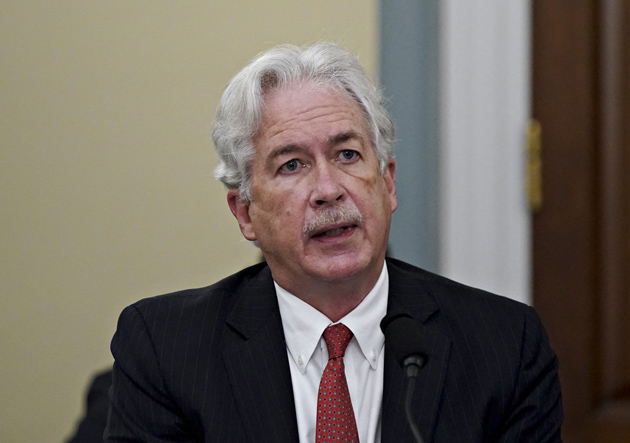
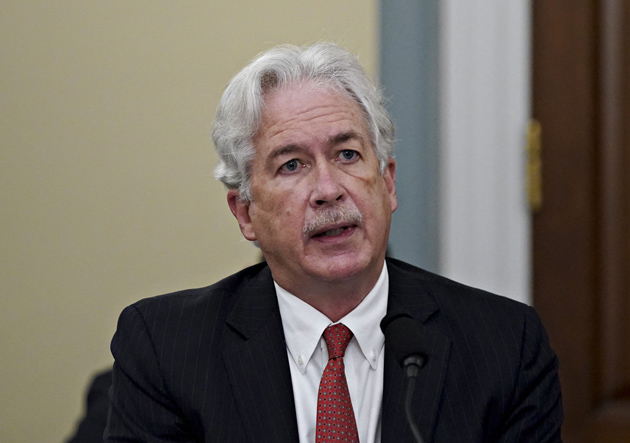
Of late, US Central Intelligence Agency director William Burns enriched the diplomatic dictionary with another term: "diversify away from."
Speaking in Oxfordshire on Saturday, Burns said: "China is the only country with both the intent to reshape the international order and increasingly the economic, diplomatic, military and technological power to do so.
"In today's world, no country wants to find itself at the mercy of a 'cartel of one' for critical minerals and technologies.
"The answer to that is not to decouple from an economy like China's, which would be foolish, but to sensibly de-risk and diversify by securing resilient supply chains, protecting our technological edge and investing in industrial capacity."
It would appear that the former US ambassador to Russia may have undergone extensive media training as his remarks contained keywords that media outlets could readily pick up to use in headlines.
Consider these two: "CIA chief: US decoupling from China would be 'foolish' given economic interdependence" and "CIA's Burns: US needs to de-risk and diversify away from China."
They referred to the same speech but focused on different aspects. So, did Burns actually contradict himself in his comment on the relationship with China?
While there apparently has been less reference to "decoupling"and the phrase "small yard, high fence" recently and more mention of "de-risking," a more fundamental question is whether these terms - including "diversify" which was used on Saturday - are different in practice.
They may embody various breadths in concept but for most people, including those doing China business, it would be difficult to distinguish one from another in practice.
Perhaps, among them, "small yard, high fence" is the easiest to understand, providing a relatively elaborate description of how the policy is to be actually executed regardless of how the policy is named.
The Sino-US relationship is now more a relationship between China and the West led by the US.
Decoupling is a relatively hawkish term first used by the Donald Trump administration.
In contrast, de-risking is a European term first suggested by Germany where pro-business politicians have disagreed with "decoupling."
If decoupling is a broader concept involving total separation, de-risking implies continued engagement but at arm's length - or probably longer than that.
When Burns spoke about the need to de-risk and diversify away from China, he may have been trying to define the rather abstract description with a term that would be easier for his audience to understand.
However, as president of the EU Chamber of Commerce in China Joerg Wuttke said in a post recently, the distinction is often not so clear in practice.
Wuttke said: "De-risking is sometimes seen as a label for a more commercially minded approach to China than the tougher decoupling that is popular with hawkish American policymakers.
"If the EU eventually imposes export controls or blocks a European investment project in China, it will no doubt call it de-risking. And China will probably call it decoupling."
William Burns