Read More








Six senior counsel appointed
31-03-2026 13:54 HKT

Approval granted for Kai Tak’s six-stop Smart & Green Mass Transit System
31-03-2026 16:27 HKT
It's ironic that people living in the digital age scramble to look up "truth" in social media only to discover the so-called truth regularly appearing on social media platforms could indeed be consistently wrong.
I have no doubt that former observatory director Shun Chi-ming wasn't alone in feeling this way as he commented on tropical storm Ma-on.
As soon as Ma-on began flashing on the observatory's radar, social media was inundated with comments from self-proclaimed experts citing computer projection from a number of sources that Ma-on would deal Hong Kong a direct blow.
Furthermore, they said city might have to raise the highest typhoon signal No 10.
What happened next? The emergency mode that has been quietly formed in every resident since the pandemic kicked in. Supermarket shelves were emptied of food and vegetables in no time.
Having lived through lockdowns before, residents were no longer willing to take a chance. It is always more assuring to fill up ice boxes with food and drinks.
Truly, people have learned to react to perceived emergency situations by thinking through the heart, not the mind.
There is now an instinct embedded in society to run to stores and grab groceries and daily necessities due to the uncertain periods that many went through during the pandemic.
But that is not a valid reason to rely on information from not-so-trustworthy sources.
Indeed, it can be dangerous to depend on information found on the social media. Even if a piece of information is posted regularly in Facebook or Twitter, it does not necessarily follow that it is correct just because of its consistent appearance on social media.
It was astute of Shun to point out the common misconception that one must follow the other.
Incorrect information can be repeated a number of times. Although each mention is consistent with what has been previously said, the information is still wrong.
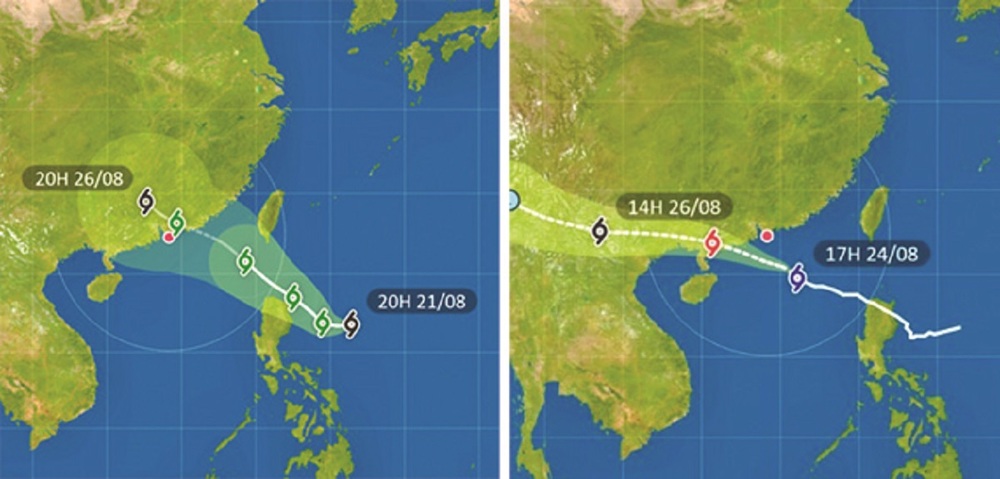
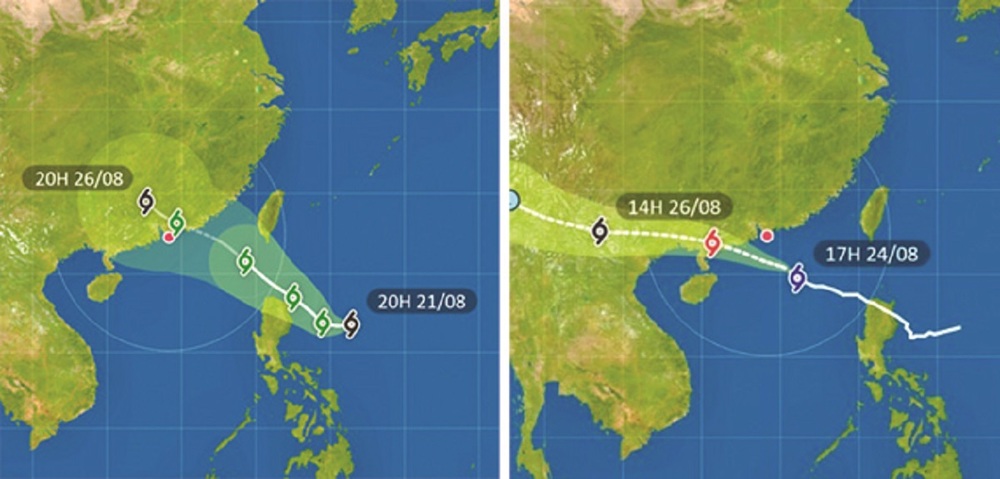
As it turned out, Ma-on changed to a course skirting past the SAR in the southwest at a distance of about 200 kilometers.
If that was considered a direct hit, I fear that what constitutes common sense would have to be fundamentally redefined.
Although Shun didn't say it, it is unwise to drop reliable sources like the observatory in favor of amateurs.
After Ma-on made landfall in the Luzon area, computer models and observatories in the region updated forecasts to project a track further to the west. As a result, the likelihood of a direct hit became remote - less than 30 percent - according to the former observatory director.
Nonetheless, fears of Ma-on dealing the SAR a direct blow caused many events to activate their Plan B.
Information is valuable but users have to learn to use it with the mind, not heart. Shun was so right to spell out the difference between being consistent and correct.
As opposed to social media competition, the observatory may have to be proactive in future in providing clear information to the public.