Read More










Over 50 evacuated as fire in Causeway Bay disrupts traffic and trams
25-08-2026 12:58 HKT

Taxi stuck sideways in narrow Central alley
24-08-2026 15:55 HKT
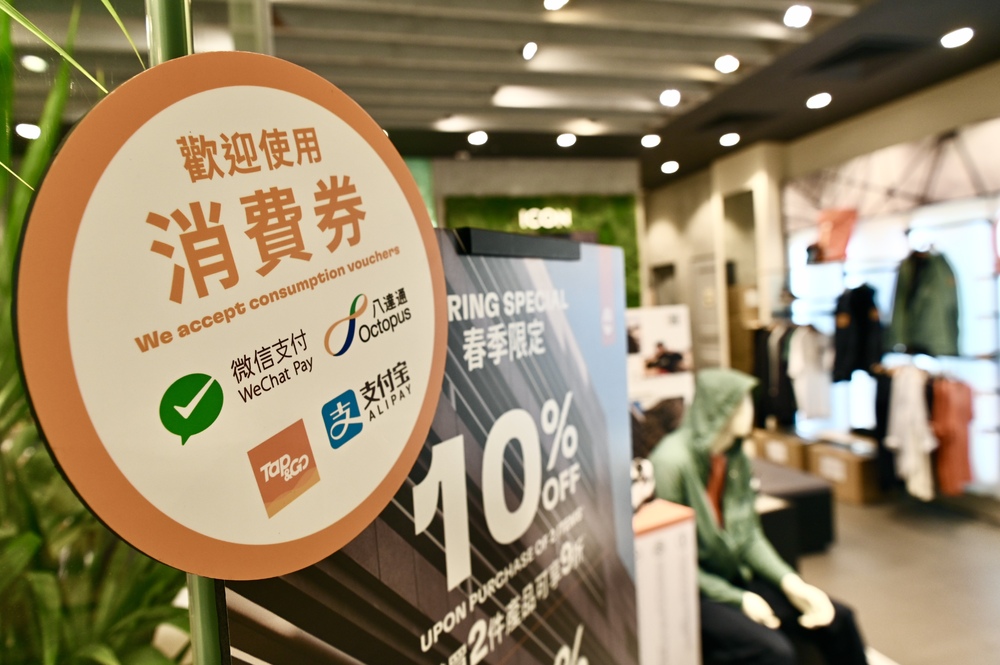
Financial Secretary Paul Chan Mo-po's announcement of a further batch of HK$5,000 spending vouchers contains what many of us have anticipated - except for some policy twists that are cause for concern.
For the first time, the government is creating a policy by differentiating people based on their intentions - as judged by the authority.
Such a controversial approach has not only been applied to pre-election screening but is now being extended to affect a general policy.
Although the HK$5,000 spending voucher scheme is a relatively minor policy, the financial secretary's undertaking to separate people thought to be planning to emigrate from those thought to be planning to remain is problematic.
Yesterday, Chan ended the wait and said the second batch of HK$5,000 e-vouchers would be given out in phases from August.
Technically, there will be two more electronic payment platforms, but Chan appeared to be refraining from encouraging consumers to apply to switch to the new platforms, operated by HSBC and Bank of China - unless, he added, consumers wanted to.
Hong Kong operates a capitalist system and government should keep its intervention to a minimum, leaving players to compete through normal practices in a free-market environment.
A highlight of the new batch is the unprecedented approach that states people who have permanently left Hong Kong or who intend to leave will no longer be eligible for the handouts.
Could this set an example that will affect other government policies in future? Most likely.
In order to identify these people, the government will review immigration records for the past three years, mandatory provident fund withdrawals and other sources with a view to screening out the unwanted.
To be fair, people who have already left the city and settled in other countries should concentrate on building new lives in their new homes.
It is not controversial to exclude those who have left Hong Kong for good since they are already nationals of other countries.
But it is ill conceived to extend this policy to those who are still in Hong Kong just because someone in the government "thinks" they are making plans to leave the city.
The counter argument is straight forward.
They are Hong Kong citizens and, therefore, have the same rights as anyone else.
It is ironic that temporary residents without local citizenship will be given the spending vouchers - though only half the amount - whereas many citizens will not get them.
The financial secretary said he is making the change in response to criticism, but that is a weak defense.
It has always been the case that ,whenever the government rolls out a policy, there is criticism from some corners of the community.
While government officials are expected to respond to criticism, they are not expected to give up on the integrity of government policy merely to appease the critics.
Targeting people who have not left Hong Kong is a grave mistake.
The financial secretary is setting a dangerous precedent of far-reaching implications.