Stacy Shi and Adelyn Lau
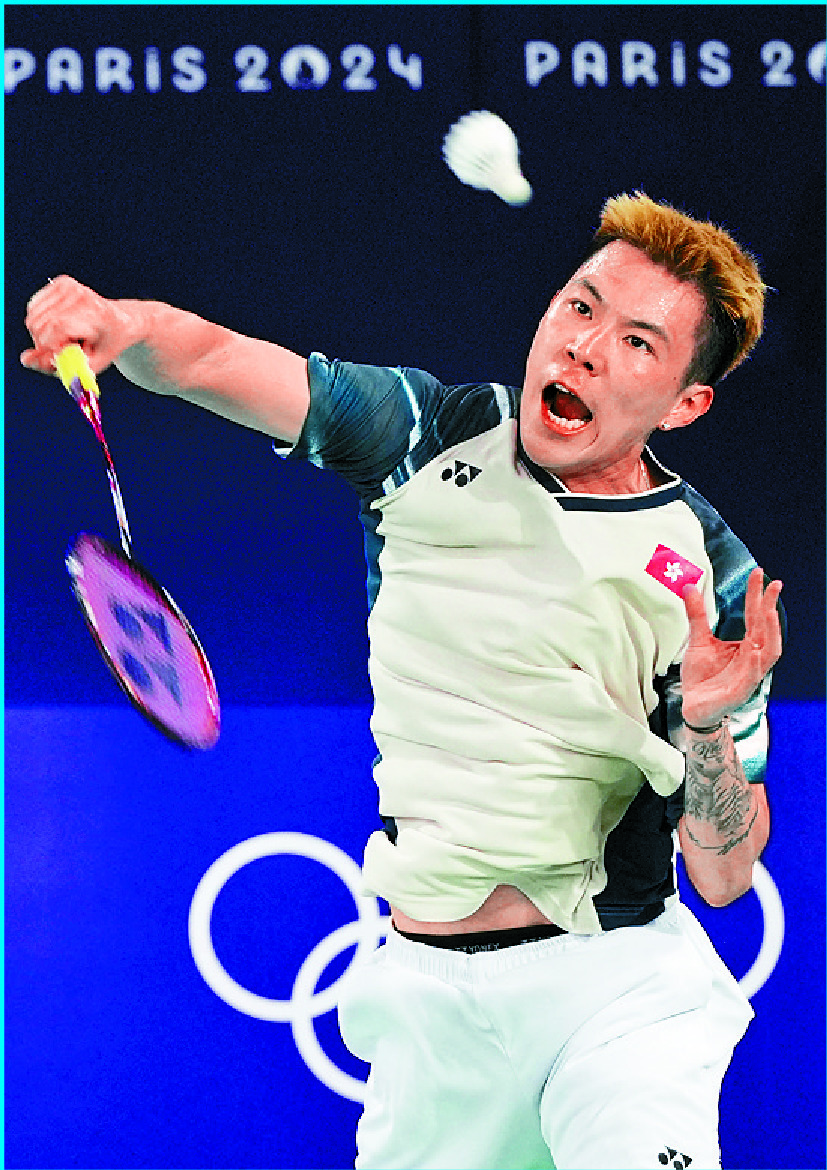
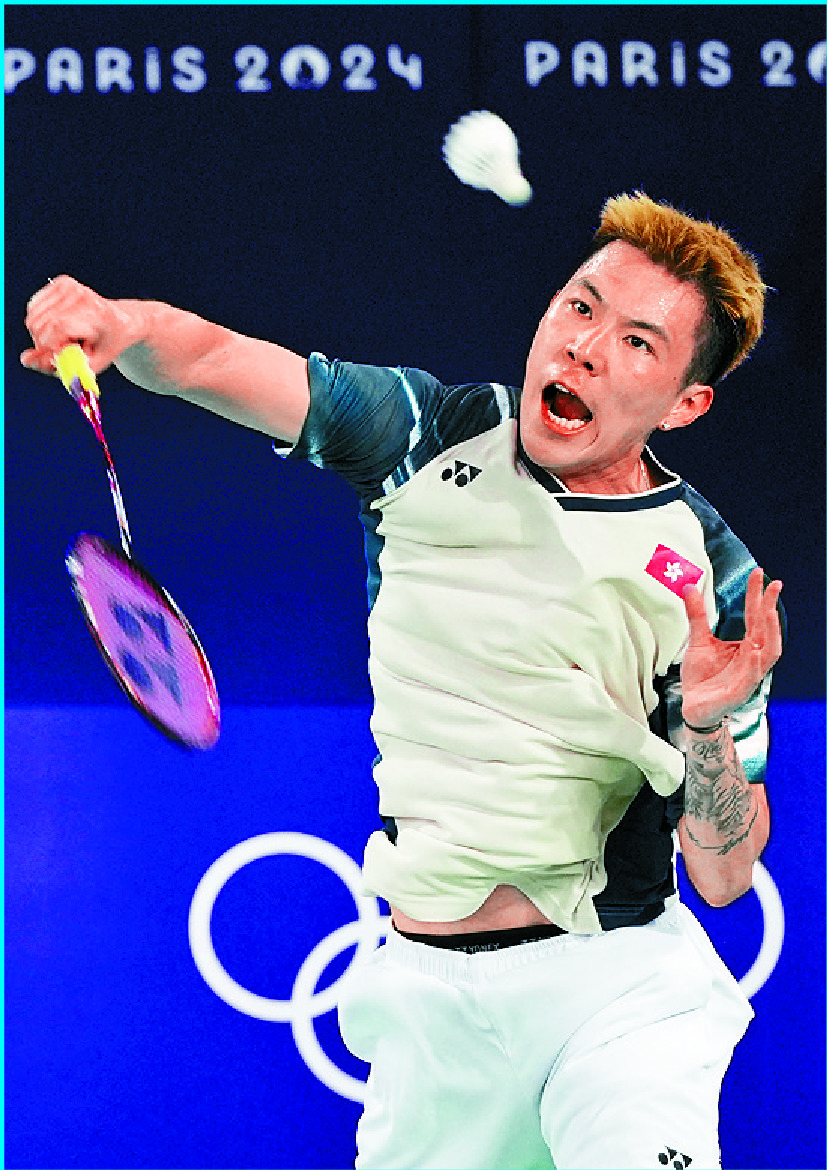
Talented teenagers gave up their sporting careers due to the low salary of HK$7,130 a month, according to SAR shuttler Lee Cheuk-yiu, who hopes athletes can receive a proper salary of at least HK$10,000.
Lee responded to Edgar Yang Joe-tsi, honorary secretary general of the Sports Federation and Olympic Committee of Hong Kong, China, who on Sunday said athletes have coaching, medical care and accommodation at their disposal, that they "almost have nothing to spend money on" and the HK$7,130 salary is "pocket money."
Speaking on a radio program yesterday, Lee said the income is not just pocket money but rather a formal salary that reflects the significant personal sacrifices one makes in pursuing a career as a professional athlete.
Lee said he became a full-time athlete at the age of 16 and his salary only increased after he qualified for major competitions such as the Olympics, world championships and Asian Games.
"I was 16 years old and the over HK$7,000 was like pocket money, but for athletes who do not have a higher rank it is their monthly salary."
According to the criteria set out by the Hong Kong Sports Institute, Elite A+ athletes, medalists at Olympic Games and world championships or World Cup finals, are entitled to a standard monthly grant of HK$44,500 - or 5.2 times more than the HK$7,130 minimum.
Even Elite C class athletes who qualify for the Olympics are only granted HK$11,520 per month.
Lee called for the government to provide more assistance to athletes at lower levels, suggesting that "their salary should be set at a minimum of HK$10,000, in line with the statutory minimum wage."
Meanwhile, Beijing praised Hong Kong's "exemplary performance" at the Paris Olympics and for putting the SAR's "Lion Rock spirit" on full display.
Chief Executive John Lee Ka-chiu congratulated the Hong Kong delegation for making history at the Games.
He added that the government will continue building more sports facilities in the future, including converting a sporting complex into facilities dedicated to fencing, which brought home two gold medals from Paris.
Separately, Patrick Yung Shu-hang, chairman of orthopedics and traumatology at the Chinese University of Hong Kong and volunteer doctor for Hong Kong athletes for two decades, suggested the city build a comprehensive mechanism to support athletes in sports medicine.
He acknowledged that the development of sports medicine here still faces many challenges and suggested the government vigorously promote the concept of medical sports integration.
"Hong Kong does not have a specialized field in sports medicine in its medical apparatus," Yung said, adding that it makes objectively assessing the capabilities of practitioners difficult, limiting their social status and job prospects.
Lee Cheuk-yiu
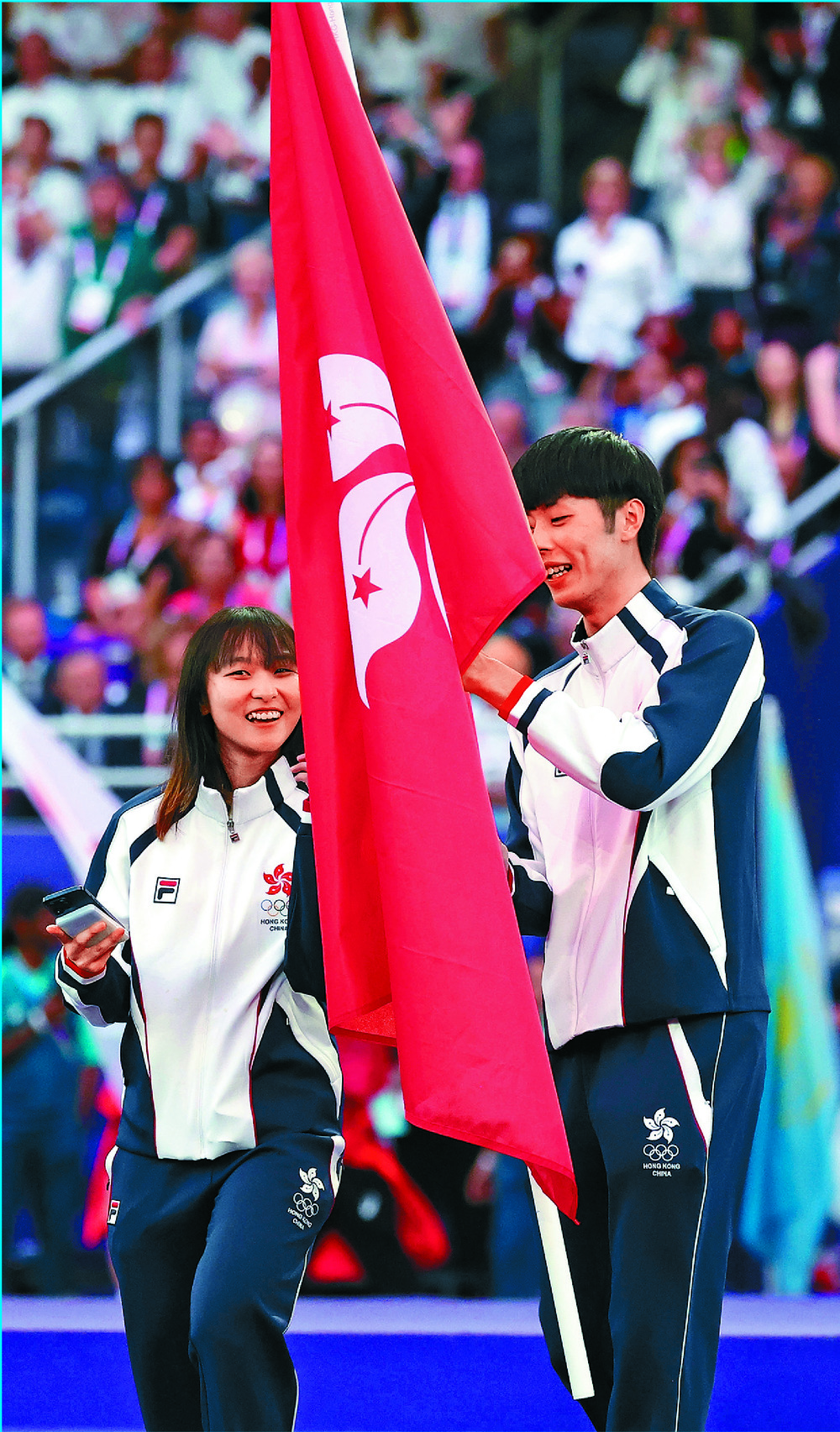
Cyclist Ceci Lee, left, and taekwondo's Lo Wai-fung are Hong Kong's flag-bearers at the Olympic closing ceremony. XINHUA