Read More
Michael Shum and agenciesAlibaba Group Holding reported a rise in gross merchandise value and order amount, while JD.com reported its orders hit a new record.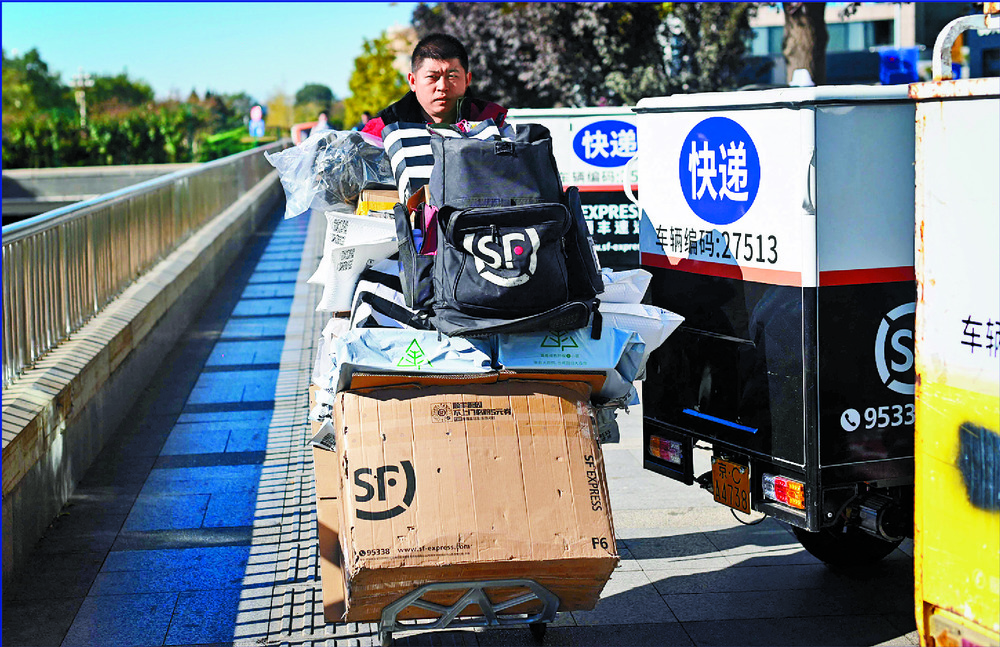
Both Alibaba and JD.com reported sales increases for Singles' Day, with 639 million parcels delivered - a 1.87-fold increase from usual days - but overall revenue figures for the mainland's shopping extravaganza on November 11 - or 11/11 - were not provided.
ADVERTISEMENT
SCROLL TO CONTINUE WITH CONTENT
This year, the unofficial holiday focused on a low-price strategy to draw in reluctant consumers.
Alibaba's Taobao and Tmall businesses said their direct discount value that offered a 15 percent price reduction reached 210 million orders during its sales period, and more than 400 brands exceeded 100 million yuan (HK$108.6 million) in earnings.
JD's credit-payment business Baitiao gathered 400,000 brands and merchants to provide over 1.5 billion yuan in subsidies for users, with over 60 brands surpassing 1 billion yuan in sales and nearly 20,000 brands reporting tripling transaction volumes from the previous year.
China's postal delivery companies handled 639 million packages nationwide on Saturday - up 16 percent from last year - while the first 11 days of November saw 5.3 billion packages handled - up 23 percent - the State Post Bureau said.The annual shopping blitz, used as a key indicator of Chinese consumption sentiment, has been weaker-than-expected following the postpandemic reopening.
Consumer prices fell to below zero last month, while producer prices declined for the 13th consecutive month. Over three-quarters of shoppers plan to spend less this year or maintain their spending levels, a Bain & Co survey of 3,000 Chinese shoppers found.That includes people like Shi Gengchen, whose billiard hall business in Beijing's trendy Chaoyang district has slowed.
"There are fewer customers than before. Sales are just 40 percent of what they were before the pandemic," Shi said."I don't spend a lot. Everyone has a desire to spend, but you have to have the money to spend."
Chinese consumers were more eager to splurge before the pandemic hit 2020. Shoppers spent US$38 billion (HK$296.4 billion) in 24 hours on Alibaba's e-commerce platforms on Singles' Day in 2019.Hu Min, a convenience store employee in Hebei province, said she no longer spends on anything except daily necessities.
"People don't spend as much as before possibly because they don't have much to spend," she said. Among those who were still willing to consume during the festival, those from Guangdong were found to have the strongest buying power, statistics from JD.com show.Within Guangdong province, Shenzhen residents consumed the most this year, with gaming laptops, air conditioners, mobile phones, tablets and refrigerators making the top five products in terms of consumption amount per person.
The statistics also show consumption among Hong Kong users doubled and many bought laptops, household appliances and mobile phones online.michael.shum@singtaonewscorp.com
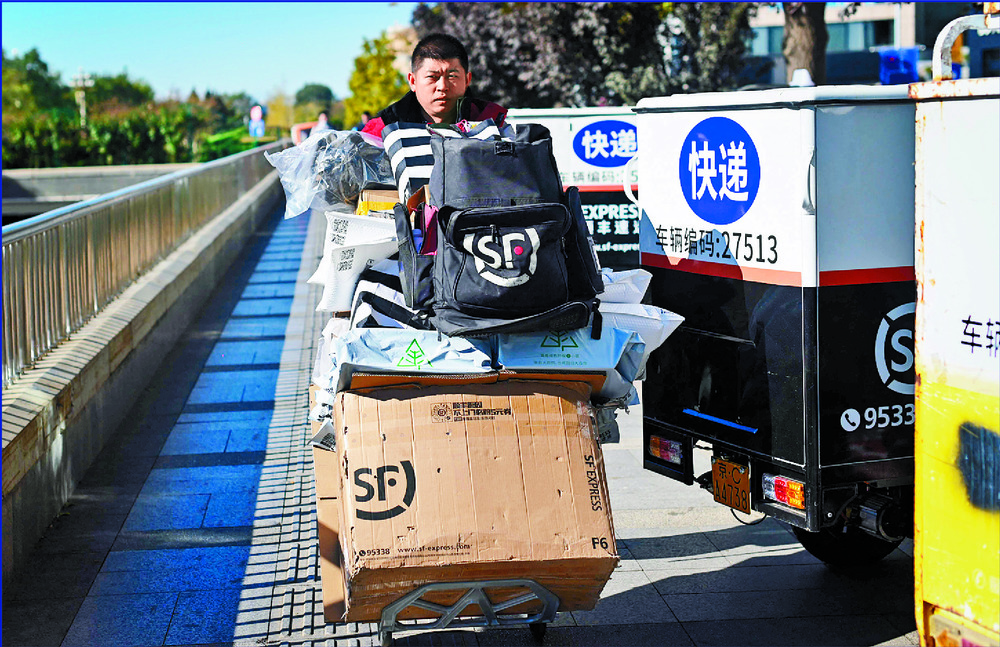
Editorial: Page 4Parcels are delivered in Beijing. There were 639 million parcels delivered on 11/11 – nearly twice as many as on ordinary days.
AFP