Read More
Beijing warned yesterday it was facing its most severe test of the Covid-19 pandemic, shutting businesses and schools in hard-hit districts and tightening rules for entering the city as infections ticked higher in Beijing and nationally.
ADVERTISEMENT
SCROLL TO CONTINUE WITH CONTENT
China is fighting numerous flare ups, from
Zhengzhou in central Henan to Chongqing in the southwest. It reported 26,824 new local cases for Sunday, nearing the country's daily infection peak in April.
That came as Hong Kong reported 7,286 infections - including a single-day high of 614 imported cases since the beginning of outbreaks in early 2020 - and 11 deaths.
China also recorded two deaths in Beijing, up from one on Saturday, which was China's first since late May.
Guangzhou ordered a five-day lockdown for Baiyun, its most populous district. It also suspended dine-in services and shut night clubs and theaters in the city's main business district.
The latest wave is testing China's resolve to stick to adjustments made to its zero-Covid policy, which calls for cities to be more targeted in clampdowns and steer away from widespread lockdowns and testing that have strangled the economy and frustrated residents.
Beijing reported 962 new infections on Sunday, up from 621 a day earlier, and a further 316 cases for the first 15 hours of Monday.
City authorities said people arriving from
elsewhere in China would need to undergo three days of testing before they are permitted to leave their homes or accommodation.
"The city is facing its most complex and severe prevention and control situation," Liu Xiaofeng, deputy director of the municipal center for disease control and prevention.
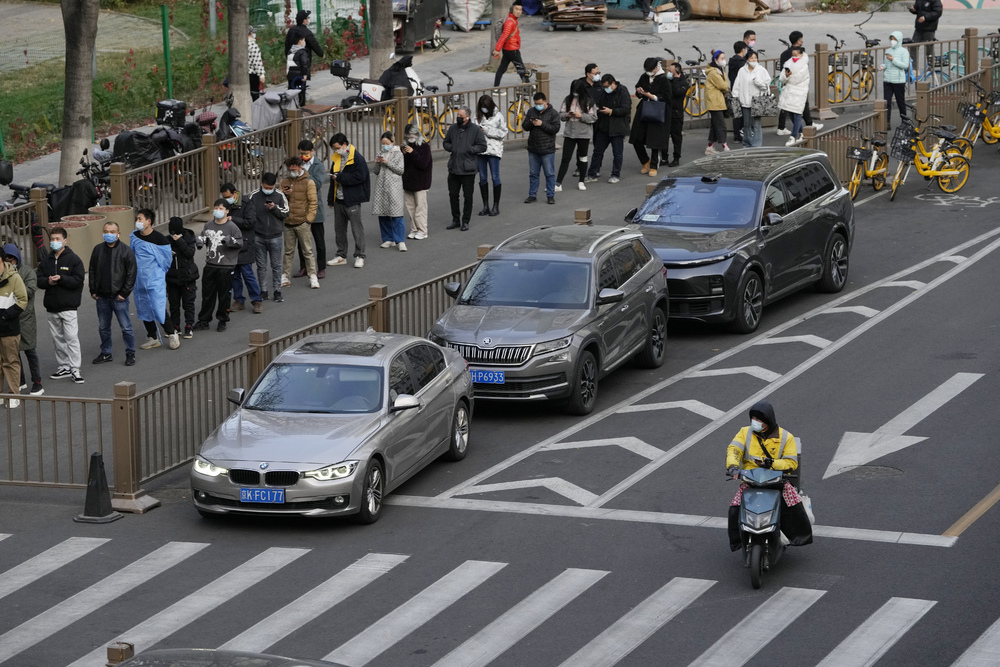
Residents in Beijing's sprawling Chaoyang district, home to 3.5 million people as well as embassies and office complexes, were urged to stay home, with schools going online.
Streets were unusually quiet, and stores in the district other than those selling groceries appeared mostly shut.
Restaurants were empty but for one or two staff huddled at entrances around small tables showing "takeout only" signs.
"You can't go anywhere. Everything's closed. Customers cannot come, either. What can you do? You can do nothing," said Jia Xi, 32, a medical industry salesman.
Staff at building entrances carried out strict checks of phone health apps with the command now familiar to all Beijingers: "Scan the code!"
Several cities began cutting routine community testing last week, including northern Shijiazhuang, which became the subject of fervent speculation that it could be a test bed for policy relaxation. But late Sunday the city said it would conduct mass testing in six of its eight districts over the next five days after new daily local cases hit 641.
REUTERS
From Page 1
On the same day Lee had bilateral meetings with Indonesia's President Joko Widodo and Singapore Prime Minister Lee Hsien Loong. None of the leaders wore masks.
Lee also met Vietnam's President Nguyen Xuan Phuc on Saturday, then dined with a Hong Kong business delegation and Thai business leaders.
On Sunday, Lee had breakfast in a local restaurant with three colleagues of the Hong Kong Economic and Trade Office in Bangkok, when they talked about attracting Thai businesses and talent to the SAR.
University of Hong Kong microbiologist Ho Pak-leung said yesterday that Lee has low transmissibility as he tested negative in rapid tests.
And it was almost impossible for him to have spread the Covid virus to others two to three days before testing positive in a PCR test. Even so, Ho believed Lee contracted the coronavirus in Thailand.
In a Legco panel meeting yesterday, constitutional and mainland affairs chief Erick Tsang Kwok-wai said Lee was not afraid of the virus and had only good things to relate about Hong Kong in Bangkok.
It was on October 27 that Financial Secretary Paul Chan Mo-po tested positive in a rapid test on the last day of a trip to Saudi Arabia for a financial forum.
But he was able to attend in person a global top-level financial summit here on November 2, despite testing positive when he returned as health authorities declared he could be considered a "recovered case" and was therefore exempt from compulsory quarantine.
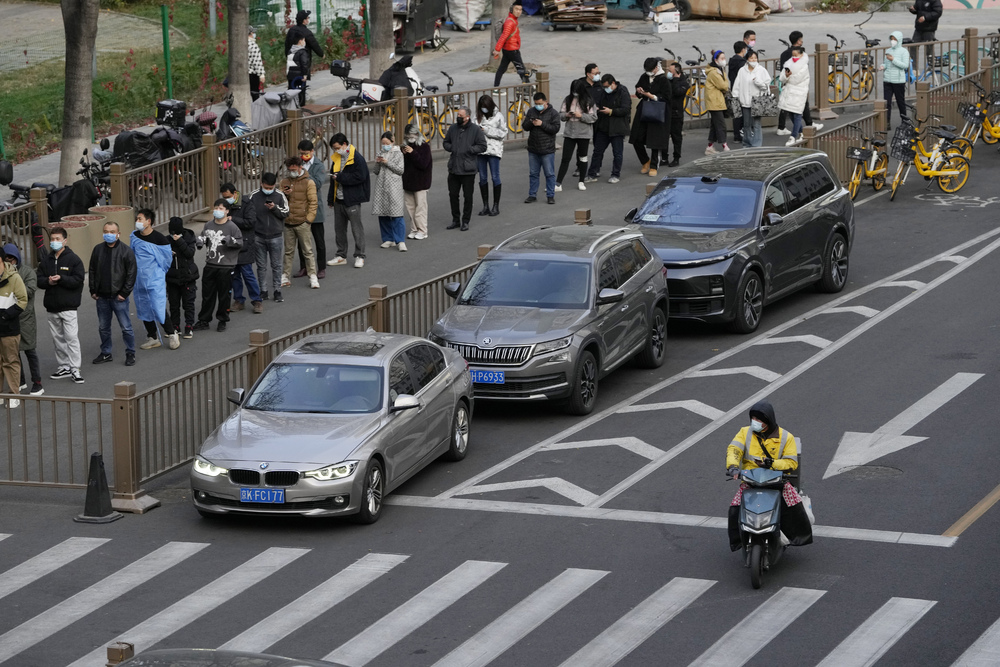
Residents are forced to line up for mass Covid-19 tests near a busy road in Beijing.