Read More
It is too early to allow people to return from countries currently under the flight ban - even if they are vaccinated - as the highly infectious Delta variant is actively spreading worldwide, infectious disease expert Ho Pak-leung says.
ADVERTISEMENT
SCROLL TO CONTINUE WITH CONTENT
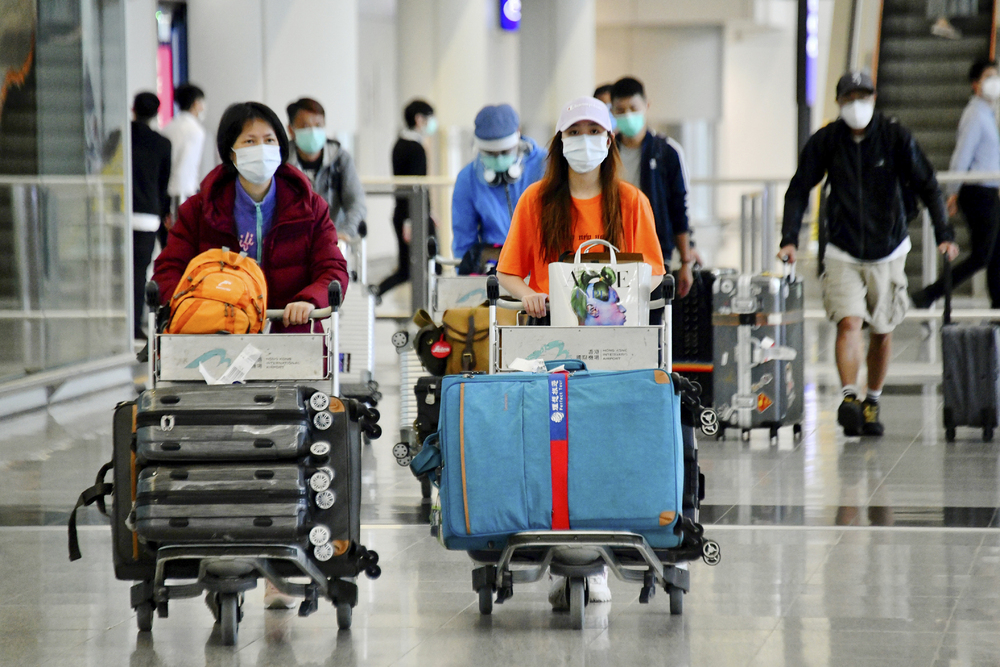
His remarks came a day after Chief Executive Carrie Lam Cheng Yuet-ngor announced a new classification system for border control measures, which Ho said yesterday was in effect a relaxation of arrival restrictions.
Speaking on a radio program, Ho, from the University of Hong Kong, said although the mainland has a high vaccine coverage - with Shanghai at 85 percent -recent Covid clusters are growing rapidly.
"Unless we achieve a 100 percent vaccine coverage among workers in the airport and quarantine hotels, it's not the time to relax border measures," he said.
Ho suggested authorities tighten its flight ban mechanism and ban all arrivals from high-risk countries upon recording three to five imported cases.
Secretary for Food and Health Sophia Chan Siu-chee said a circuit-breaker system to ban flights from a country and those operated by a specific airline upon recording a certain number of cases among passengers is still in effect.
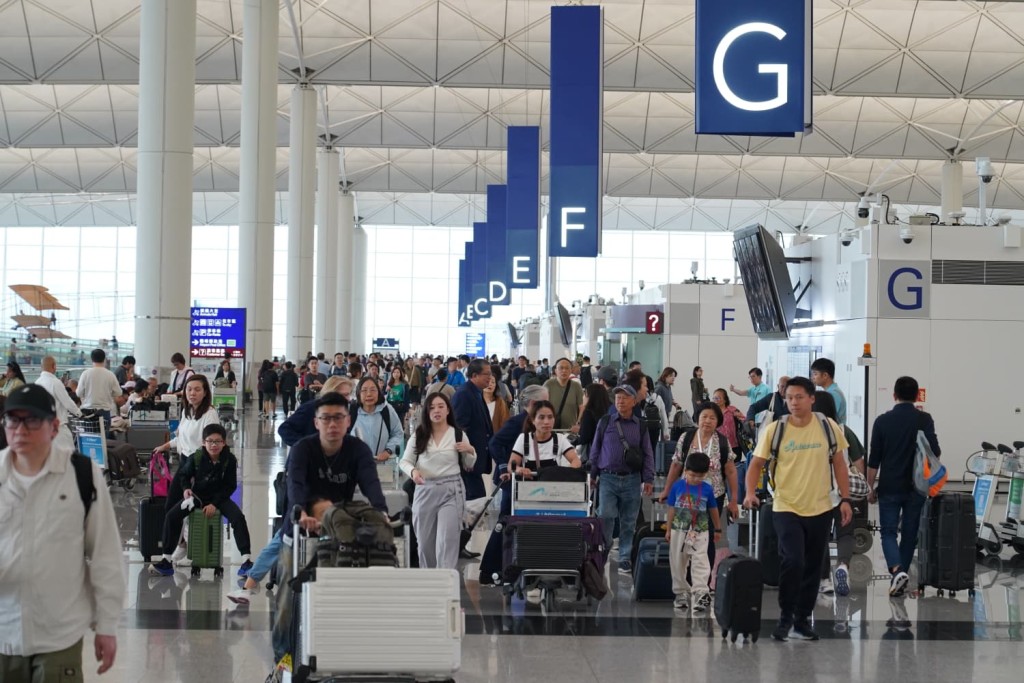
The new classification starts on Monday and is expected to benefit stranded Hongkongers and domestic helpers from extremely high-risk countries currently under flight bans, including the United Kingdom, India, Indonesia and the Philippines.
Under the new classification, 10 countries - including Brazil, Ireland, Nepal, Pakistan, Russia and South Africa - will be listed as high-risk, to allow fully vaccinated Hongkongers and domestic workers to return to the SAR, followed by 21 days of hotel quarantine.
All other countries except Australia and New Zealand will be listed as medium-risk - including the United States, Canada and European countries - where vaccinated visitors will be able to enter the city for the first time since March last year when it shut overseas travelers out.
They must, however, stay in a quarantine hotel for 14 days. Unvaccinated Hongkongers can return home from these medium-risk countries as long as they observe a 21-day quarantine in hotels.
Australia and New Zealand will be classified as low-risk. All unvaccinated arrivals will have to undergo quarantine in a hotel for 14 days and seven days for those fully vaccinated. All overseas arrivals - regardless of the classification of the country they come from - must present a negative Covid result from a test taken within 72 hours before boarding.
The reclassification was welcomed by business leaders.
Tara Joseph, president of the American Chamber of Commerce in Hong Kong, told Bloomberg: "This is a very positive step to help Hong Kong get back to the crucial connectivity it needs as an international business center."
The move should be a relief to helpers stranded in their home countries, but concerns remain over recognition of jabs if they were not vaccinated in Hong Kong.
Hong Kong recognizes 11 vaccines, including Pfizer/BioNTech, Oxford/AstraZeneca, Sinovac, Sputnik V and Moderna. But employment agencies said there could be difficulties in recognizing vaccination records as authorities in various parts of the Philippines give out different forms of certifications.
Separately, Hong Kong yesterday recorded four imported cases from Greece and Turkey, all of whom carried the L452R mutant strain. The city's tally inched up to 11,995 cases, including 212 deaths.
But Hong Kong's record of 57 days without infections is likely to be broken after sources said a worker at Kwai Tsing Container Terminal tested preliminary positive last night. He has no travel history.
jane.cheung@singtaonewscorp.com
Ho Pak-leung has reservations about the new classification system for border-control measures that allows helpers from high-risk countries to fly to Hong Kong. SING TAO