Read More






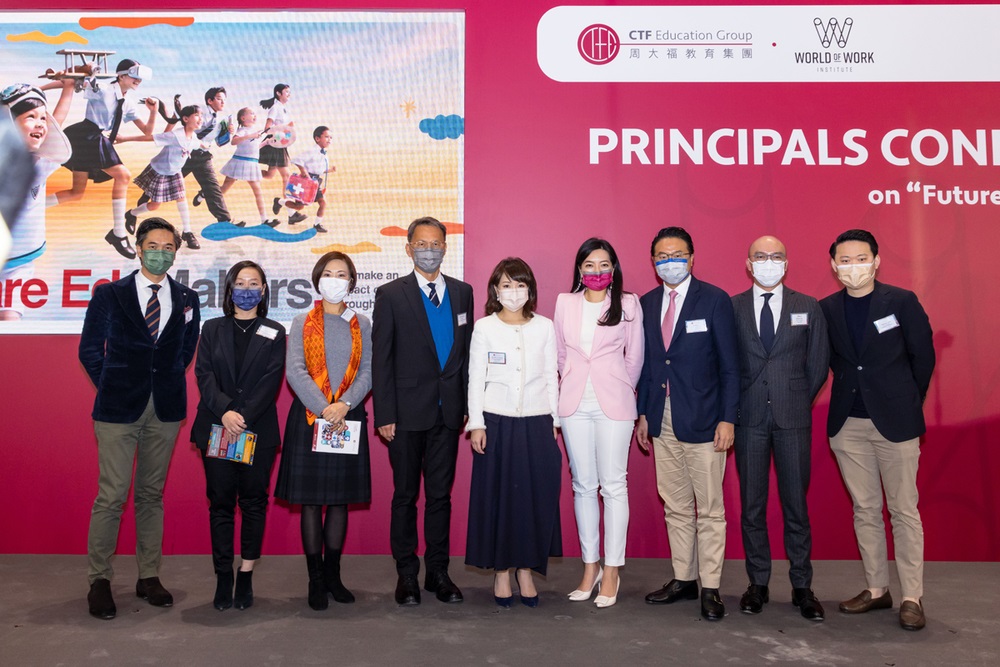
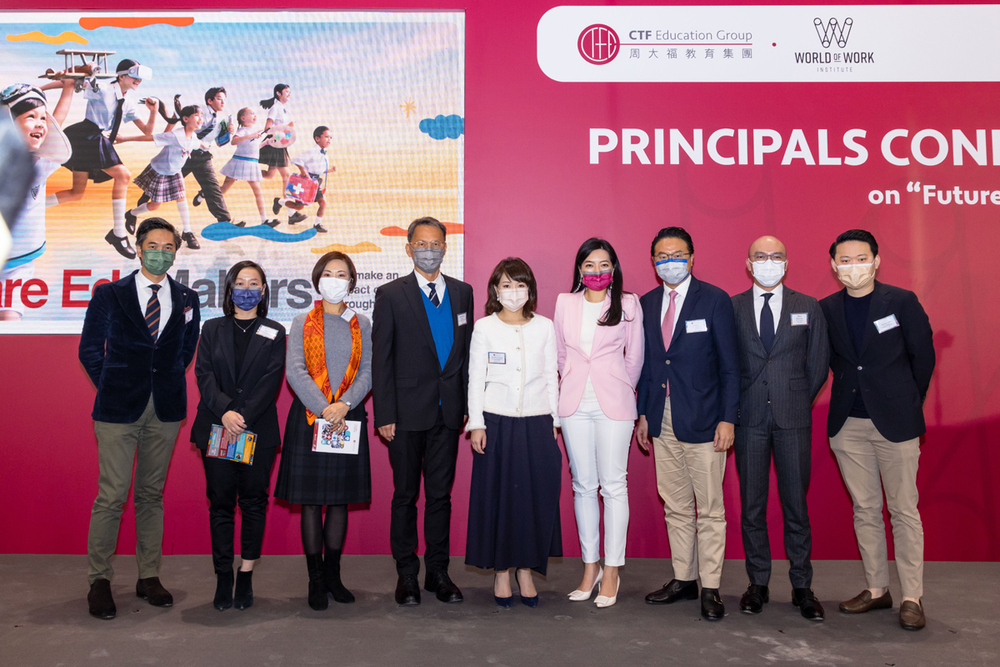
Uniquely positioned as a bridge between industry and education, CTF Education Group (CTFEG) announced the launch of the WOW (“World of Work”) Institute at the inaugural “Future World of Work” Principals Conference on December 2.
Fueled by innovation, cooperation, and technology, the future of work is changing at an unprecedented scale and speed, with possibilities that are previously unimaginable emerging. At the heart of changes to the workforce and the workplace, companies across different industries are on the lookout for enterprising talents brimming with fresh ideas, along with the knowledge and competencies that can realize the novel concepts.
On a mission to empower the younger generation to be future-ready, CTFEG, in collaboration with New World Group (NWG), has founded WOW Institute in a major drive to gather a myriad of resources and stakeholders for greater synergy, efficiency and opportunities.
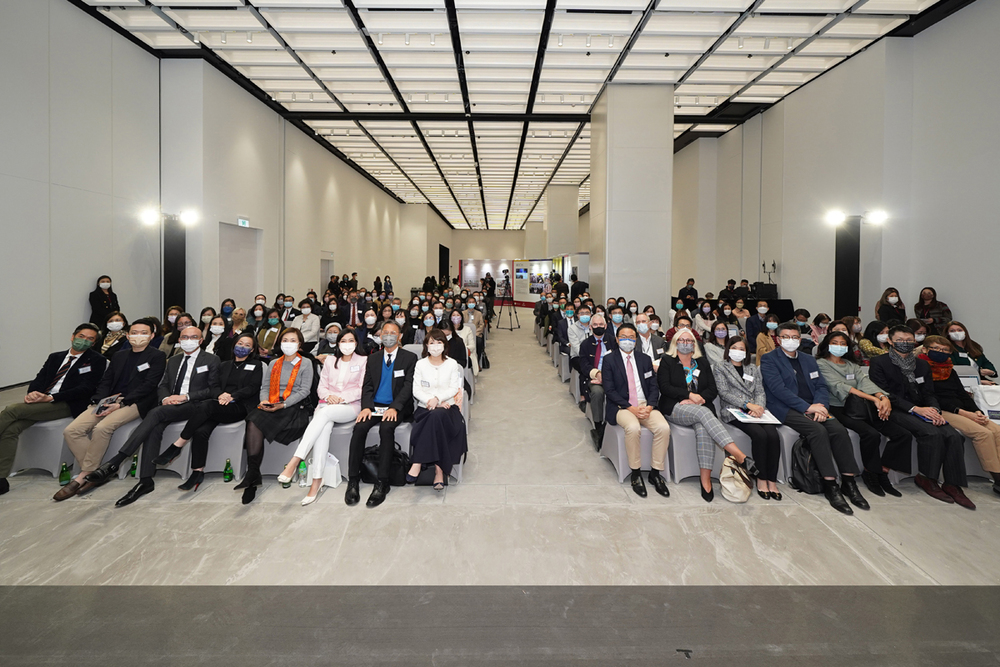
The creation of the synergetic education initiative was kick-started by the inaugural ‘Future World of Work’ Principals Conference, which was attended by more than 130 principals and educators from local and international schools, as well as industry leaders and practitioners, to share their latest insights on working in a post-Covid world.
Synergy for K-12 education
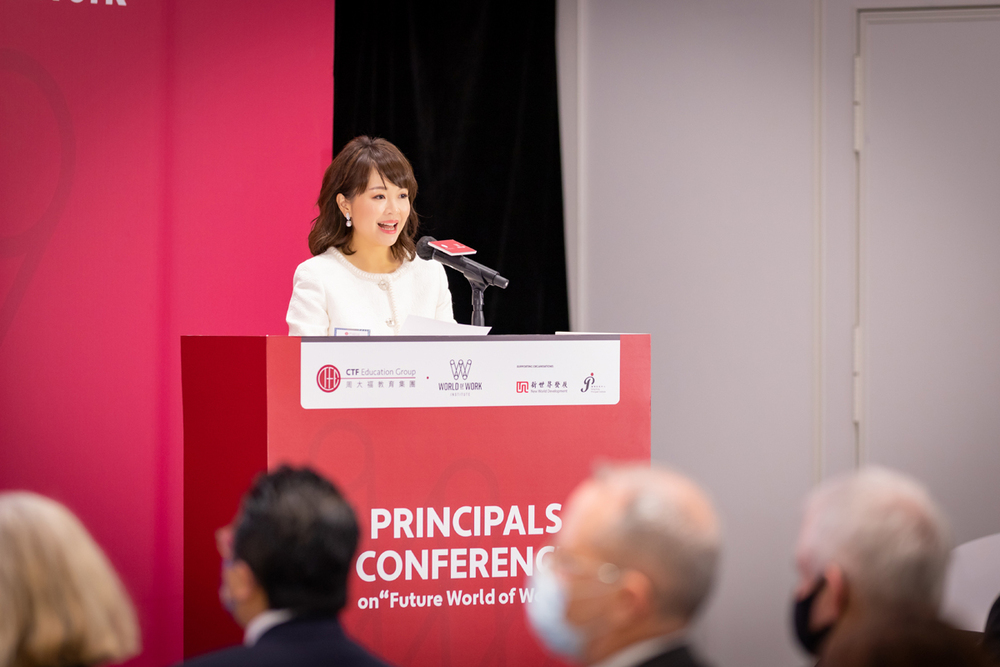
In her opening remarks, Jennifer Yu Cheng, Deputy Vice Chairwoman and Group President of CTFEG, acknowledged the critical role that K-12 education plays as a strong pipeline to the community in the whole-person development of students, as it is the golden period to nurture and foster the mindsets, skills, and learning approaches that are essential to success.
“Within the NWG ecosystem spanning across over 17 major industries, the Group is co-curating a better, more hospitable world with the public and different stakeholders to create shared value (CSV),” she added.
“While traditional industries are shedding their old skins to stay competitive and startups are mushrooming to cater to new market needs, K-12 education requires urgent transformation to keep up with trends in a post-Covid world,” she stressed. “It’s important that we make K-12 education relevant to the workplace, and that calls on everyone on board, from educators to parents and school leadership.”
Looking forward to the education sector and the wider community engaging in CTFEG’s initiatives, inspiring dialogue, and driving extensive change for the benefit of students and the society of Hong Kong, Cheng hoped that the conference would be an exciting start of an impactful conversation on innovating life planning education.
In his opening address, Dr. John Tan, Immediate Past Chairman of the Hong Kong Principals’ Institute, underscored the need for principals and teachers to incorporate real-world experience from industry experts in life planning education.
The conference on the future world of work enhances connection between industries and educators, as the sharing of experienced professionals from leading industries under NWG is a convincing statement for the education sector, Dr. Tan noted. “It helps us better link the actual future-ready competencies to our school curriculum, and make what we teach in life planning and exploration actually relevant to the real-world trends.”
WOW Institute set sail
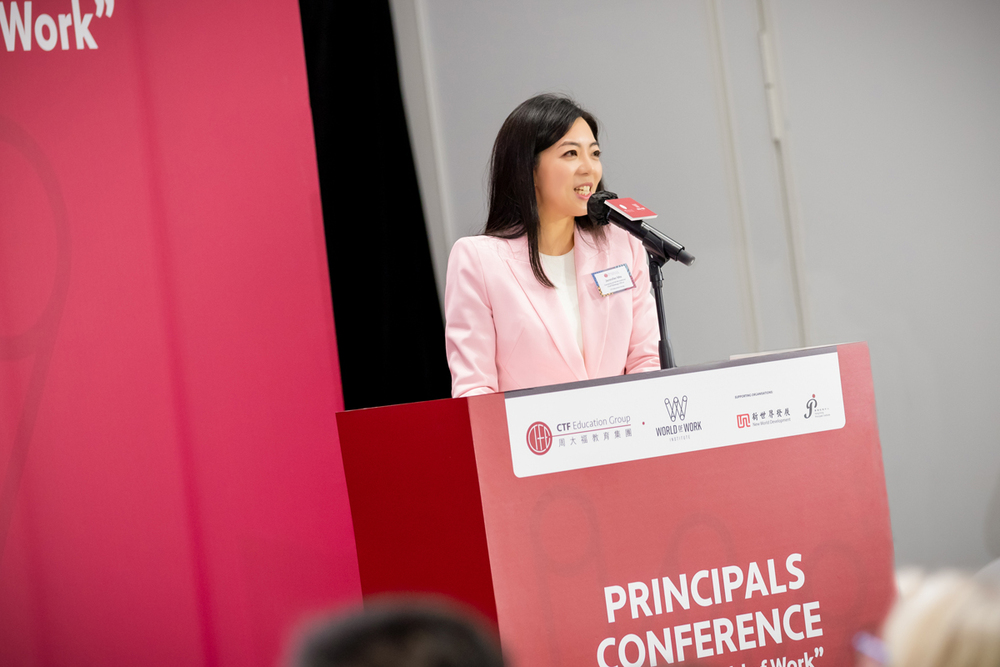
Through its “EduMaker” ethos, CTFEG is leveraging its education expertise within the NWG ecosystem to mobilize synergy at a unique position. Jennifer Ma, Chief Strategy Officer of CTFEG and Convenor of WOW Institute, envisaged in her presentation of WOW Institute’s framework, that no one would be excluded from needing to adapt and acquire new knowledge, competencies and mindset to succeed in the world, today and tomorrow.
While competencies and attitudes are transferable in all contexts and critical for long-term success, she seeks to address the question of “how to mobilize industries and education to synergize on talent development and innovate current practices to make K-12 education relevant to the future world” with the answer from WOW Institute.
Over the next two years, WOW Institute will deliver four programs: Leadership Exchange and Corporate Visits, Think Tank Research, Networking Mentorship, and Curated Apprenticeships, bringing together industry professionals, school leadership, researchers, faculty members, and students.
Beyond enjoying the behind-the-scenes look at company operation, industry professionals and educators can exchange ideas and insights in corporate visits to inspire curriculum innovations. In education research, industry professionals, academic researchers and faculty members will be invited to review theories and research findings to reinvent pedagogies and narrow the gap between academic studies and real-world applications. Targeting the student population, mentorships will be fostered to construct an organic mentor-mentee community, while apprenticeships will be on-the-job learning co-designed between educators and industry practitioners to ensure meaningful experiences for both students and corporates.
On the future world of work
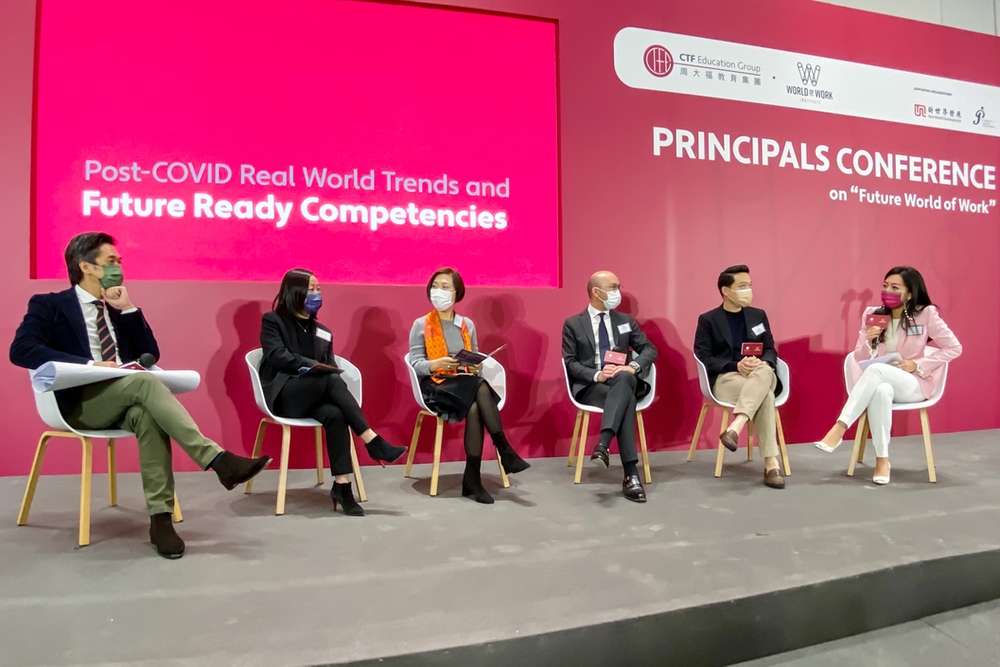
The conference featured a panel discussion on “Post-Covid Real-World Trends and Future-Ready Competencies”, moderated by Ma, with industry professionals and members of NWG management on the panel: Jenny Chiu, Executive Director and Senior Director of Human Resources of New World Development Company Limited; Gilbert Ho, Executive Director of NWS Holdings Limited; Edwin Chan, Senior Project Director of New World Development Company Limited; Horace Lam, Vice President, Strategic Development of K11 Concepts Limited; and Maggie Chau, Councilor of Hong Kong Principals’ Institute and Principal of St. Stephen’s Girls’ College.
On the fast-changing trends in the workplace, Chan observes that digitalization in the building sector is prevalent from planning to building systems. “In the old days we carried blueprints around the construction site, but now just a tap on the tablet by our younger colleagues already does the job.”
While Ho does not doubt the digital literacy of Generation Z, he reckons that they lack the communication skills which are fundamental to collaboration at work. His view is echoed by Chau who expresses concerns on the overindulgence in mobile devices, as it might affect the digital natives developing the social-emotional skills required to negotiate and compromise in real-world scenarios.
In a human resources perspective, an entrepreneurial mentality is what Chiu is looking for in talent acquisition for NWG, on top of strong academic background. “Curiosity and the ability to ideate and self-learn are essential to seizing opportunities.”
With work getting more sophisticated, there is an increasing demand for matrix organizational structure in corporations. “Teammates have to communicate with multiple leaderships specialized in different verticals in a project, so it actually takes them to understand how to work across the organization and others’ priorities,” says Lam. “It’s equally important for current leaders to understand Gen Z’s mindset, since the definition of success is different for us and for the future generation, who are looking for a purpose, a meaning in their work.”
To “make things happen”, Chan expresses that maintaining a multi-perspective thinking and a burning passion is crucial to uncover new potentials for the up-and-coming generation. “Take a step back and you can see more possibilities to contribute to the public well-being as we did in creating the world’s first inverted greenery installation at K11 ATELIER.”
Besides learning, Chau points out that the ability to “relearn and unlearn” is pivotal to lifelong learning. “As frontline educators, we place emphasis on cultivating students with a positive mindset and a growth mindset. Working with others, do they respect different perspectives? Could they agree to disagree? These are vital in everyday life.”
On a final note, Lam emphasizes that resilience and grit are what he wants to see in fresh graduates. “The courage to explore new things and risk failure, as well as a positive mindset to rebound afterwards are becoming quintessential in the workplace as we are all operating under a high level of uncertainties.”
While various new roles in sustainability and cultural retail are available, Ho says that NWG is looking for young talents to help them identify challenges and solutions. Lastly, Chau points out that students need real-life experience to understand the world of work, while exposure for teachers is needed as well to share their observations on different professions with students back in school.
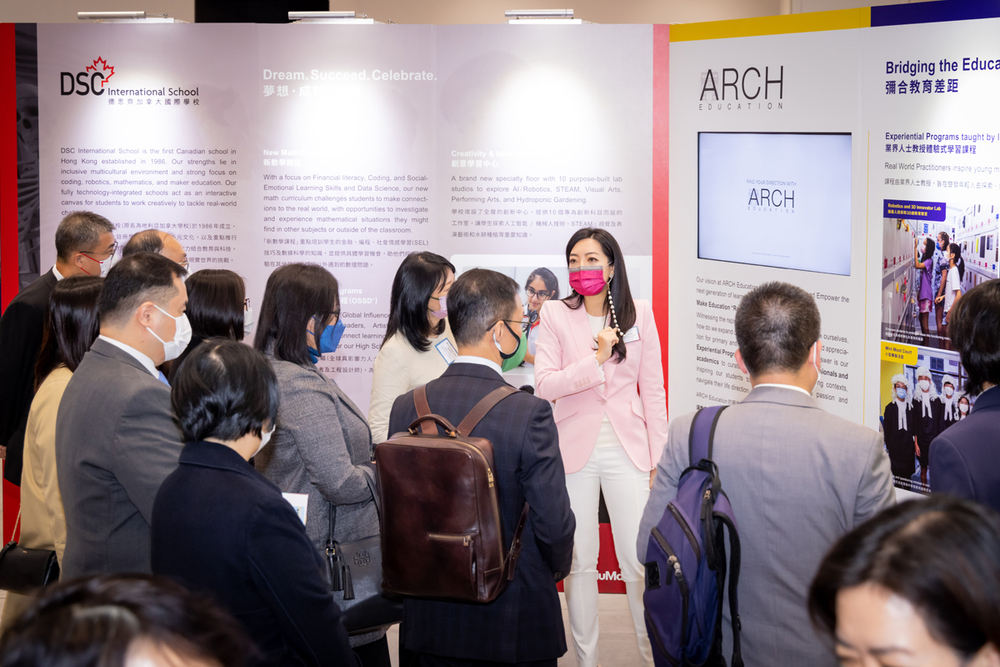
Guests took part in guided tours of a special exhibition on CTFEG’s education focus and NWG’s ‘Evolution of Industries’, where real-world insights into such topics as cultural retail, social innovation, wellness and healthcare, multi-complex development, and experiential K-12 learning are showcased.
Info:
Website: www.ctfeducation.com
Facebook: CTF Education Group
Instagram: ctfeducation