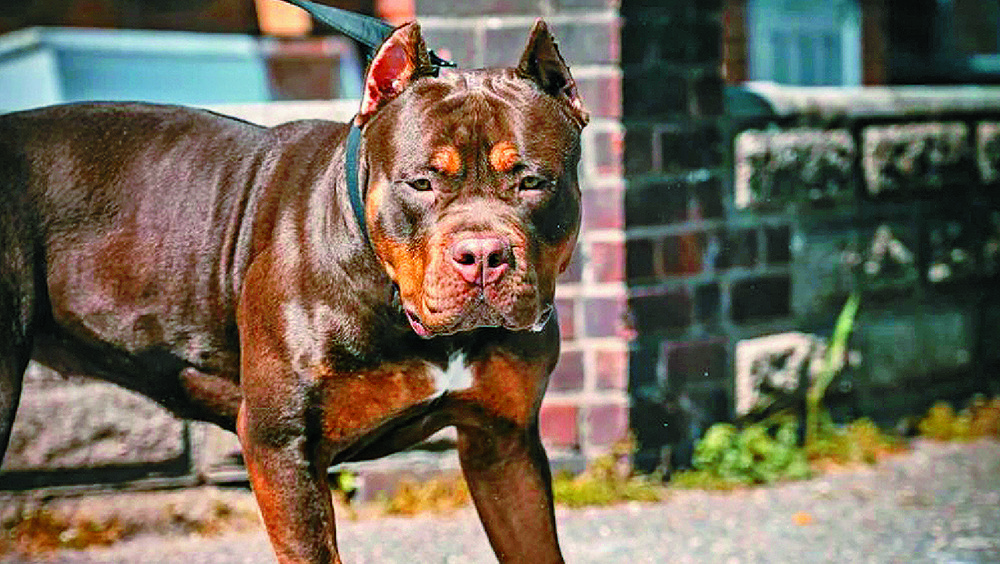
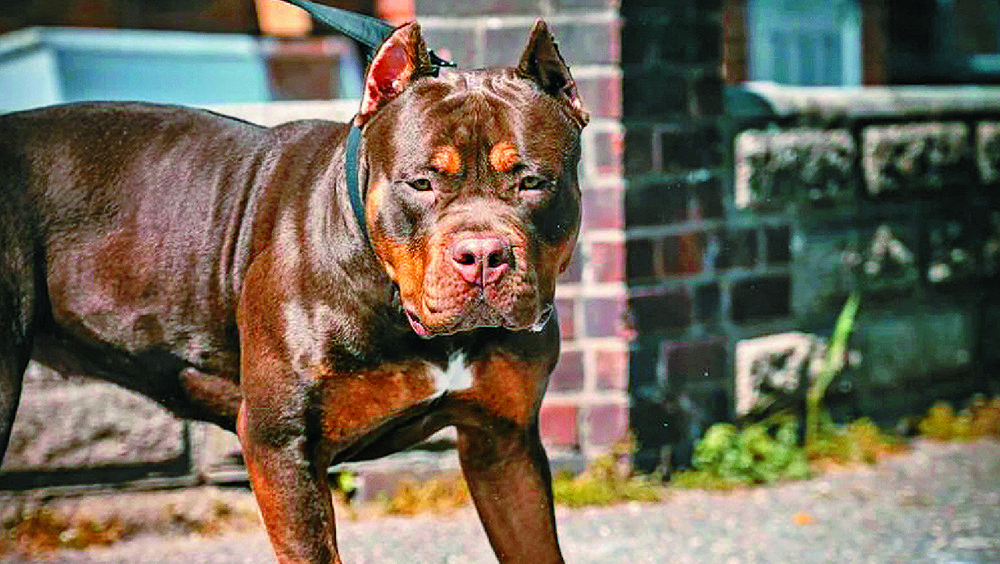
The government is facing calls to crack down on the backyard breeders of XL bully dogs, and even to cull the breed, following a string of horrifying attacks.
Prime Minister Rishi Sunak has pledged to ban the dogs but stopped short of saying they should be euthanized.
The dogs, which have huge, powerful jaws and can weigh over 60 kilos, have risen in popularity since the Covid lockdowns, which saw dog ownership rise.
"These dogs would appear to be valued by some as status symbols prized for their aggressive temperament. We will not tolerate this any longer," environment minister Therese Coffey said.
That followed a viral clip of an out-of-control XL bully biting an 11-year-old girl, leaving her traumatized and in need of hospital treatment.
The rampaging dog then chases and attacks one of the men who had gone to her aid in Birmingham.
Under Sunak's plan, owners will have to register their dogs and muzzle them in public places.
They will also be required to neuter them so that the dog type dies out within a decade.
Conservative party lawmaker Robert Goodwill has said the government should be considering faster action, including a "general cull." Others are calling for a crackdown on unscrupulous breeders.
Since the Birmingham attack on September 9, there have reportedly been at least four more attacks -- two of them fatal and another involving a toddler.
Lawrence Newport, a researcher at Royal Holloway University of London who has spearheaded efforts to get the dogs banned, says they are uniquely aggressive due to their breeding history.
"These are fighting dogs, originally bred from fighting stock," he said.
XL bully type dogs were now responsible for 70 percent of dog attacks in the UK even though they only made up 1 percent of all dogs, he said.
If attacks were caused by bad owners, rather than something inherently dangerous about the dog type, there would be more attacks involving other big breeds, he argued.
Others, however, said fixating on one dog type would not solve the problem of underground breeders who would simply move on to other dangerous breeds.
"As soon as something becomes popular, the wrong people get involved and all this cross-breeding and inbreeding starts to create problems," dog safety campaigner Mark Riley said.
"It's happening with other breeds as well so it's not just the XL bully. We've heard stories of people crossing rottweilers with other dogs. They're the kind of people that need dealing with."
Riley's group supports people who have had their dogs seized by police under the Dangerous Dogs Act and advocates responsible ownership programs and licenses for dog owners.
Under the law, introduced in 1991, it is illegal to own four types of dog without an exemption, including pit bull terriers and Japanese tosas. Breeding the dogs is also banned.
An XL bully owner said he accepted the dogs looked "pretty big and intimidating" but stressed that "any dog can turn violent" if not handled correctly.
According to the Bullywatch website, XL bully, bully type or crossbreed dogs now accounted for the majority of UK dog attacks. The group said it believed there had been 11 confirmed deaths since 2021 and three more suspected deaths.
The general rise in dog attack fatalities "can be explained directly" by the introduction in recent years of XL bully type dogs, it said.
The mother of a 10-year-old boy who was killed by an XL bully named "The Beast" nearly two years ago has criticized the government for being slow to act. Emma Whitfield's son Jack Lis is one of several children killed by the dogs.
While she has said she is relieved by the ban, she is also urging the government to tackle the source of the problem once and for all.
"Banning the dog at the moment will help ... but if backyard breeders still exist, they are going to create a new breed and we could find ourselves in a few years in the same place," she said.
The government is slow to act despite a pledge to ban XL bully dogs following a string of horrifying attacks, according to critics.