Developers are grabbing at opportunities to convert industrial building sites in Kwun Tong into commercial ones, with government planners working hard to turn Kowloon East into a new business district.
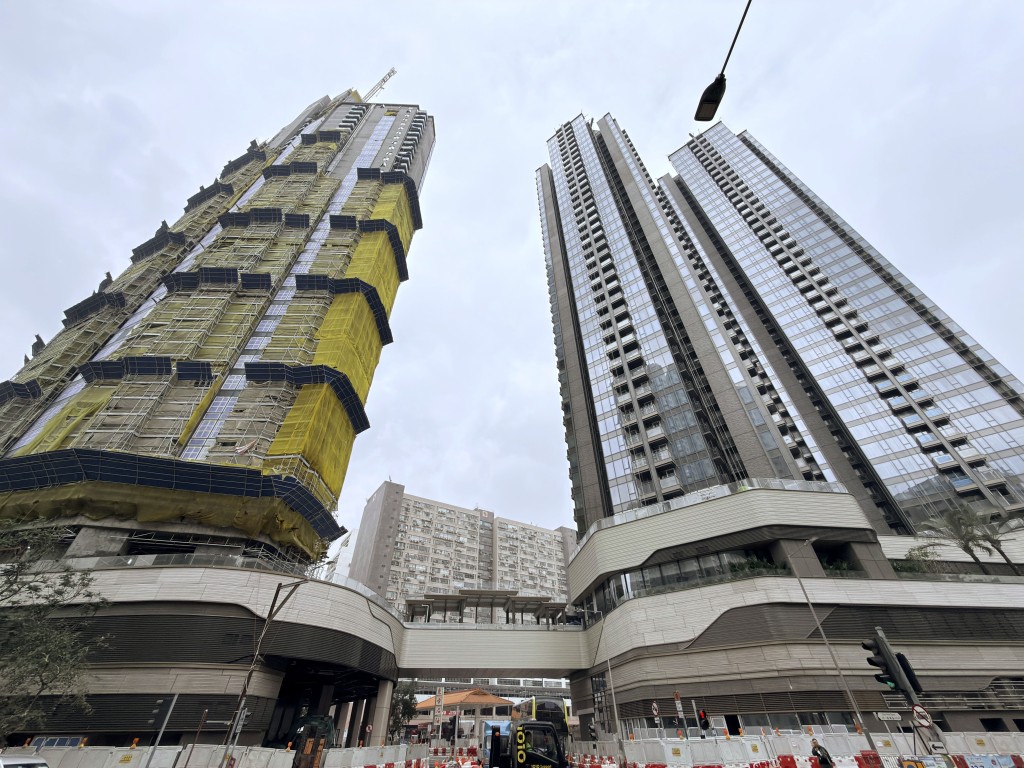
At least 14 sites in Kwun Tong totaling around 5.66 million square feet have been approved for conversion into offices and hotels, including projects submitted by the Urban Renewal Authority.
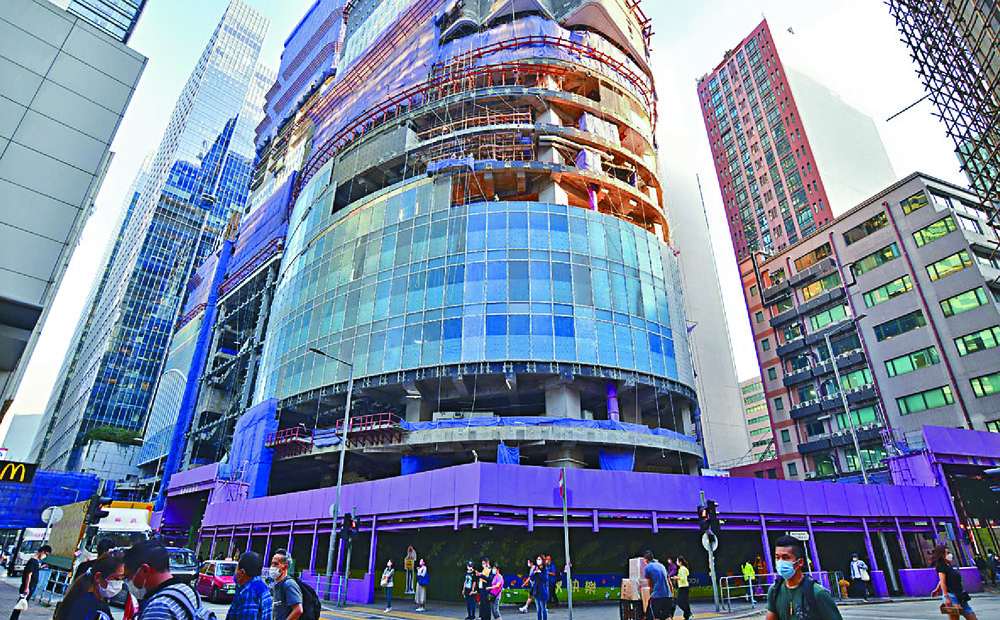
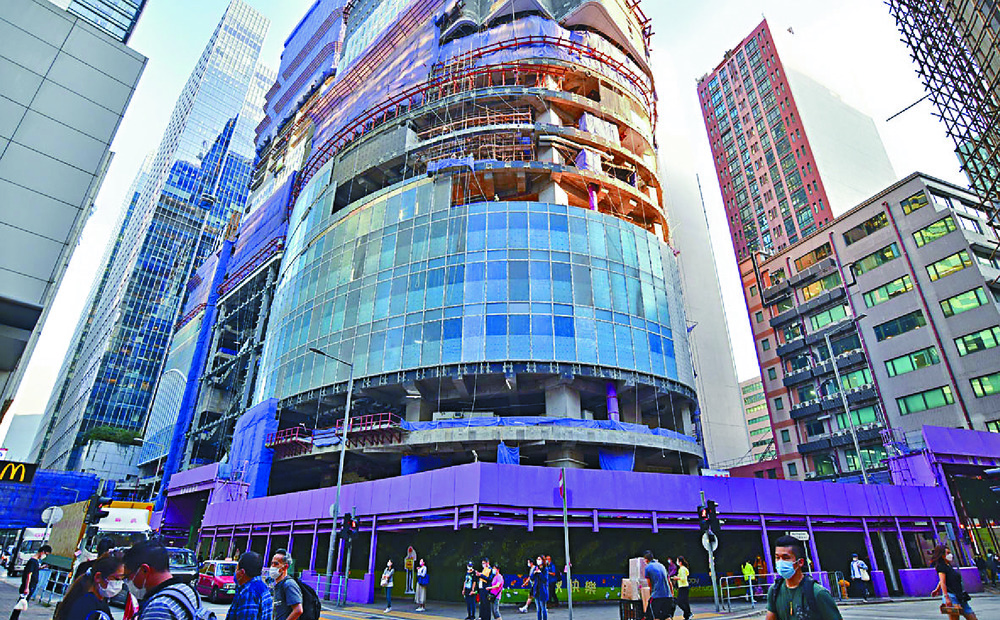
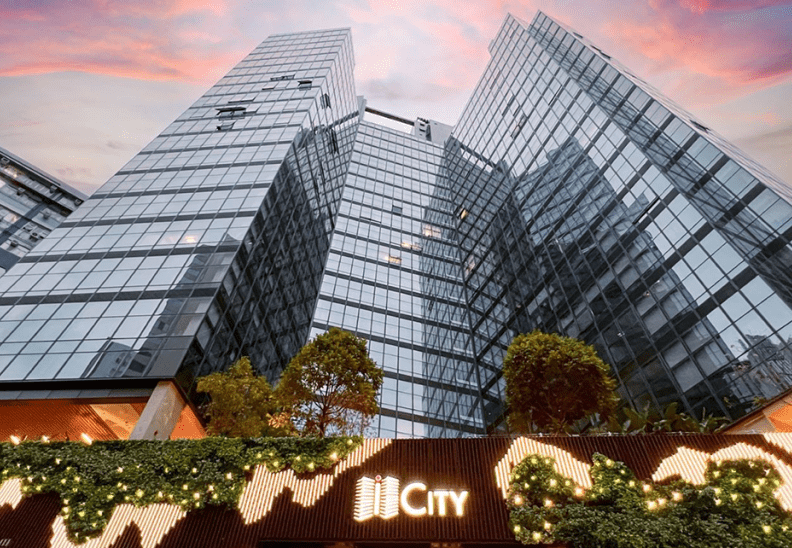
Approval by the Town Planning Board has been secured by Sun Hung Kai Properties for the construction at 98 How Ming Street - the largest private project in Kwun Tong.
It will be developed into integrated complexes with a gross floor area of about 1.15 million sq ft, including two grade-A office skyscrapers totaling 650,000 sq ft, according to the developer's annual report.
And a 500,000-sq-ft, 10-story shopping mall in the project is set to open in 2024.
Another project next to Crocodile Centre and APM Mall, which ranks second in size, is owned by Yeung Kin-man, founder of Biel Crystal Manufactory that recently sought permission to increase the plot ratio by 20 percent.
The site, which combines two phases of the Yip Fat Factory Building and the Good Year Industrial Building, will be redeveloped into a 39-story commercial building with a gross floor area of 720,000 sq ft.
Qi Feng Capital also intends to redevelop Wong's Building at 33 Hung To Road.
As noted by Billy Hung Ying-wai, the company's founding partner, remarkable changes are taking place in Kwun Tong.
He points to the massive redevelopment project being undertaken by Sun Hung Kai becoming a new attraction and drawing a greater number of people to the area.
But Hung also warns that East Kowloon's high vacancy rate and a glut of office space there could keep down rent levels.
In recent months the vacancy rate in East Kowloon reached 13 percent, the highest among Hong Kong's regions over the last five years. Moreover, the average rent in the prime district was over HK$100 per sq ft whereas the rent in Kwun Tong was at most HK$30 per sq ft. He suggests that landlords should tempt more corporate operations to relocate to more cost-effective locations.
Kwun Tong, as an old industrial district, also suffers from severe traffic congestion, particularly during peak hours. Vehicles block traffic lanes, including Hoi Yuen Road, in order to load and unload goods.
Hung believes, however, that the problem will be alleviated in the course of revamping the old industrial sites and buildings.
According to Vincent Cheung Kiu-cho, managing director of Vincorn Consulting and Appraisal, the connectivity of East Kowloon, which includes the Kai Tak development area and Kwun Tong, will be enhanced by building a linkage system.
He believes that by improving transportation and infrastructure the district will be able to attract tenants from the financial sector and even multinational corporations.
Some experts believe also that more owners will approach the Lands Department for lease modifications after the recent policy address by the chief executive announced a three-year extension of the revitalization scheme for industrial buildings.
Aside from commercial projects, some industrial building sites in Kwun Tong have been rezoned to create hospitality facilities.
There is a proposal for the Tak Shun Industrial Building on Wai Yip Street to become a site for a hotel along with sports and culture facilities, including art and recording studios.
The site will be redeveloped into a 13-story building with a gross floor area of 60,710 sq ft and 89 hotel rooms.
Sun Hung Kai is redeveloping the former Kowloon Motor Bus Depot at 98 How Ming Street into integrated complexes. Sing Tao