Hongkong Land and insurance broker and risk advisor Marsh reported on Friday the resilience measures of Westbund Central in Shanghai can cut expected rainfall-flood losses by 88 percent and storm-surge losses by 84 percent under today's conditions.
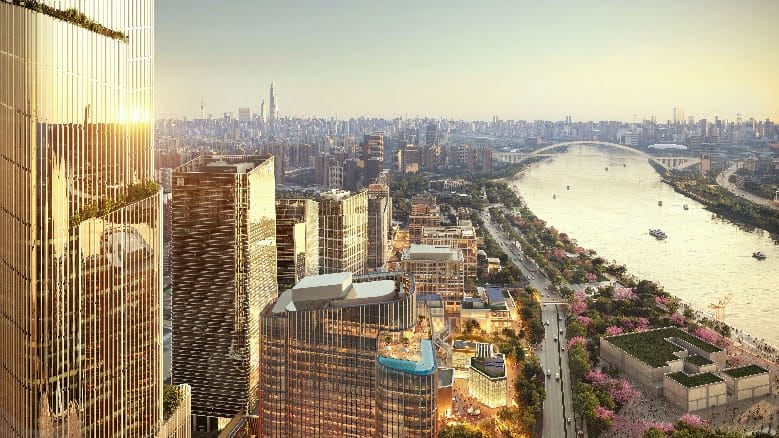
The case study is Westbund Central, Hongkong Land's mixed-use waterfront development of around 1.7 million square meters on Shanghai's Huangpu River, the largest commercial project underway in Asia, opening in phases with completion expected in 2030.
It shows a method the industry can use to put a financial value on designing buildings for a changing climate. Without the development’s enhanced resilience measures, expected storm-surge losses would more than double and wind losses would more than triple by 2050, according to the report.
The development’s resilience design includes 23 percent higher drainage capacity for 1-in-100-year rainfall protection, Grade one waterproof basements with raised critical equipment and a Sponge City network of over 12 stormwater facilities with over 2,000 cubic meters storage capacity.
Separately, extreme heat, the fastest-growing hazard at this location, is addressed qualitatively through the design and operational measures rather than quantified figures, as its financial impact is driven primarily by operational and commercial effects, the report said.
Michael Smith, chief executive of Hongkong Land, said, "Climate change is a significant force reshaping real estate. At Westbund Central, climate resilience is core to all that we do because we believe resilience and commercial performance reinforce each other."
Frank Feng