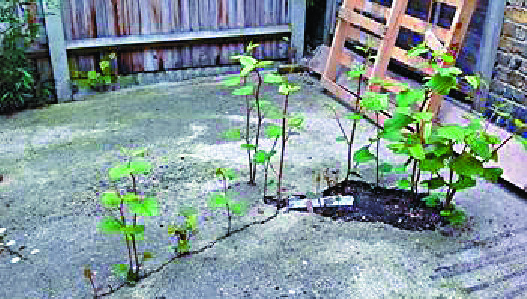
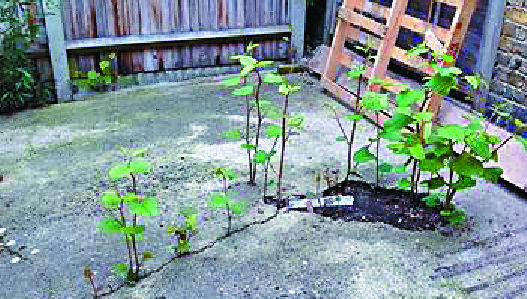
The price of a property could fall 10 percent if Japanese knotweed is found in the backyard, according to the Daily Mail.
Due to the humid and warm spring weather in Britain this year, knotweed has grown faster and stronger, resulting in a greater threat to building foundations.
Once knotweed appears in the backyard of a home, the price of the property could drop by 10 percent, and banks will refuse to approve mortgage loans, putting potential buyers off.
Japanese knotweed was introduced to Europe from Japan in the 19th century as an ornamental plant. As it grows in a volcanic area with harsh conditions, it has strong rooting abilities and strong vitality.
The roots can penetrate concrete and grow up to three meters underground.
It can also penetrate the walls and floors of residences, causing water seepage.
In the UK, it is not illegal for residents to grow knotweed at home
But if it affects neighbors, the local council can order owners to solve the problem at their own expense.
A professional weeding company is needed for the removal of Japanese knotweed. Doing this can cost as much as 20,000 (HK$215,000), and chemical liquid treatment can cost 5,000 at the very least.
Serious cases may require five years of chemical treatment.
The British government since 2013 has required owners to fill out a property transfer document called a TA6 before selling their homes. On this document, owners must disclose whether there is Japanese knotweed on the property.
In addition, financial institutions may require the owner to completely remove knotweed from the property before granting loans. If a false report is found to have been made on the TA6 form, the owner can be prosecuted.
Potential homebuyers are advised to hire a plant expert to check for Japanese knotweed.