Aviation connects people globally and is fundamental to the world economy.
It contributes over 63 million jobs and US$2.7 trillion (HK$21.06 trillion) in GDP, comparable to the UK's economic size and population, according to the 2019 Aviation Benefits Report by the Industry High Level Group.
Likewise, it is responsible for around
3 percent of emissions according to the Global Carbon Project by University of Exeter professor Corinne Le Quere.
As one of the major emitters of greenhouse gases, the sector's efforts are crucial in order to meet Paris Agreement goals. Multi-stakeholder cooperation is needed if it is to achieve net-zero emissions by 2050.
This week I want to look at three possible approaches on sustainable aviation to achieve stable and resilient growth in the sector with minimal environmental impact.
The first is improving system efficiency.
To achieve this aim, several emission reduction measures will need to be put in place, such as the accelerated adoption of new, innovative aircraft technologies and streamlined flight operations.
Using innovative financing and tech can quickly fund the necessary transformation and motivate implementation of existing solutions through the "triple As": aircraft, airspace and air pilots.
For example, the two advanced engine choices for Airbus A321neo - LEAP-1A and PW1100G-JM geared turbofan - can improve operational efficiency through lesser fuel usage and maintenance savings.
China also has ambitious green plans for large passenger planes - compared with old similar models, its first self-developed single-aisle aircraft C919's emissions have been reduced by 15 percent, while the next generation C929's goal has been set at 60 percent, with green design philosophy to reduce weight, fuel and noise.
Best-in-class green operations are made possible by converting wide and narrow body crafts with the help of new materials and manufacturing processes, plus optimized route distance and load factor.
But this approach alone cannot achieve net zero emissions.
The industry also needs to consider risks, opportunities and cost effectiveness of future alternative bespoke fuel solutions.
The airline association IATA says using sustainable aviation fuel will contribute more than 80 percent to life-cycle reductions in emissions.
This SAF is made from plant or animal material, including, for example, waste oils from industrial food facilities. In future it may also be possible to make industrial-scale quantities of synthetic SAF using hydrogen obtained from low-emission sources and carbon dioxide taken from other industrial processes or the air.
Another advantage of using SAF is that it can blend with conventional jet fuel and be put in existing airplanes without a need for major design changes.
But depending on the technology used, SAF can be up to eight times more expensive than conventional jet fuels. It currently accounts for less than 0.1 percent of the 300 million tonnes of fuel used every year by commercial airlines.
Last, a complete zero emission energy revolution is required to crack the heart of the matter.
This seeks a catalyst for the revolution through finance and investment in the sector, sparking a broader energy revolution.
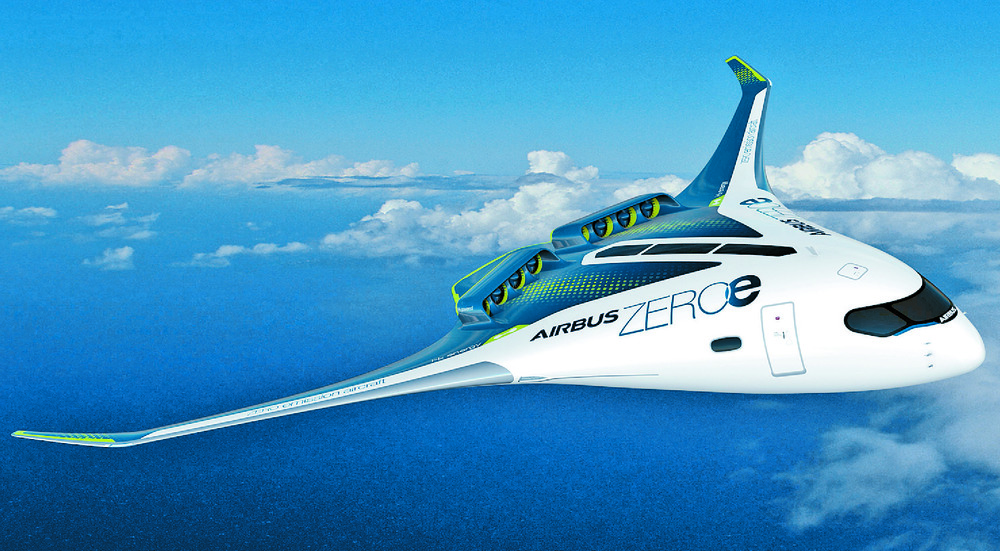
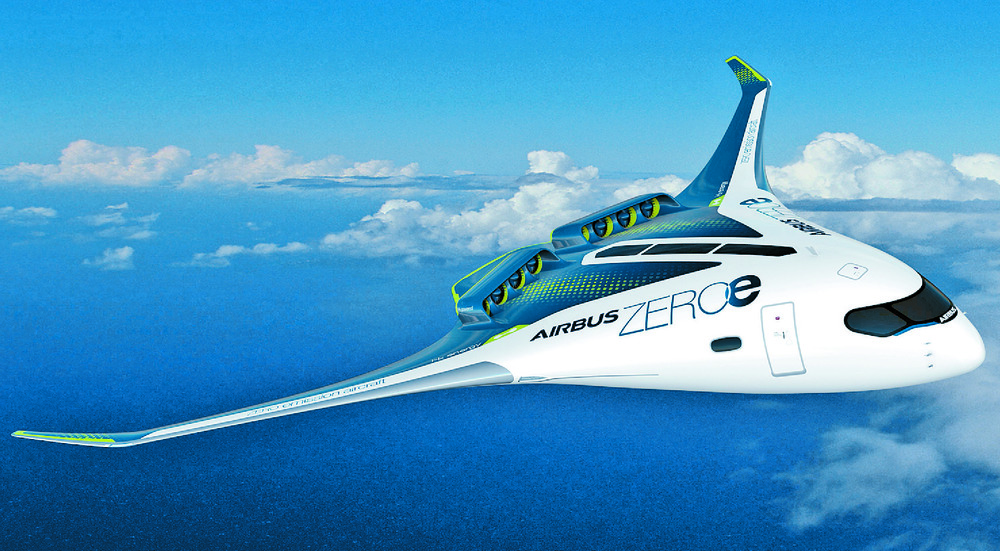
For example, low-emission technologies like electric and hydrogen-powered aircraft are being developed by major players like Airbus.
Hydrogen and battery-electric aircraft can make global aviation more efficient starting in the late 2030s and supply up to a third of the final energy demand in 2050.
The industry's net zero future is critically dependent on an energy revolution and commensurate institutional investment to meet an extreme shortage of "green" energy.
We need a joint effort by actors across the value chain of policymakers, financial institutions and industry leaders to make this mission possible.
Dr Jolly Wong is a policy fellow at the Centre for Science and Policy, University of Cambridge
Computer-generated images of three prototype zero-emission aircraft from Airbus that are envisaged to be powered by hydrogen fuel.