
Read More
Hong Kong boasts what is arguably one of the most evocative Mid-Autumn Festival atmospheres anywhere in the world. From illuminated waterfronts to the fragrant haze of burning incense wafting through historic neighborhoods, the city transforms into a living showcase of traditional celebration. Yet, despite this vibrant streetscape, the festival has rarely served as a peak tourism driver. Because Mid-Autumn is not a statutory public holiday across most international outbound markets, spontaneous long-haul travel remains constrained. This calendar asymmetry, however, should not obscure an immense commercial and cultural opportunity: with deliberate branding and experiential curation, Hong Kong can transform Mid-Autumn into an internationally recognized, iconic cultural-tourism product.
ADVERTISEMENT
SCROLL TO CONTINUE WITH CONTENT
Heritage and spatial dispersion
Realizing this vision requires upgrading existing flagship events from passive sightseeing into participatory cultural encounters. The Victoria Park Lantern Carnival remains the city's urban centerpiece, which can be enriched by organizing prestigious regional lantern design competitions that showcase emerging creative talent alongside master bamboo crafters.
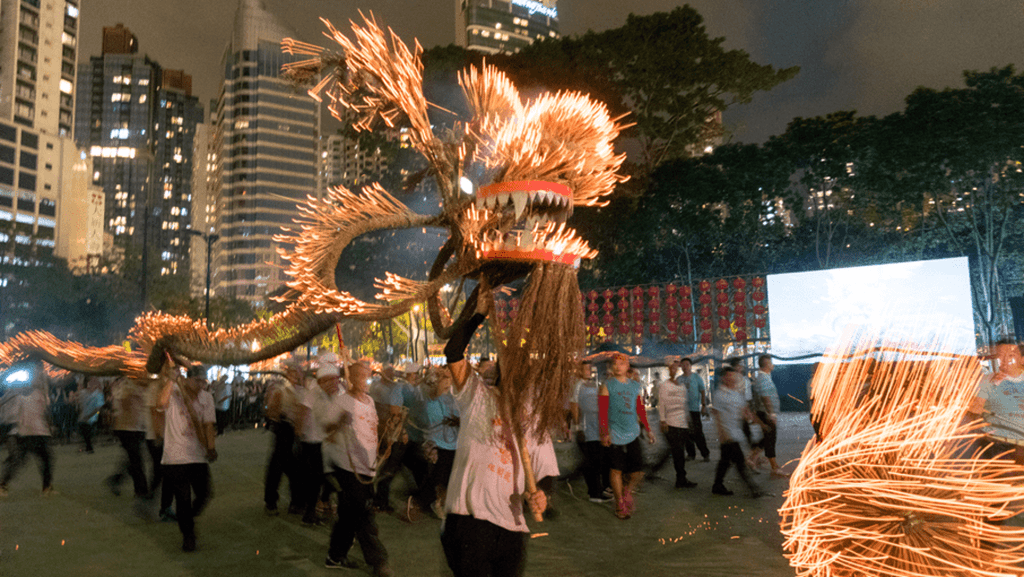
Alongside this folklore stands the kinetic spectacle of the Tai Hang Fire Dragon Dance. Originating in the late 19th century as a ritual to ward off a devastating plague, the performance sees hundreds of residents maneuver a 67-meter straw dragon studded with tens of thousands of burning incense sticks through dense neighborhood streets. To attract higher-yield cultural travelers, tourism authorities can formalize bilingual guided heritage walks, develop bespoke merchandise, and curate ambient night bazaars featuring traditional artisans and folk performances.
Furthermore, promotional strategies must decentralize beyond Causeway Bay. The parallel fire dragon ritual in Pokfulam Village, alongside the community-crafted lantern displays threading through the stilt houses of Tai O water village, offer deeply authentic narratives of Hong Kong's rural roots. Integrating these secondary gems into official itineraries disperses visitor footfall, revitalizes village heritage, and presents a richer, multi-layered urban-rural narrative.
Concurrently, tourism authorities should spotlight the romantic folklore intertwined with the festival: the birthday of Yue Lao, the deity of matchmaking, falls precisely on Mid-Autumn. Promoting romantic pilgrimages and red-thread rituals at sacred sites like Wong Tai Sin Temple adds an enchanting layer of cultural appeal for younger traveler demographics.
Night economy and cultural identity
No Mid-Autumn celebration is complete without its rich culinary heritage. While Hong Kong's mooncakes – from traditional lotus seed paste to pioneering snowy variations – enjoy worldwide acclaim, the city can convert retail sales into experiential tourism. Hands-on mooncake baking masterclasses, paired with tastings of seasonal delicacies like wok-tossed river snails, osmanthus cake, starfruit, and pomelos, turn dining into participatory cultural education. Concurrently, the private hospitality sector – including hotels, cocktail bars, and restaurants – can formulate festival-themed menus, artisanal cocktails, and festive staycations, catalyzing the nocturnal festival economy.
Ultimately, elevating the festival yields dividends far beyond tourism receipts. Commercial proceeds can be channeled directly into community-led conservation of intangible cultural heritage, ensuring centuries-old rituals remain viable. Crucially, celebrating these timeless customs reinforces local community solidarity and a profound sense of Chinese national identity. By projecting this atmospheric living tapestry onto the global stage, Hong Kong fulfills its role as an open cultural hub, showcasing the enduring beauty of Chinese traditional culture to the world.