Read More








The stalling of Washington's economic siege of Iran exposes a profound structural shift: Great powers can no longer unilaterally dictate regional conflict outcomes. Failing to force Iranian capitulation through conventional coercion, the United States escalated with Treasury Secretary Scott Bessent's "Operation Economic Outcast" – an "economic D-Day" targeting Tehran's financial lifelines through sweeping secondary sanctions on shipping, aviation, gold, and digital assets.
Yet this offensive has faltered. Crucially, Washington has failed to sever Iran's commercial lifelines: China continues to absorb Iranian crude through insulated rails, while resilient reexport and gray-market conduits across the United Arab Emirates and Turkey blunt the impact of secondary sanctions.
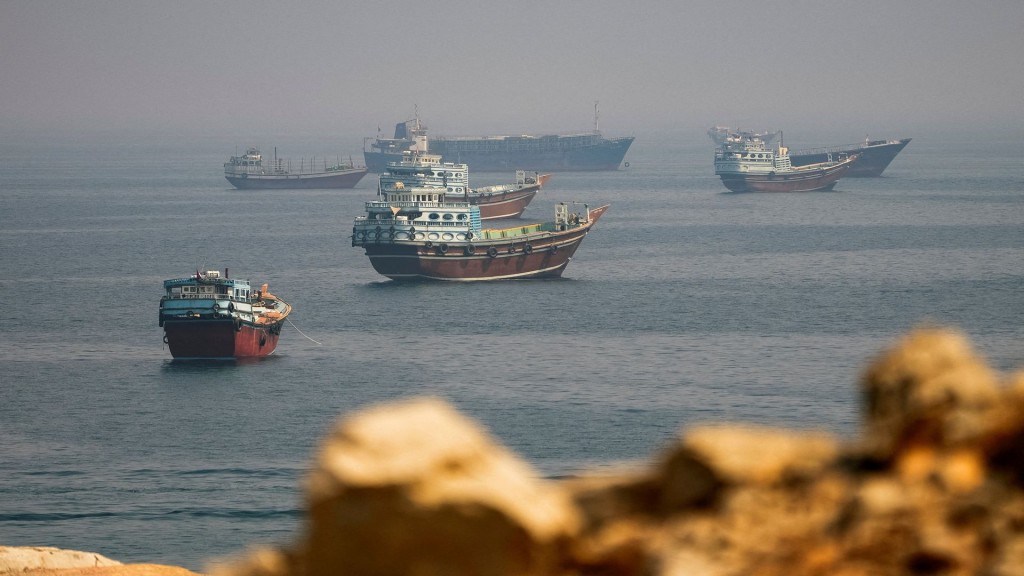
Coupled with Iranian pressure around the Strait of Hormuz, the Houthis' renewed offensive in Yemen and their control of the Bab al-Mandeb Strait have established an asymmetric "dual chokepoint." By weaponizing these maritime arteries, a decentralized actor has reversed the pressure onto the West, inflicting stagflationary shocks, surging freight rates, and soaring insurance premiums.
This impasse underscores the fragmentation of global power. Recognizing Washington's inability to pacify strategic waterways or shield Gulf states from Iranian missile and drone threats, regional heavyweights sought to construct a post-American security framework through the trilateral Mecca Joint Defense Agreement back in August.
Conceived to merge Saudi capital, Turkish defense technology, and Pakistani manpower, the pact was heralded as a new pillar of regional deterrence.
In practice, however, the Mecca pact has proven far more symbolic rhetoric than operational reality. When tested by the escalating Houthi offensive, neither Ankara nor Islamabad has proven willing to intervene militarily in Yemen. Constrained by domestic economic vulnerabilities and diverging national interests, both partners refuse to entangle their armed forces in an asymmetric quagmire on Riyadh's behalf.
The pact's paralysis illustrates that middle powers, like the superpower they sought to supplement, are ill-equipped to counter decentralized, asymmetric threats.
With Western coercion backfiring and regional pacts proving hollow, attention has naturally shifted to Beijing. As the world's leading exporter relying on the Persian Gulf for nearly half of its crude imports, China faces a dilemma: While it may benefit tactically from a crisis that consumes US military resources and exposes Western strategic exhaustion, it is directly exposed to surging shipping costs on European trade routes and the looming threat of Persian Gulf energy disruptions.
Yet while Beijing can leverage its commercial influence with Riyadh and Tehran to facilitate diplomatic dialogue, it possesses virtually no operational leverage over the Houthis, who operate with fierce ideological autonomy and pursue local objectives that external powers cannot dictate.
Furthermore, acutely aware of the imperial overstretch that trapped Washington, Beijing steadfastly avoids military entanglement or armed security guarantees. Consequently, China can only play an auxiliary, secondary role.
Ultimately, these developments signal that power has become irreversibly diffused. When inexpensive asymmetric technology allows local actors to neutralize superpower coercion, paralyze global shipping, and defy both Western hegemons and regional coalitions, the ability of great powers to unilaterally dictate outcomes has decisively eroded. In this fragmented landscape, multipolarity is no longer an aspirational concept, but a complex geopolitical reality.