Spain is renowned for its railways, with their railway design and construction – especially in high-speed rail – among the top in Europe, in equal ranking with France and Germany. Hence, it is an embarrassment for them to see three serious railway incidents in a week.
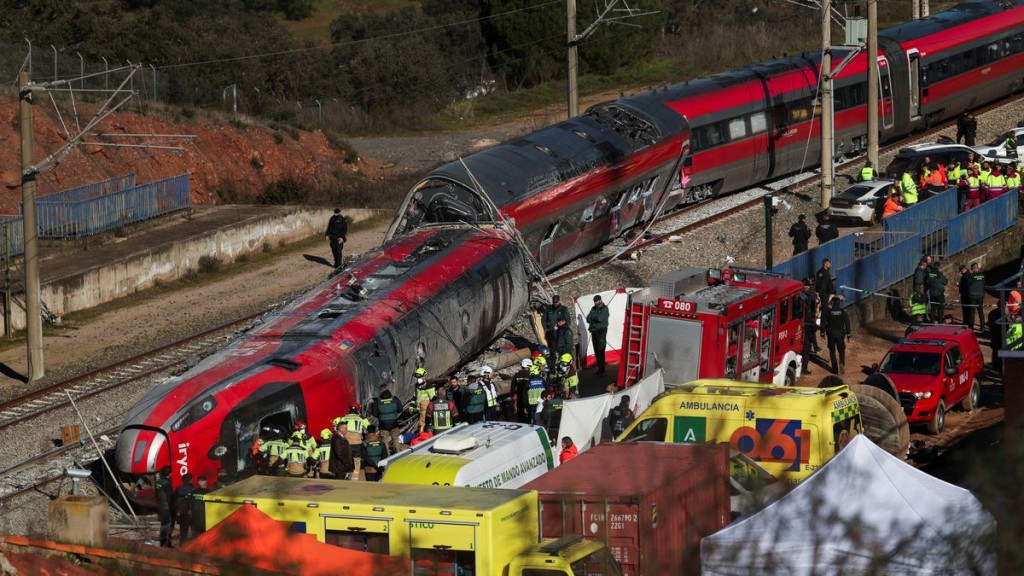
The first one involved a high-speed train suffering a derailment. It resulted in another train traveling on an adjacent track to hit it broadside and causing it to overturn, resulting in over 40 dead and over 100 injured.
Shockingly, within two days, another train smashed into a landslide and the train driver died.
A third incident involved a construction crane that dropped its jib onto a running train, breaking the train windows and lightly injuring some passengers. Fortunately, no one was seriously hurt.
The railway organization may argue that the landslide was a natural disaster and difficult to avoid, though I would suggest that they must have been lax in ensuring the integrity of the slopes adjacent to the railway alignment. The third incident can be classed as third-party damage, though the railway operator should keep an active watch to prevent construction work nearby from causing damage.
But they would find it difficult to defend the first incident which, based on information reported, was the result of a cracked rail.
For a railway system, the only contact between the train and the ground is the two rails. The rails not only support the weight of the train, but also guide it to run along them. Derailment is a serious incident and could cause serious injuries to passengers and must be avoided at all costs.
Railway tracks must be periodically checked to ensure there are no cracks nor loosening of fasteners. It is especially important for high-speed rail as the stresses are higher.
Modern maintenance procedures employ ultrasonic detectors to check rails for minor cracks so that they can be replaced before they propagate to large cracks, which could hinder safe operation of the trains. For cracks to develop from merely detectable ones to serious cracks that could affect operation, it normally takes a few weeks, if not months. One can therefore assume that there must be a weakness in the maintenance procedure that allowed cracks to grow to the point of breaking without being noticed by the maintenance team. The only other possibility would be faulty manufacturing of the rail, which caused it to become brittle and break suddenly. But again, rail manufacturing is a mature process, and the integrity of rails is monitored in production by sophisticated quality assurance processes and unlikely to escape inspection.
Public transport is a part of our lives and when passengers board trains to travel, they never know what fate lies in front of them. They can only rely on the professionalism and integrity of the railway organizations to provide safe travel but are completely helpless to avoid any disaster that they might face.
I hope this series of incidents can serve as a wakeup call to all railway operators, as we cannot afford to see any more repeats of such disasters.
Veteran engineer Edmund Leung Kwong-ho casts an expert eye over features of modern life