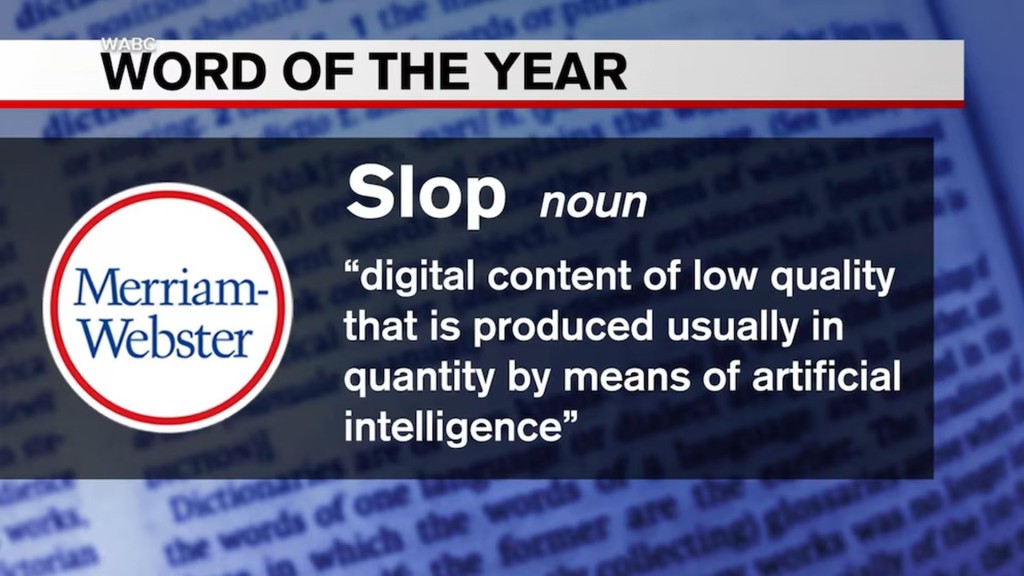
Merriam-Webster has named “slop” its 2025 Word of the Year, repurposing an old term for scraps and sludge into a modern label for mass-produced, low-quality digital content, often generated with AI. The word’s popularity tracks a growing public fatigue: feeds, search results, and even inboxes are increasingly padded with synthetic filler that looks convincing at first glance but delivers little value, originality, or accountability.
The issue is not AI’s ability to write or draw, but the scale of this content that turns mediocrity into pollution. “Slop” is the endless parade of near-identical “top 15” restaurant listicles, each with generic descriptions, stock photos, and no evidence of having been visited. It floods social platforms with bizarre, hyper-saturated AI images, like “the Pope DJ-ing,” “a lion made of noodles,” or “Hong Kong skyline in neon watercolor” – engineered to harvest shares rather than inform. Commerce suffers too, from product pages generated cheaply, with inconsistent specs, awkward translations, and reviews that read as if written by the same tireless, soulless intern.
What makes the dictionary’s pick notable is its reflection of shifting expectations, not merely a new meme. People have started searching for language to explain why their digital environments feel corrosive: an attention economy where “more” is rewarded even when “better” is absent.
If the last era of technology celebrated speed, the next one will prize proof, transparent sourcing, human responsibility, and systems that reward quality over volume.
Francis Fong is a Hong Kong IT and Telecom expert who frequently represents the industry in public discussions about innovation, digital transformation and technology policies