Gold prices recently surged past the psychological barrier of US$2,000 (HK$15,600) an ounce, and Chinese University of Hong Kong academic-cum-political commentator Ivan Choy Chi-keung sent me a message about this.
In it, he noted how seldom he writes about investment matters, and jokingly highlighted the fact that he was right on the mark.
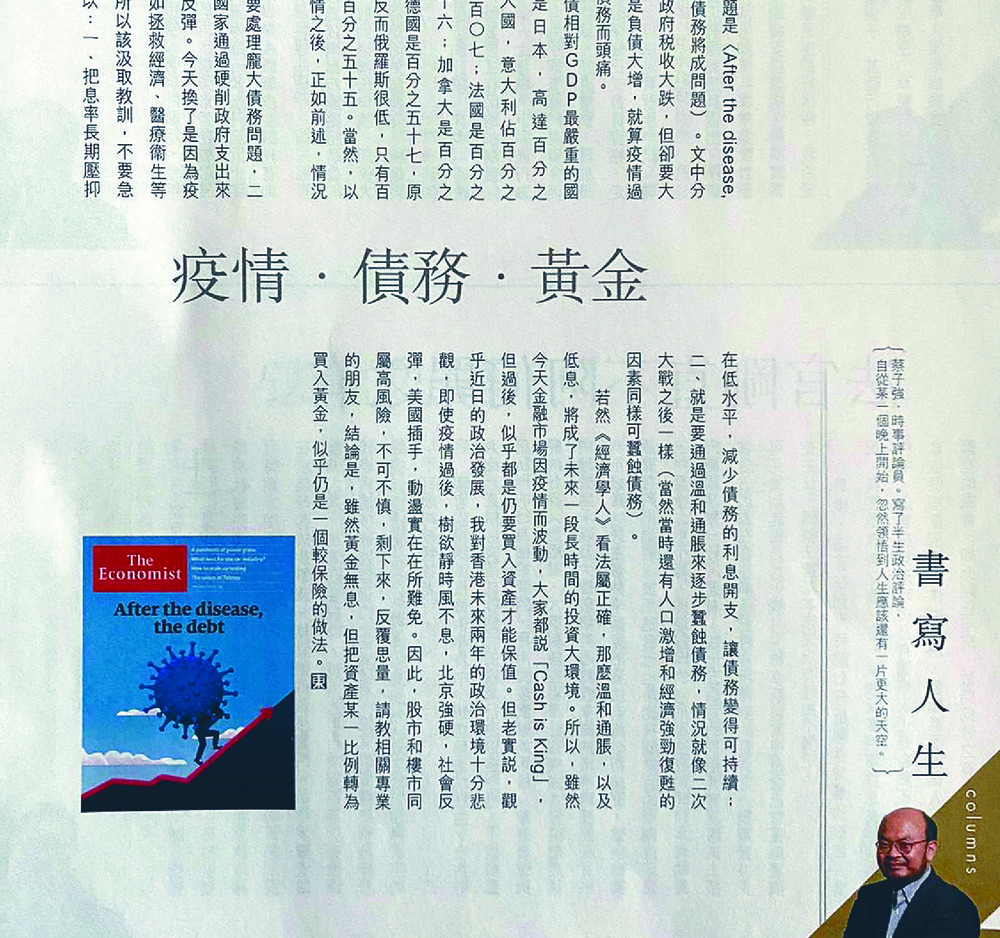
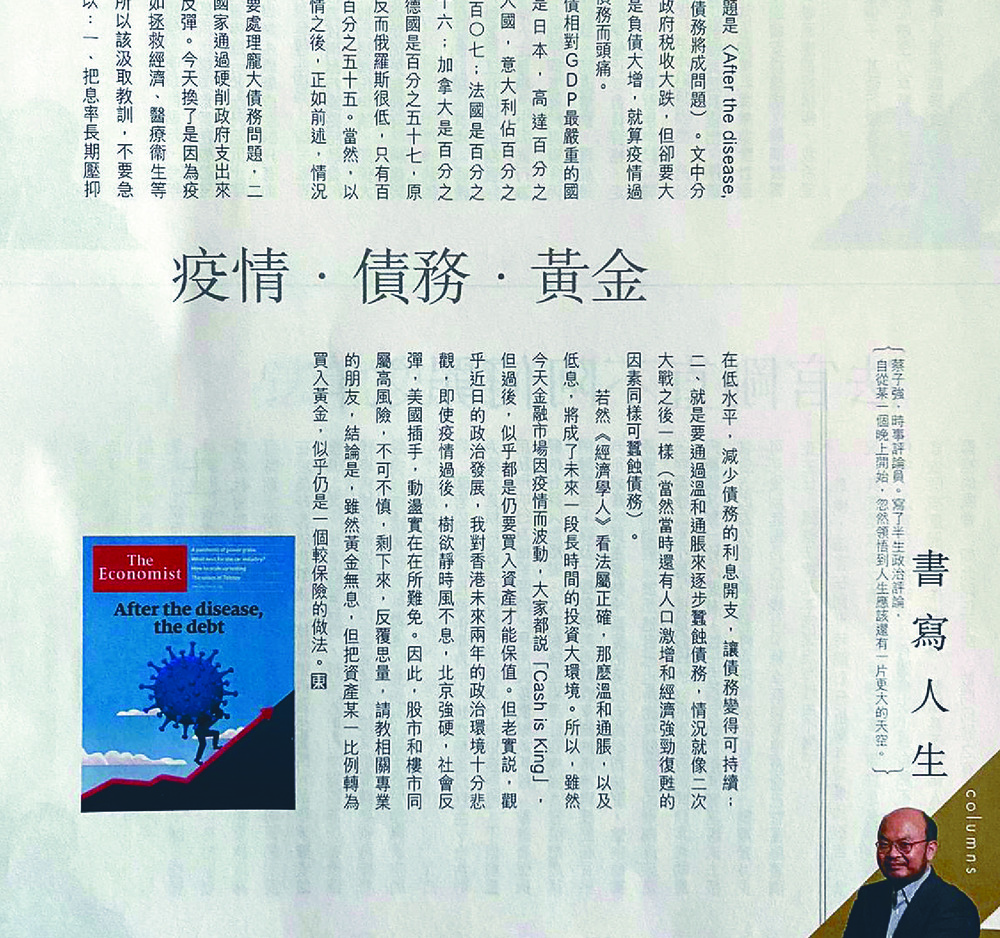
Choy was referring to his May article in Eastweek magazine headlined "Pandemic, debt and gold," in which he was bullish about the bullion.
He also mentioned an analysis in The Economist about the post-pandemic public debt crisis that countries around the world will be facing.
He also cited his own research on gross public debt as a percentage of GDP among developed nations.
His research shows Japan, at 238 percent, to be the highest, followed by Italy (133 percent) and the United States (107 percent). China, meanwhile, is at 55 percent.
These are pre-Covid-19 figures that will certainly worsen drastically after the pandemic, he wrote.
Choy noted that The Economist suggested two ways to deal with the problem: keep interest rates down to lower interest expenses and let modest inflation whittle down debt.
Low interest and inflation means you must buy assets to avoid encroachment of the value of money, he said, even if many people believe cash is king in a volatile investment market.
And as the unstable local political climate presents risks in stocks and real property, he suggested putting part of the money in gold.
After Choy's article was published, the gold price rose by nearly 30 percent.
Did the senior lecturer practice what he has so rationally preached? The answer is in the affirmative.
As to whether it's time to take profit, he says not to hurry as the United States is still taking market-saving action and continuing to print money.
Siu Sai-wo is publisher of Sing Tao
Ivan Choy's Eastweek article.