The relocation of our airport from Kai Tak to Chek Lap Kok on Lantau freed up a huge piece of land.
Apart from the new cruise terminal, the site allows opportunities to build municipal facilities, which include a cluster of hospitals and comprehensive sports facilities in the form of the Kai Tak Sports Park.
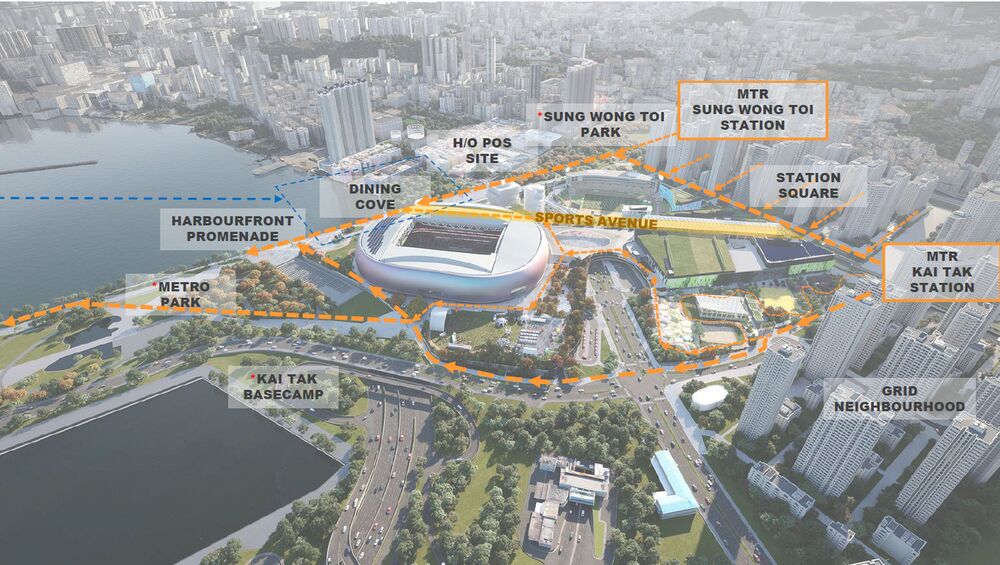
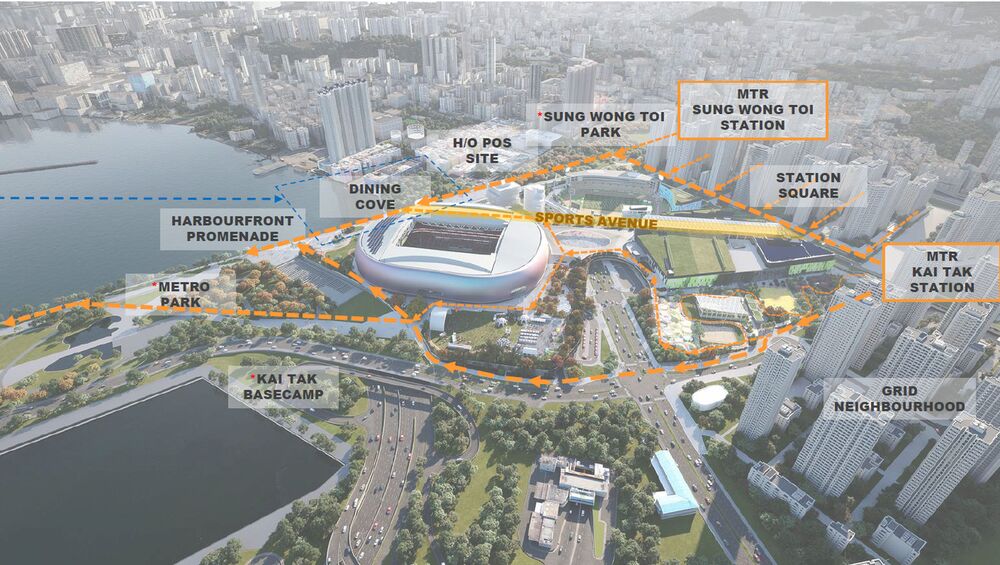
The resiting of Hong Kong Stadium from So Kon Po to Kai Tak provides much more than greater convenience. The larger site also facilitates easier planning of the various components of a state-of-the-art sports park with the potential for longer term development.
Flanked by Kai Tak and Sung Wong Toi MTR stations, access to this new complex by athletes and spectators will be much easier and will no longer overload the crowded streets in Causeway Bay on days of football matches and the annual Rugby Sevens.
The stadium will be accessible at podium level so pedestrian access will not be interrupted by road traffic as the major ground-level Kowloon Highway crosses the park site.
This segregated road and pedestrian access will also allow other concurrent events in close proximity to the stadium.
Pedestrian link bridges will provide direct access from the two stations and the walking distance will allow a comfortable cushion to spread out crowds entering or leaving the railway stations at peak times to minimize congestion.
Taking advantage of the open and large site, a full range of facilities will be built to enable various sports activities to be held continuously.
This new sports park not only houses a large stadium with a seating capacity of 50,000 but also includes an indoor games hall for hosting other games with the capacity for 10,000 spectators.
There is also a sports ground for a full range of events covering those from schools and leisure sports all the way up to regional and international events.
Leisure and refreshment outlets at the waterfront complete the wide range of facilities in the complex to allow visitors to enjoy their time in this oasis in the center of the SAR.
The main focus of the park is, of course, the stadium.
To allow it to operate in both outdoor and indoor conditions, a retractable roof will be installed.
Learning from the experience of the turf issues at the Hong Kong Stadium in So Kon Po, this facility will be equipped with a system of variable surfaces.
A hard surface can be provided for events such as concerts, soft covers provided for a gymnasium floor, or even an ice surface.
For football and rugby matches, the hard base will be covered with a specially formulated subsoil to provide the necessary give for best performance and to minimize injury to players.
The grass turf can be laid on this sub-soil like rolling carpets in a room, and during preparation for matches, this turf will be grown outside where there is good sunlight and irrigation for better cultivation and control.
The stadium is slated for substantial completion by 2023, which could allow an opening in 2024 - the year of the Paris Olympics.
The people of Hong Kong can look forward to seeing this modern facility available to professional athletes for training and to the community for enjoying leisure sports.
Veteran engineer Edmund Leung Kwong-ho casts an expert eye over Hong Kong's iconic infrastructure