Read More



Night Recap - October 2, 2026
12 hours ago
A 23-year-old man has been arrested for impersonating government-verified organizations to send phishing text messages using a radio jammer, police said.
Under the scheme, implemented in late 2023, only accredited organizations such as telecommunications providers, banks and government departments are allowed to use a hashtag symbol in their sender identifications.
One victim had reportedly lost HK$22,000 after revealing credit card information to the scammer on the fraudulent site.
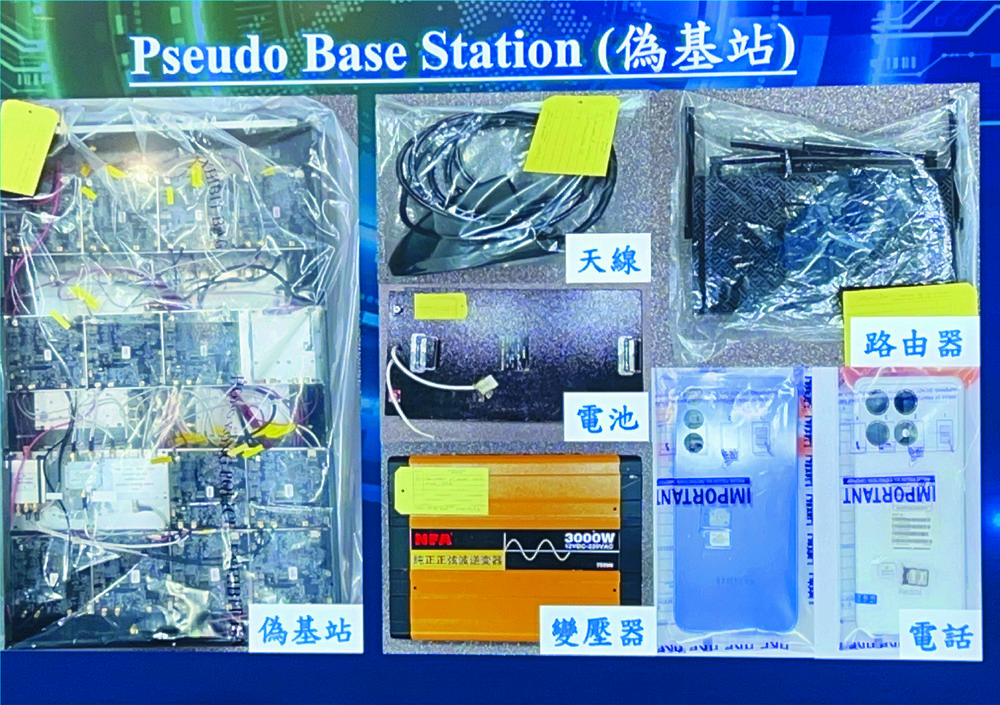
Senior Inspector Wan Chun-hong of the Cyber Security and Technology Crime Bureau said that the arrest took place in a van in Mong Kok. Officers seized two mobile phones and a radio jammer that was operational at the time of the bust.The man is set to face charges of conspiracy to defraud.
Andrew Lo Tsz-him, principal regulatory affairs manager from the Office of the Communications Authority, said that a radio jammer could be used as a fake 2G-network base station, enabling scammers to send fraudulent messages.Since a 2G network requires only one-way authentication, it can easily deceive mobile phones into receiving the fake texts.
"If your stable mobile network suddenly switches to 2G and immediately receives an SMS, you should be more cautious about it," Lo said.He also advised the public to avoid clicking on unfamiliar web links.
Since Tuesday, 28 people had reported receiving fake text messages claiming to be from government departments, courier services or electronic payment systems.The police urge residents to verify the authenticity of any suspicious texts with the relevant organizations.
Residents can also submit dubious web links to the official "Scameter+" app for a risk assessment, or call the police's 18222 "anti-scam" hotline for immediate assistance.jamie.liu@singtaonewscorp.com