Read More
Ayra WangThis innovative material can be manufactured into reusable cups and cutlery, significantly contributing to the reduction of carbon emissions in urban areas.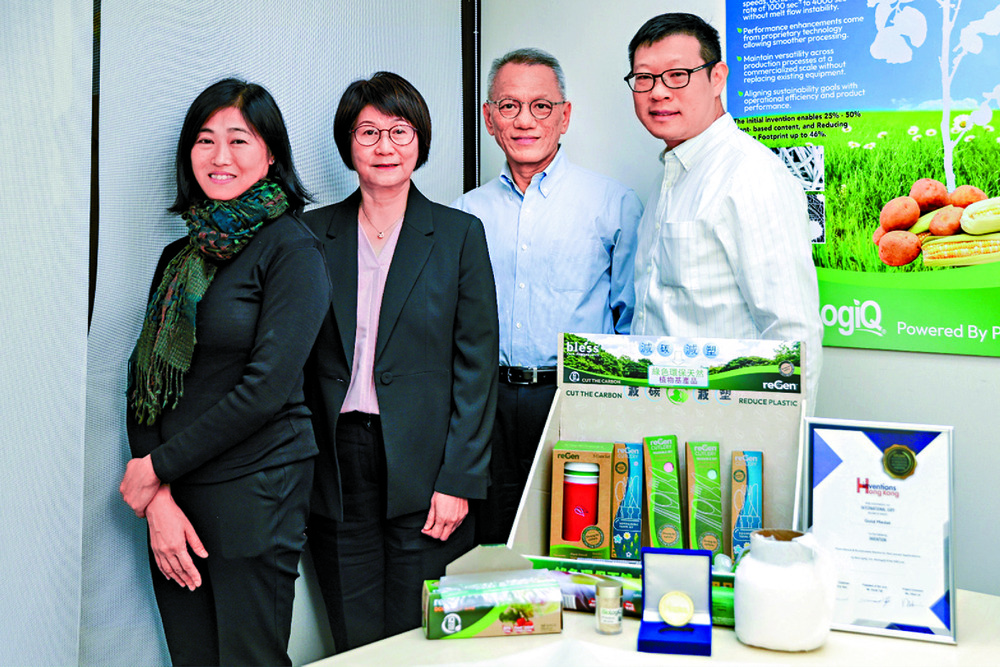
BioLogiQ, a technological company, has developed a method to convert potato starch into a plant-based material.
ADVERTISEMENT
SCROLL TO CONTINUE WITH CONTENT
The company's breakthrough technology was recognized with a gold award at the 4th Asia Exhibition of Innovations and Inventions, held at the Hong Kong Convention and Exhibition Centre on December 5 and 6.
Ken Kramer, BioLogiQ's president and chief technology officer, called the award an affirmation of the hard work by the company's research and development team.
He expressed hope that their invention would help mitigate human-caused pollution and promote sustainable development for future generations.
"I've been involved in the plastic manufacturing industry for over 30 years, and I understand the environmental harm caused by fossil fuels and plastics," Kramer said in an exclusive interview with Sing Tao Daily, a sister publication to The Standard.Founded in 2011, the US-based company expanded into Asia in 2019, establishing its regional office in Hong Kong and a factory across the border in Shaoguan.
Kramer said that the plant-based material is derived from crops such as potatoes and corn and can reduce carbon emissions by up to 46 percent compared to conventional plastics."Fossil fuels are not renewable and contribute to pollution, whereas plants can be regrown and absorb carbon dioxide during their growth," he said.
Plant-based materials, he added, are often stronger than those made from fossil fuels.Kramer highlighted the fact that plant-based materials are more cost-effective than wood, bamboo and paper, especially now that the SAR government is promoting a citywide plastic-free lifestyle.
"Cutting down trees or bamboo is detrimental to the environment, as it takes years for trees to grow back," he said."In contrast, crops like potatoes and corn can be harvested two to three times a year, allowing factories to utilize existing machinery for plant-based material production," he said.
While the company's products can contain up to 50 percent plant-based materials, they typically mix in 10 to 25 percent traditional plastics to keep costs manageable for consumers.Kramer's aim is for some products to achieve 100 percent plant-based content for agricultural use next year, with plans to develop entirely plant-based products within five years.
Linda Lee Wai-ling, the company's managing director, said the plant-based material is converted from the starch of potatoes or corn.BioLogiQ also plans to recycle wastewater containing starch from fry production facilities as a raw material.
Lee reassured people that using crops for plastic does not impact the food supply, as the plant-based materials industry currently uses only 0.02 percent of agricultural land, and that is projected to rise to just 0.073 percent by 2028."It's not a waste of food; starch is already used in paper production, though many people may not realize it," Lee said.
The company aims to integrate environmental protection into everyday life by producing household items like reusable tableware, cups and food bags made from plant-based materials."We want consumers to engage in environmental protection easily and affordably," Lee said.
Plant-based materials, she added, can help reduce microplastic contamination in the food chain, protecting human health."Currently, over 90 percent of plastic waste ends up in landfills or nature, breaking down into microplastics that pollute oceans and soil. These microplastics can eventually enter the food chain," she said.
The company is in discussions with local juice producer Bless to create containers, packages and plastic bags made from plant-based materials, with anticipated discounts for consumers next year.Lee said plant-based materials are 100 percent compostable, non-toxic and environmentally friendly, making them ideal for non-reusable items aimed at reducing pollution.
BioLogiQ plans to expand the use of plant-based non-woven materials into various applications, including disposable masks, hospital protective clothing and diapers, which cannot be reused due to hygiene concerns.