Read More
Thousands of students taking the Diploma of Secondary Education Chinese language exams encountered disruptions yesterday due to a malfunction in the new self-check-in app.
ADVERTISEMENT
SCROLL TO CONTINUE WITH CONTENT
As a result, some invigilators had to take attendance manually at certain exam venues.
The Chinese Language exam was taken by a total of 41,674 candidates, while today the English Language exam - the second of the four core subjects - will be taken by 42,942 candidates.
To streamline the examination process, the exam authority introduced the "i-Invigilator" app this year. The app allows teachers to verify candidates using designated mobile devices that display their photographs after students check in with the "Check-in Smart" app.
However, schools reported that invigilators encountered problems logging into the app yesterday morning. Despite an invigilator from a Kowloon school reaching out to the exam authority via instant messaging, a response was not received.
Chow Sau-leuk, the principal of CMA Secondary School in Shek Kip Mei, reported the same problem.
While acknowledging the benefits of a computerized system, Chow said "it is also important to ensure that such technical difficulties do not disrupt the exams or affect the emotional well-being of the candidates."
In a statement, HKEAA apologized for the inconvenience brought to the invigilators after the app saw "unsatisfactory performance when handling a huge data traffic." It reminded the invigilators to update the app to the latest version from 7.30 am today, or one hour before the start of the English Language exams.
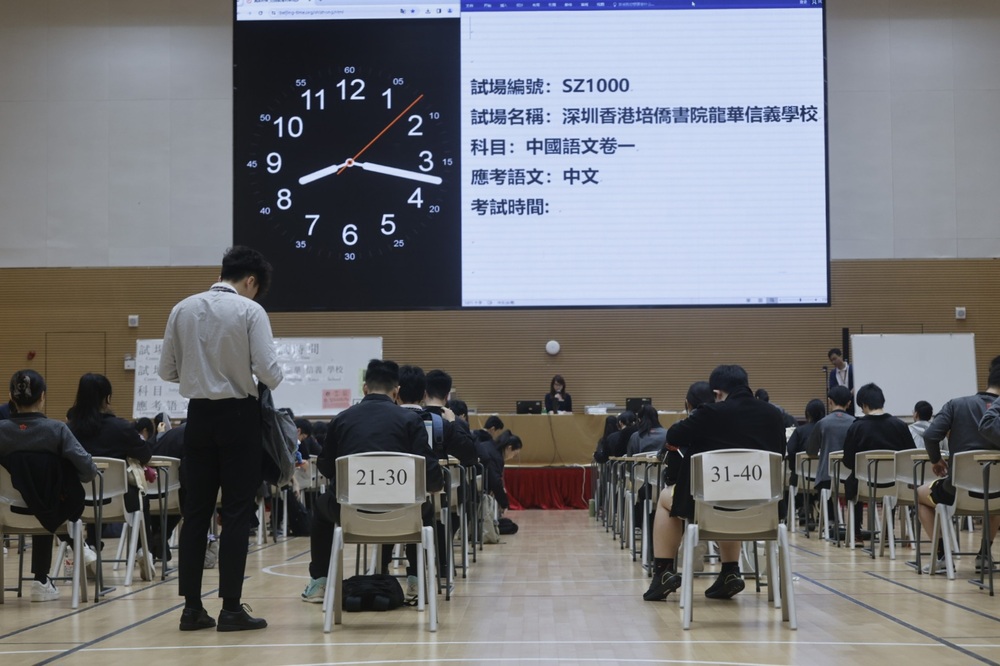
In the mainland, approximately 110 students took the public exam at two venues - the Shenzhen Hong Kong Pui Kiu College Longhua Xinyi School, and the Affiliated School of Jinan University for Hong Kong and Macao Students in Guangzhou.
Mainland police provided security for the venues.
The exam authority had previously announced that the same set of exam papers would be used and that they are to be stored securely in locked boxes inside locked rooms until the exam days.
The authority said it will evaluate the feasibility of establishing exam centers in the Greater Bay Area next year based on this year's experience.
However, education sector lawmaker Chu Kwok-keung believes that the number of mainland exam centers will not significantly increase in the future.
This year's Chinese Language exam was modified, with the cancellation of the Listening and Integrated Skills and Speaking exams, reducing the total number of papers from four to two.
The Chinese reading exam consisted of eight questions based on 12 prescribed classical Chinese texts, followed by an unseen Chinese contemporary text titled "Prosperous" by mainland author Li Juan, and two classical passages by Southern Song dynasty writer Liu Yiqing and Northern Song dynasty poet Su Shi.
A Chinese teacher named Ho, from CMA Secondary School, said the reading paper was "not that difficult," although some students might find it challenging to comprehend Li Juan's article due to its focus on farming and the nomadic lifestyle, which is not commonly encountered in Hong Kong.
This year's Chinese writing exam introduced a practical composition section.
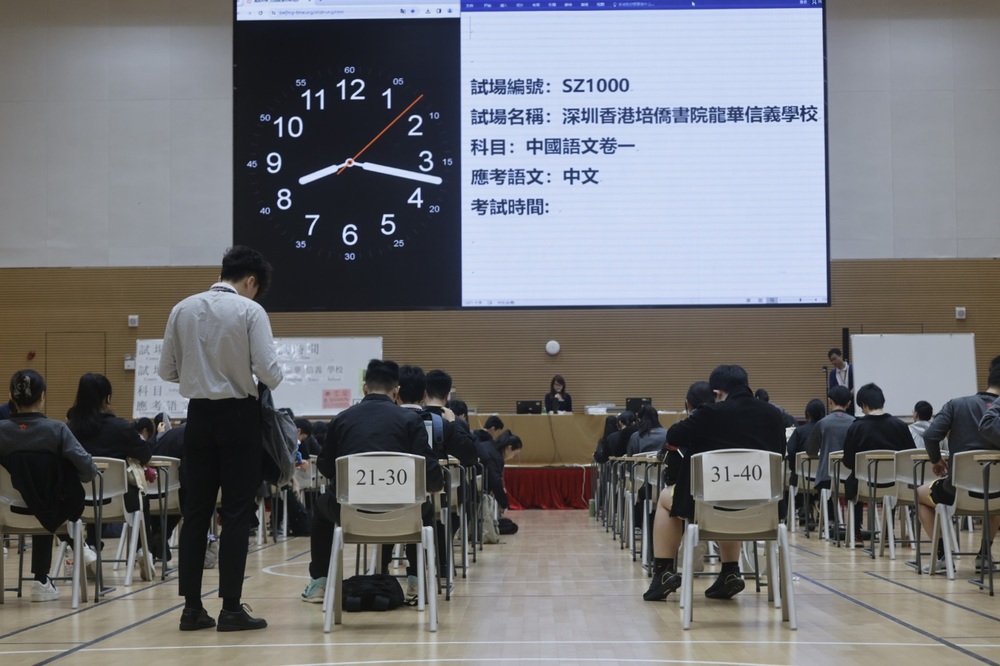
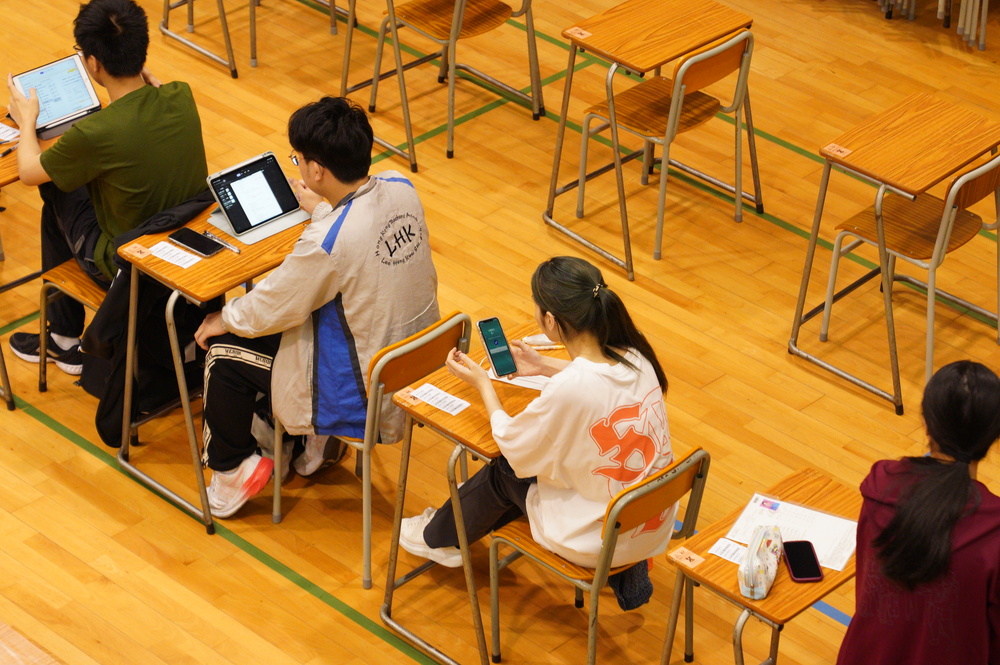
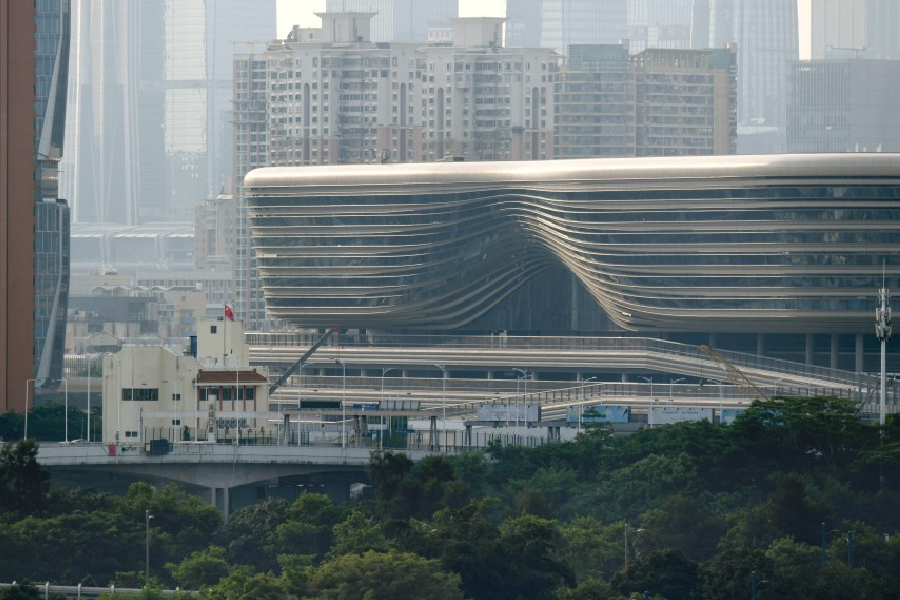
Thousands of candidates take the DSE exams in Hong Kong, with others sitting theirs at the Shenzhen Hong Kong Pui Kiu College Longhua Xinyi School, left.