Read More








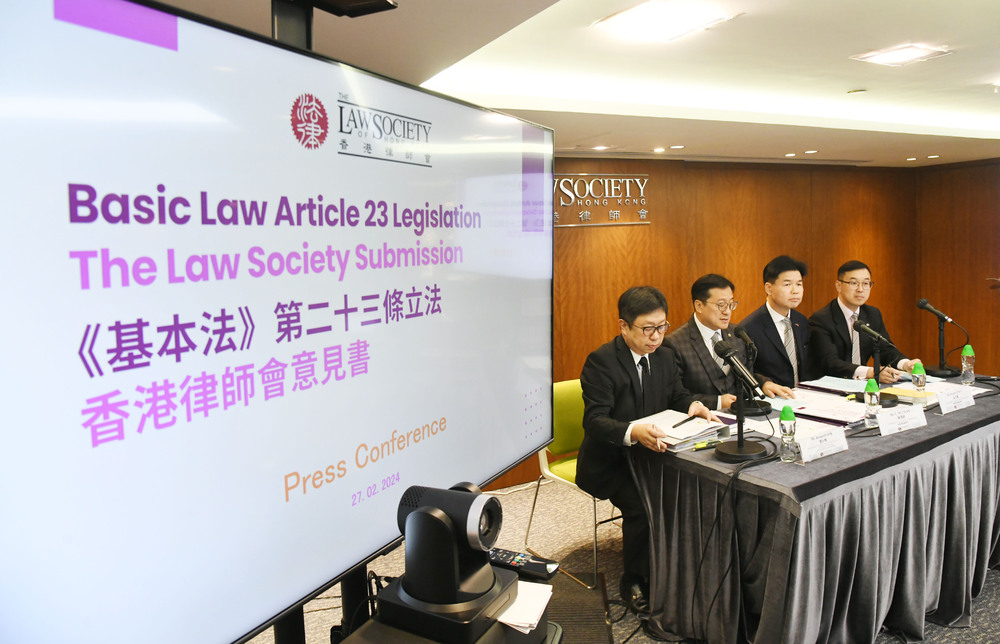
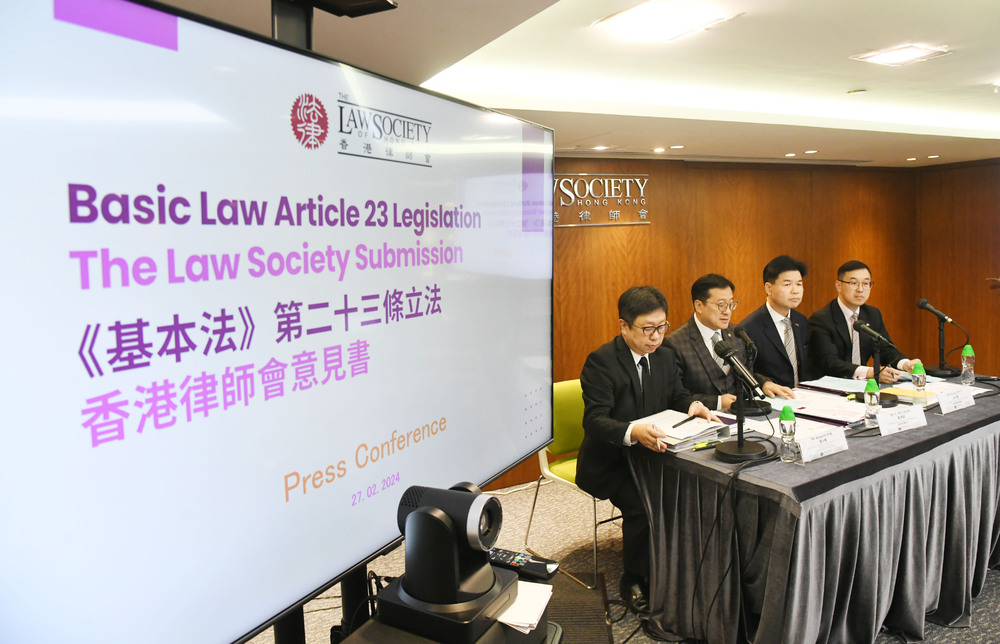
The government should provide a clear definition of "theft of state secrets" under the enactment of Basic Law Article 23, the Law Society says, as it seeks more details in its submission.
The public consultation for Article 23 ends today.
Society president Chan Chak-ming said it agrees with the legislation's principles and considerations in the consultation paper of enacting Article 23.
"The legislation is the constitutional responsibility and obligation of the SAR to protect national security, as well as human rights and freedoms of Hong Kong residents," Chan said.
"It is not a zero-sum game and I am convinced Hong Kong's excellent legal tradition can strike a reasonable balance."
The society agreed that the government should exempt those who disclosed state secrets out of public interest grounds.
"I suggest the government take reference to the Security of Canada Information Disclosure Act, where the defendants are required to prove that the public interest in disclosing state secrets outweighs that of keeping the information secret," Chan said.
"To be eligible for exemption, the defendant would also have to prove that he or she is exposing a crime of another person, which has already been reported to authorities but was not dealt with within a reasonable time."
The society's vice president, Roden Tong Man-lung, suggested the government should be more detailed about conditions breaching the sedition clause to prevent the legislation being accused of targeting political speech.
Another vice president, Christopher Yu Kwok-kin, called on the government to reveal more details of its plan to simplify procedures for prosecuting national security suspects to strike a balance between defendants' rights and the prosecution's efficiency.
Former secretary for justice Elsie Leung Oi-sze said Article 23 will not only be put on "standby" to "scare off" troublemakers, adding authorities will not loosely enforce the stringent legislation.
Leung, who participated in the government's failed attempt to enact Article 23 back in 2003, said the legislation this time is "not harsher" the one before.
The difference in the two versions is the concept of national security, which has changed in the mainland and overseas.
The legislation should keep pace with the times, she said, as authorities did not believe Hongkongers would commit treason in 2003 but the government now has to prevent such cases after the 2019 social unrest.
Some foreign companies have raised concerns about adopting the definition of "state secrets" from mainland law covering confidential information on economic and social development.
But the courts in Hong Kong will still interpret "state secrets" under the common law, Leung said, adding economic information may also involve national security.