Read More









Hong Kong faces stronger showers in coming hours, says HKO
24-04-2026 16:22 HKT


Hong Kong teen loses $230,000 in 'compensated dating' scam
24-04-2026 19:05 HKT


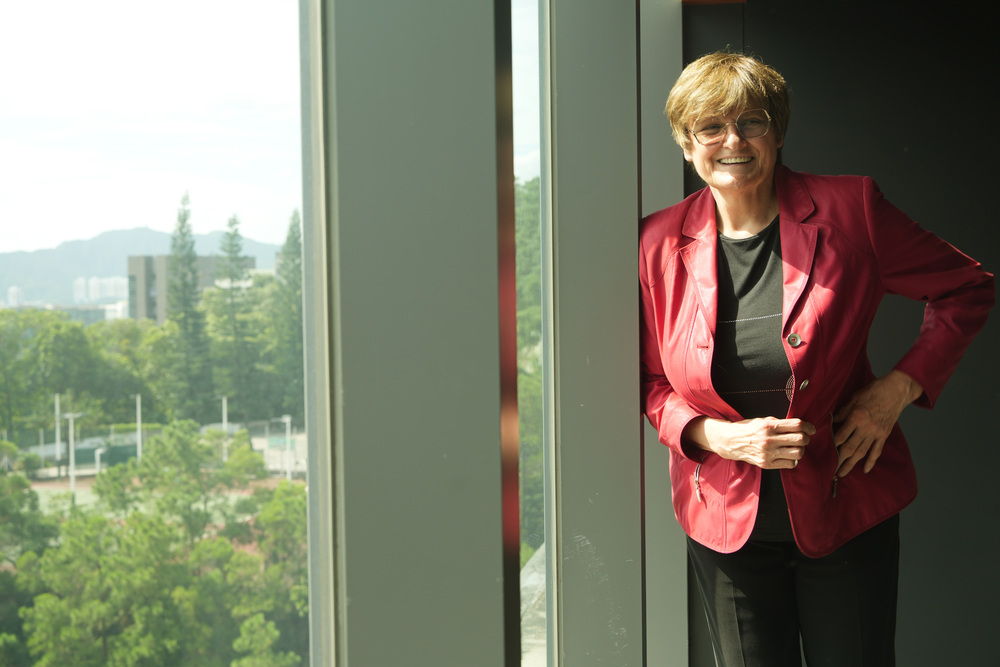
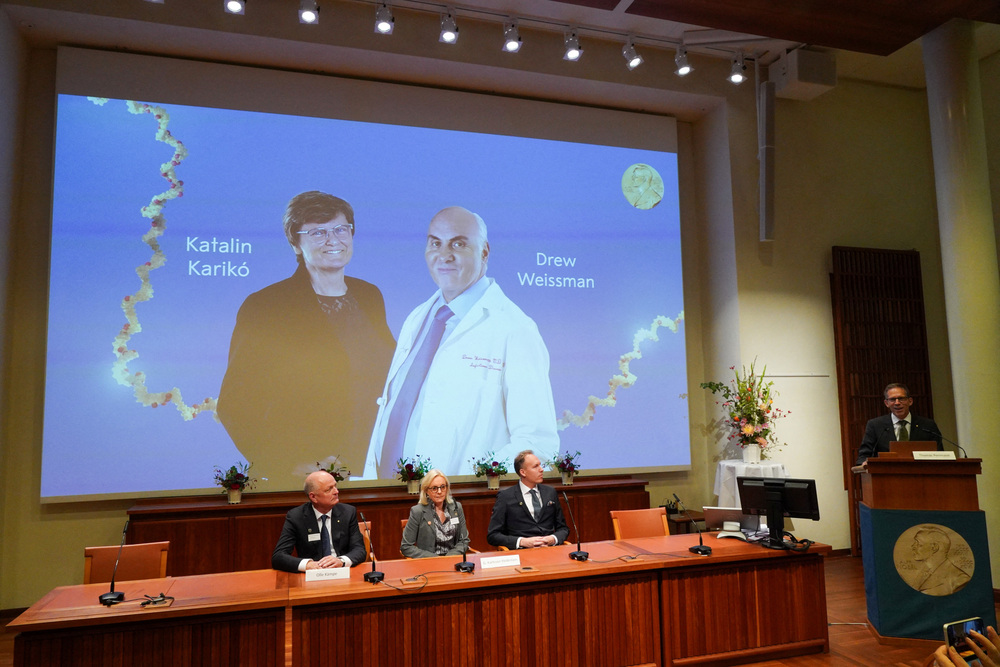
Katalin Kariko of Hungary and Drew Weissman of the United States have won the Nobel medicine prize for work on messenger RNA technology that paved the way for groundbreaking Covid-19 vaccines.
The pair, who had been tipped as favorites, "contributed to the unprecedented rate of vaccine development during one of the greatest threats to human health in modern times," the jury said.
In honoring them, the Nobel committee in Stockholm broke with its usual practice of honoring decades-old research. While the prize-winning science dates back to 2005, the first vaccines to use the mRNA technology were those made by Pfizer/BioNTech and Moderna against Covid.
Kariko, 68, and Weissman, 64, longstanding colleagues at the University of Pennsylvania, have won a slew of awards for their research, including the prestigious Lasker Award in 2021, often seen as a precursor to the Nobel.
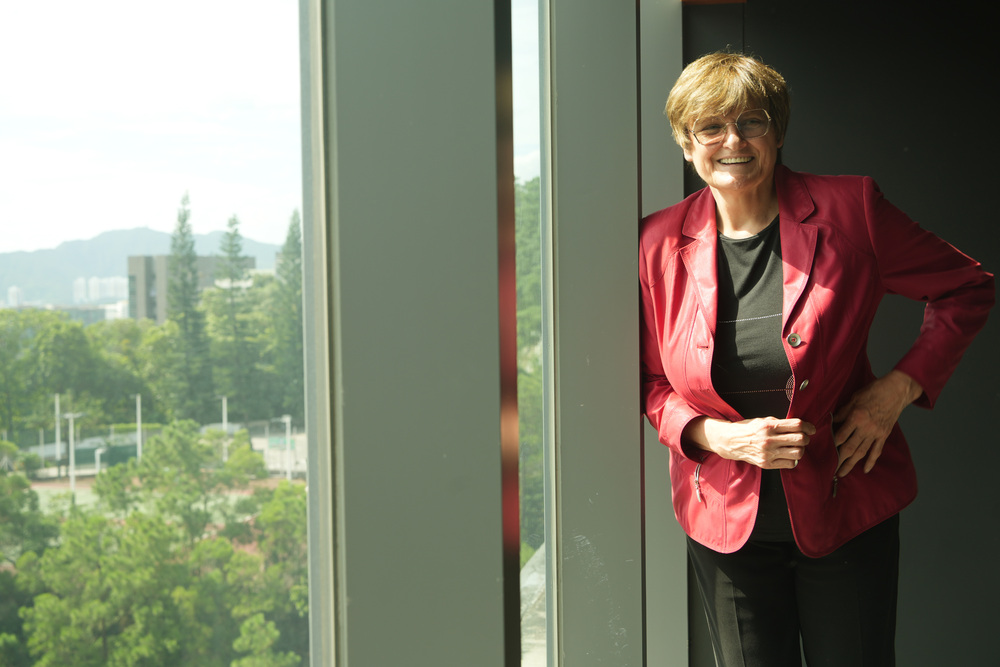
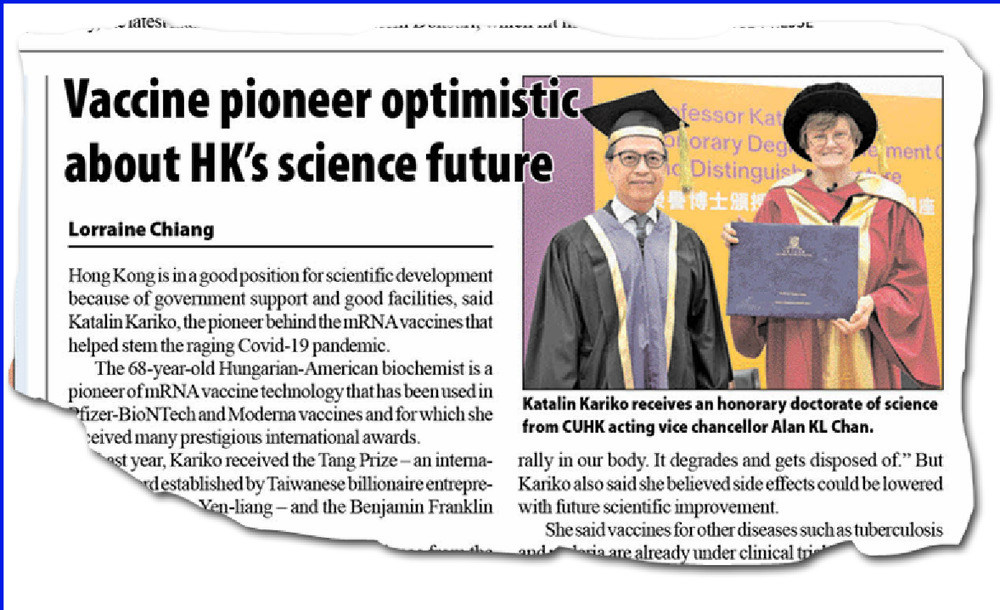
Kariko, who received an honorary doctorate of science from Chinese University in August, also received the Tang Prize - an international award established by Taiwanese billionaire entrepreneur Samuel Yin Yen-liang - and the Benjamin Franklin Medal in Life Science.
While in Hong Kong, she shared: "I saw the support of the government and good facilities [in Hong Kong]. And top quality papers are coming out now in the mainland. The quality of science is unbelievable. I'm sure the future for the whole of China including Hong Kong is great."
She also advised the Hong Kong government to provide high-quality child care to "bring women back into research" so that their careers would not be halted by family responsibilities.
Unlike traditional vaccines which use weakened virus or a key piece of the virus' protein, mRNA vaccines provide the genetic molecules that tell cells what proteins to make, which simulates an infection and trains the immune system for when it encounters the real virus.
The idea was first demonstrated in 1990, but it was not until the mid-2000s that Kariko and Weissman developed a technique to control a dangerous inflammatory response seen in animals exposed to these molecules, opening the way to develop safe human vaccines.
Kariko's and Weissman's mRNA technology is now being used to develop other treatments for diseases and illnesses such as cancer, influenza and heart failure.
The pair will receive their Nobel prize, consisting of a diploma, a gold medal and a US$1 million (HK$7.8 million), at a formal ceremony in Stockholm on December 10.
The Nobel season continues this week with the announcement of the winners of the physics prize today and the chemistry prize tomorrow.
They will be followed by the much-anticipated prizes for literature on Thursday and peace on Friday. The economics prize winds things up on Monday.
Among the names making the rounds for the literature prize are Russian author and outspoken Putin critic Lyudmila Ulitskaya, Chinese avant-garde writer Can Xue and British author Salman Rushdie.
Kariko's obsession with researching mRNA to fight disease once cost her a faculty position at University of Pennsylvania, which dismissed the idea as a dead end.
Kariko spent much of the 1990s writing grant applications to fund her research into mRNA, which she believed held the key to treating diseases. But University of Pennsylvania, where Kariko was on track for a professorship, decided to pull the plug after the grant rejections piled up.
"I was up for promotion, and then they just demoted me and expected that I would walk out the door," she said in an interview from her home in Philadelphia in December 2020.
Kariko did not yet have a green card and needed a job to renew her visa. She also knew she would not be able to put her daughter through university without the hefty staff discount. She decided to persist as a lower-rung researcher, scraping by on a meager salary.
It was a low point in her life and career, but "I just thought ... you know, the [lab] bench is here, I just have to do better experiments," she said.
The determination runs in the family - her daughter Susan Francia did go to University of Pennsylvania, where she earned a master's degree, and won gold medals with the US Olympic rowing team in 2008 and 2012.
The breakthroughs of Kariko and her main collaborator Weissman were key to the vaccines developed by Pfizer and its German partner BioNTech, where Kariko is now a senior vice president, as well as the shots produced by Moderna.
Though she does not want to make too much of it, as a foreign-born woman in a male-dominated field, Kariko occasionally felt underestimated - saying people would approach after lectures and ask "Who's your supervisor?"