Read More
Motorists using the Hung Hom Cross-Harbour Tunnel will be paying twice as much for a rush-hour crossing by the end of the year as the government speeds up congestion charging after it retakes control of the Western Harbour Crossing.
ADVERTISEMENT
SCROLL TO CONTINUE WITH CONTENT
Transport authorities yesterday revealed new tolls for the three tunnels in Hung Hom, Eastern and Western to cope with an increase in traffic as the city returns to post-Covid normality, with full border resumption.
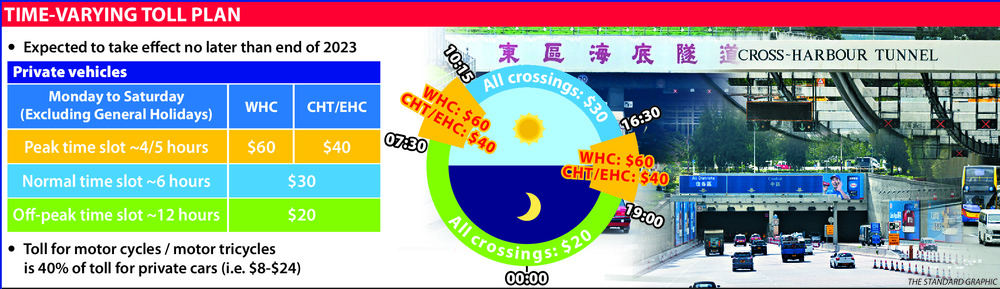
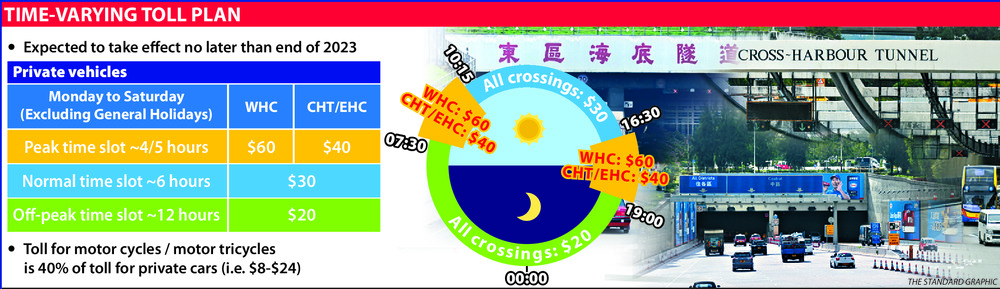
From August 2 - the date the government recovers the Western crossing's 30-year franchise - tolls for private vehicles at the Cross Harbour Tunnel will go up from HK$20 to HK$30 and at Eastern Harbour Crossing from HK$25 to HK$30.
Tolls for the Western crossing will be reduced by 20 percent to HK$60, from HK$75.
Officials had said they would review the impact of the changes within a year before moving to introduce different fees for rush hour.
But now they are saying the congestion charges will take effect before the end of the year, though Secretary for Transport and Logistics Lam Sai-hung did not give an exact date.
Tolls will increase from 7.30am to 10.30am and again from 4.30pm to 7pm from Monday to Saturday.
The fee at the Western crossing will still be HK$60 for private cars, while at the other two tunnels, the toll will be HK$40 - twice the current cost of a harbor tunnel journey.
Lam said: "This will enable motorists originally planning to travel via the Cross-Harbour Tunnel or the Eastern Harbour Crossing to have more incentive to shift to the Western Harbour Crossing. That will help redistribute the traffic flow among the three tunnels."
To avoid people speeding up or slowing down when fees change, the increases and decreases will be phased in and out, with tolls up by HK$2 every two minutes at the start of the period, then falling at the same rate at the end of the rush hour.
Lam said he hoped the new tolls can change drivers' habits, and encourage them to leave home earlier for work. For example, he added, people can eat breakfast near their offices instead of at home.
Transport Commissioner Rosanna Law Shuk-pui said her department will work with tunnel operators and police to monitor driving speeds at areas near the tunnels.
Some drivers believe the new mechanism will have a limited impact in easing congestion, as they use the tunnel closest to their destinations and seldom take longer routes just to save some cash.
Central worker Wong said: "If I am arriving at the office earlier for a cheaper toll, can I get extra wages for that?"
Lawmaker Ben Chan Han-pan, who heads Legco's transport panel, said a four-hour peak is too long to change drivers' habits.
"The toll hikes at Hung Hong tunnel and Eastern crossing are too high, while the price difference between these two and the Western crossing becomes closer," he said. "And it's not worth causing traffic jams at the Western crossing."
In the second phase, taxis across the city will be charged HK$25 at all three harbor-crossing tunnels, while there will be a standardized HK$50 fixed toll on commercial vehicles, including buses and goods vehicles, no matter their weight.
A taxi association is worried the new toll will benefit illegal cabs because the charge for private cars during nonpeak night hours is HK$5 cheaper than taxis.
The chairman of the Hong Kong Taxi Owners' Association, Wong Po-keung, said the overnight toll for taxis should be the same as that for private cars.
"In that way, those illegal white-plate taxis will not take away our cross-harbor business," Wong said.
Kowloon Motor Bus, Citybus and New World First Bus backed the new toll standard of HK$50, saying it could help reduce costs and improve operational efficiency. But Federation of Hong Kong Transportation and Logistics Industry Unions argued that the toll was a "de-facto increase."
A bill on the new toll will be tabled at Wednesday's Legislative Council meeting.
eunice.lam@singtaonewscorp.com
Editorial: Free hand means better grasp of toll scheme