Read More


Night Recap - June 5, 2026
12 hours ago



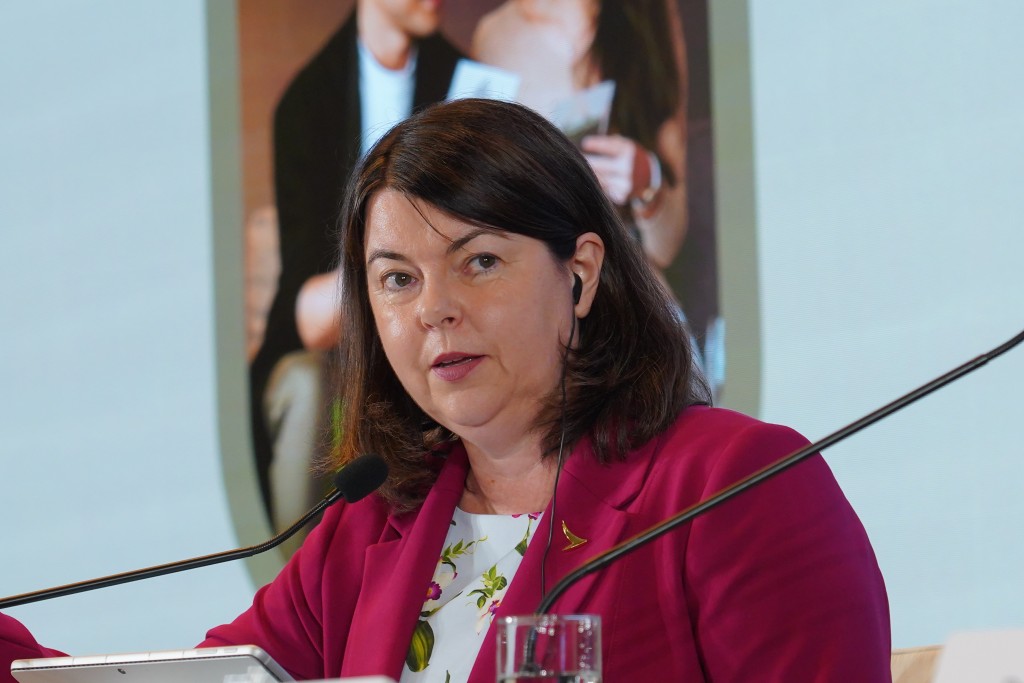
Cathay Pacific's executive director and CFO Rebecca Sharpe to step down
04-06-2026 17:35 HKT
Former Chinese president and Communist Party general secretary Jiang Zemin died of leukemia and multiple organ failure in Shanghai yesterday. He was 96.
Xinhua News Agency said he died after all medical treatments failed.
A letter announcing the death was addressed to the Communist Party, military and Chinese people by the Central Committee of the CPC.
Jiang was "an outstanding leader enjoying high prestige acknowledged by the whole party, the entire military and the Chinese people of all ethnic groups," the letter said.
He was also "a great Marxist, a great proletarian revolutionary, statesman, military strategist and diplomat, a long-tested communist fighter, and an outstanding leader of the great cause of socialism with Chinese characteristics."
Jiang was the core of the Communist Party's third generation of central collective leadership from 1989 to 2002.
Born in Yangzhou, Jiangsu, in 1926, Jiang came from an academic family in which his uncle, also his foster father, Jiang Shangqing, was considered a national hero after dying while fighting the Japanese in World War II. Jiang joined the Communist Party when he was a university student.
He graduated from Shanghai Jiao Tong University, formerly named National Chiao Tung University, in 1947 with an electrical engineering bachelor's degree.
After graduation, he worked at food factories and automobile plants before joining the government. He became the minister of electronic industries in 1983.
His foster father's comrades, including former mayor of Shanghai Wang Daohan, recommended Jiang succeed him as mayor in 1985.
Jiang became Shanghai party chief in 1987.
Jiang rose to national prominence in June 1989 when he became the Communist Party's general secretary amid the Tiananmen Square crackdown after his predecessor, Zhao Ziyang, was dismissed.
Jiang supported the then-paramount leader Deng Xiaoping's speech in the 1992 southern tour in which Deng talked about economic reform and capital market for China.
During his 13-year party leadership, Jiang guided the country's rise to be a global economic power by proposing the socialist market economy. He led China to join the World Trade Organization in 2001.
He was the principal founder of the "Three Represents" - a socio-political theory of the country put forward in 2000. They include the development trends of advanced productive forces, the orientations of an advanced culture, and the fundamental interests of the people of China.
But the decision allowing capitalists to join the Communist Party was criticized by leftist publications. Some party members called it a "significant political mistake."
The criticism ended after the suspension of two leftist magazines, and the "Three Represents" was included in the constitution of the CCP in 2002.
The same year, Jiang, then 76, handed over the general secretary role to Hu Jintao, who led the "fourth generation" of leadership. But Jiang remained Central Military Commission chairman until he retired from his last official post in September 2004.
Jiang mainly lived in Shanghai and continued to make appearances after his retirement in 2004, and analysts said he remained influential in politics after he stepped down from official posts.
Jiang had suffered from health concerns after retirement and there had been fake news about his death circulating in the media and on the internet.
These included Asia Television, a free TV channel which stopped broadcasting in 2016. In July 2011, it misreported news of Jiang's death, drawing a fine of HK$300,000 from the government.
The funeral committee of Jiang will be led by President Xi Jinping, with other top officials including Premier Li Keqiang as committee members.
The national flags at Tiananmen, Xinhuamen, the Great Hall of the People and the Ministry of Foreign Affairs in Beijing, as well as Beijing's liaison offices in Hong Kong and Macau, and Chinese embassies and consulates in other countries, flew at half mast.
Mourning halls will also be set up in liaison offices in the two SARs, as well as in Chinese embassies and consulates, to receive condolences.
sophie.hui@singtaonewscorp.com