Read More


Night Recap - May 21, 2026
4 hours ago

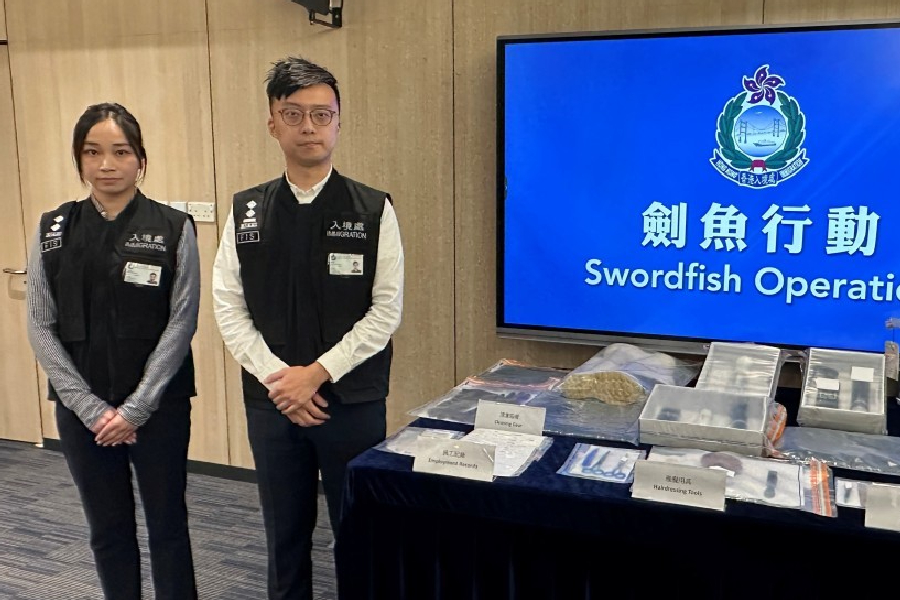
ImmD crackdown targets moonlighting domestic helpers arresting 17
19-05-2026 17:52 HKT
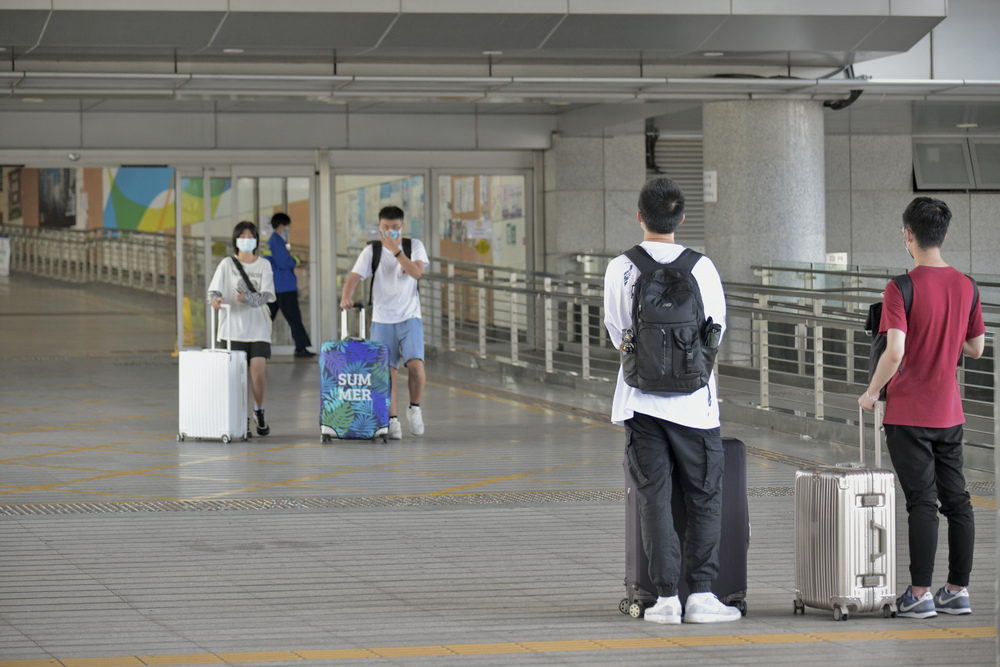
Hong Kong will prioritize quarantine-free travel for business people when it reopens its border with the mainland.
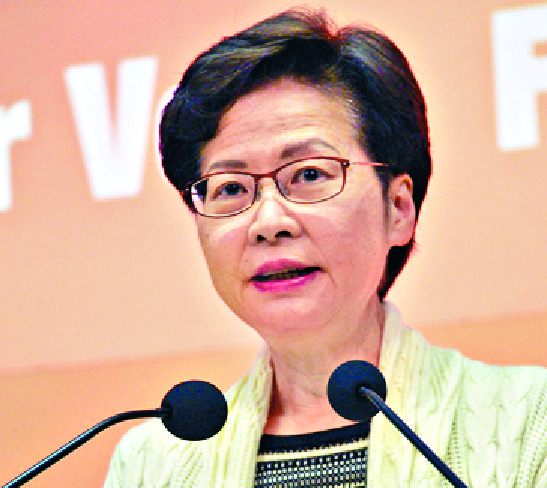
That word came from Chief Executive Carrie Lam Cheng Yuet-ngor, though she warned the SAR's sluggish vaccination rate could slow an expansion of the program.
"If we cannot raise our vaccination rate it will be a hindrance to expanding our border reopening plan," Lam said before an Executive Council meeting yesterday, referring to a 71 percent first dose coverage. Some 67 percent Hongkongers have been fully vaccinated.
The administration is working to set quotas for business people in different sectors to prepare for mainland officials confirming when quarantine-free travel can resume, she said.
"Some people have urgent needs to enter the mainland, especially those with business and public duties," Lam said. "The work they have to handle in the mainland is also closely related with Hong Kong's economy.
"As an economic hub we need to prioritize travel for those travelers with business purposes. Directors of government bureaus have also started contacting groups that have been exempted from quarantine in the SAR."
Although priority will be given to business people, Lam said they have to register for the quota by themselves, with the arrangement similar to the Return2hk and Come2hk schemes.
The administration, she added, would also like to have quotas for people not involved in business or government activities.
But she did not say what a maximum quota would be.
With the Hong Kong health code system for border reopening set to open for registration on Friday, Lam also called on citizens not to rush for it unless it is vital.
"People without urgent needs do not have to register for the health code on December 10 because they will not be using it and the health code system will not play its part until citizens secure a quota for cross-border travel," she said.
Although there is no quota for the health code, a large number of applications at the same time will lead to longer waits.
Lam also said authorities will check figures at border points in deciding whether more should open, with land control points given priority.
"In the past, each border control point could handle tens of thousands of travelers per day," she said. "But now officers will need to check more documents, and the Security Bureau is assessing whether more border control points should be opened if the number of travelers reaches a high level."
But the high-speed rail, cross-border coaches and Macau ferries will not resume services soon, she said.
Lam also said authorities will open Shenzhen Bay port two hours earlier at 8am in the initial phase of a reopening, helping travelers who need to go to the mainland and return to the SAR the same day.
She also said the new Omicron Covid-19 variant did not affect the border reopening talks with mainland officials as it has not entered the community.
But she said Omicron has triggered growing threats as there are Covid-19 rebounds around the world, so she urged Hongkongers to be vaccinated as soon as possible.
Authorities may consider only allowing vaccinated citizens into public premises if there is a need to boost the vaccination rate and secure the border reopening arrangements with the mainland.
Speaking at a forum yesterday, Lam said that while a date for a border reopening has yet to be set, talks with mainland authorities have seen good progress.
"Hopefully, good news will come very soon," she said.
Hong Kong yesterday recorded five imported Covid cases - from the United States, Switzerland, Pakistan, Nepal and Spain - to take the SAR tally to 12,472 cases with 213 deaths.
The five involved people who had been vaccinated, and four were carrying the mutation present in the highly contagious Delta variant.
And four more countries - Argentina, Croatia, Fiji and Latvia - will go on the SAR's high-risk list on Friday after cases involving the Omicron variant were found there.
Meanwhile, a research team led by health expert David Hui Shu-cheong found people receiving the German-made BioNTech vaccine can produce many more antibodies then those getting mainland-made Sinovac shots.
After measuring the antibody level of over 700 fully vaccinated citizens aged from 18 to 79, the team found 80 percent of BioNTech takers had 50 percent protection against the virus six months after receiving the second jab while only 16 percent of Sinovac takers had such protection.