Read More
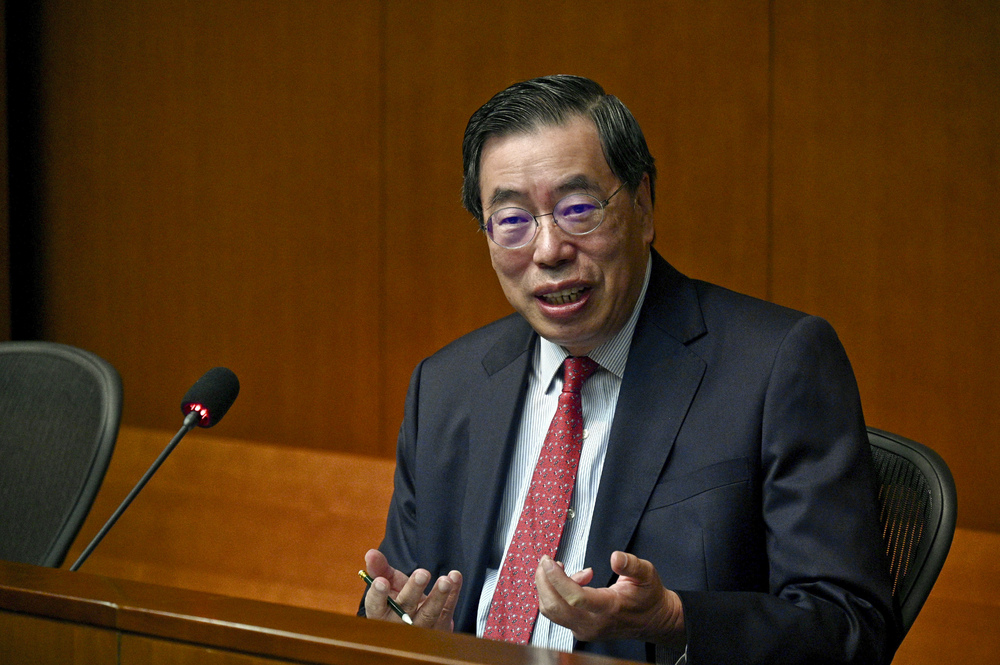
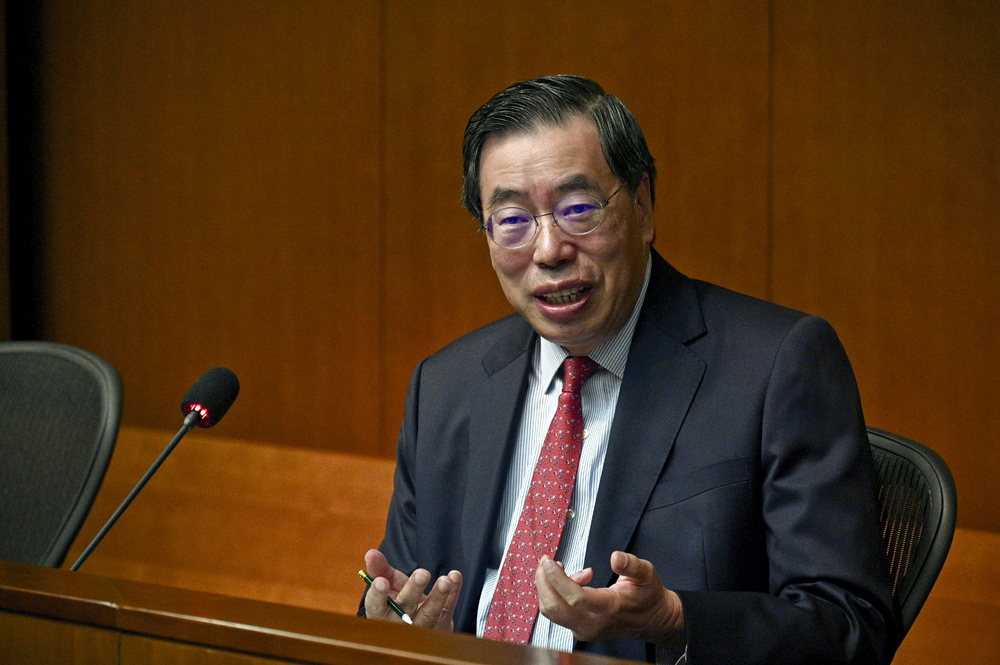
The Legislative Council has returned to calm after four stormy years, said president Andrew Leung Kwan-yuen yesterday as he wrapped up the last year of this term.
ADVERTISEMENT
SCROLL TO CONTINUE WITH CONTENT
Leung said there is finally a new atmosphere in Legco after four years filled with challenges, as it has made breakthroughs to benefit citizens' livelihoods and not fail their expectations.
He said the implementation of the national security law in June last year has restored rationality to the legislature, and chaos in Legco stopped after pro-democracy lawmakers resigned en masse in November last year.
"The legislature has successfully struck a balance where councilors aired their opinions and the government listened to them and improved their bills, which proves that the legislature did not turn into an echo chamber," Leung told a press briefing.
In this legislative year, Legco held 49 council meetings, which is the most in its history, but the meeting time was less than the past few years as lawmakers were being highly efficient, he said. A total of 124 government bills were passed this year, up 50 percent on the 80 bills passed in the previous two terms.
As most of the bills were quickly passed in council meetings, unlike in the past, Leung said the bills have already been scrutinized in committees before going through second and third readings.
"I do not think the longer the bills are scrutinized, the better the bills will get. Even the pro-democracy lawmakers will let the bills pass quickly if they opted not to oppose it."
He disagreed that the legislature had become a "rubber stamp" after all opposition lawmakers resigned.
There were 41 lawmakers after the pan-dems left.
"I have taken reference from legislatures overseas. Some also limit the number of councilors that are allowed to speak in a meeting, while some legislatures use undisclosed ballots in 95 percent of their votes," Leung said.
"Therefore, Legco might have voted with disclosed ballots more than those so-called more democratic regions."
He denied that the legislature had discussed political issues less, as he said the national security law and improvements to the electoral system have already clearly spelled out the political questions.
"Hong Kong is an economic city," he insisted.
"The vast majority of citizens are more concerned with economic and livelihood problems. It is also better to let Hong Kong be rational again rather than allowing political confrontation to divide society."
As tomorrow would be the start of the nomination period for the Legislative Council elections to be held on December 19, Leung said he will use the weekend to consider whether to seek re-election.
Leung, 70, who represents the industrial functional constituency, said he has to consider opinions of his family, the Federation of Hong Kong Industries and his party, the Business and Professional Alliance for Hong Kong.
He also did not give any hint on whether his son, Clarence Leung Wang-ching, the vice chairman of the All-China Youth Federation, will run in the Legco elections.
His son is independent, he said, but he will support any decision he makes.
Potential candidates have been lying low in recent weeks, as only three candidates from centrist party Third Side have stepped forward to run for Legco seats.
It is understood that the party has been in touch with non-pro-establishment politicians to seek electoral coordination and cooperation.
Wong Tai Sin district councilor Mandy Tam Heung-man is actively looking into a possible run in the Kowloon Central constituency, and is obtaining nominations.
A district councilor, who did not wish to be named, said the Third Side had been in touch, but their beliefs did not match and so could not cooperate.
Pro-democracy old guard Frederick Fung Kin-kee, former chairman of the Hong Kong Association for Democracy and People's Livelihood, said Third Side had not reached out to him, and he has yet to decide whether to run for election.
On the other hand, the sole delegate to the National People's Congress standing committee, Tam Yiu-chung, said he only has one chance to nominate a candidate in each of the three constituencies to run in the election.
"As I have always been working with my fellow party mates at the Democratic Alliance for the Betterment and Progress of Hong Kong, I think the priority should be given to them," he said.
Tam added: "There will be more seats than before, therefore there should a lot of people running in the December elections, giving rise to a competition, which is a good thing."
michael.shum@singtaonewscorp.com
Andrew Leung