Read More


Morning Recap - September 16, 2026
14 mins ago







Night Recap - September 15, 2026
9 hours ago




Seven arrested over Kwai Chung illegal gathering
14-09-2026 12:33 HKT


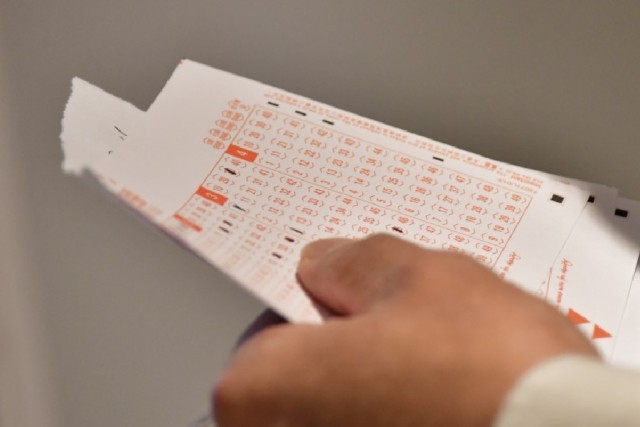
With the highly anticipated Mark Six Summer Snowball draw fast approaching and an estimated jackpot of $100 million up for grabs, a new trend is taking over social media in Hong Kong.
Hopeful punters are increasingly turning to artificial intelligence tools like Google’s Gemini to generate winning number combinations, with some users already claiming impressive returns on their AI-assisted bets.
A user on the social platform Threads recently shared a successful experience using Gemini to prepare for the massive jackpot.
By feeding the AI a highly specific betting strategy instruction regarding core and leg numbers, the user received a recommended set of five primary digits.
Betting just over two hundred dollars based on this AI recommendation yielded nearly two thousand dollars in return for a previous draw.
The AI successfully predicted three out of the five core numbers, resulting in dozens of lower-tier prize wins and an almost eightfold return on investment.
This viral success story sparked massive interest online, though many eager imitators quickly discovered that simply asking the AI for a few random numbers only resulted in generic advice about statistics.
The key to unlocking the AI's potential, according to successful users, lies in how the questions are framed.
According to seasoned AI users, the crucial first step is assigning the chatbot a specific professional identity.
Rather than making a basic request, users are advised to instruct the AI to act as a master lottery data analyst.
By directing the program to analyze historical draw trends and synthesize broad online data before outputting a combination, the AI's responses become significantly more detailed and logically structured.
Tech-savvy players emphasize that while AI cannot predict the future, it is an incredibly powerful tool for organizing complex historical data.
To avoid picking numbers purely on instinct, users are feeding extensive past draw results into chatbots and asking them to categorize the frequency of each number.
These analytical prompts instruct the AI to evaluate the ratios of odd to even numbers, map out the distribution of large and small digits, and identify patterns involving consecutive or repeating numbers from previous draws.
After processing these variables, the AI is then asked to generate balanced sets of reference numbers that mix high, medium, and low-frequency digits.
The trend has branched out into various creative schools of thought.
Analytical players are commanding chatbots to act as statisticians to build probability models, while those favoring game theory instruct the AI to identify the absolute least popular number combinations.
This contrarian strategy deliberately avoids numbers between one and thirty-one to dodge common birthday picks, aiming for a higher payout by choosing combinations no one else is likely to select.
Others have taken a distinctly more mystical route. Some players are feeding their Chinese zodiac signs into the AI, asking it to calculate lucky numbers based on traditional five-element philosophy and fortune-telling principles.
A few have even utilized AI image generators to conjure up fictional ancient masters delivering mystical lottery prophecies, blending modern technology with traditional superstitions for added entertainment.
The AI lottery craze has also produced some digital mischief. One user recently created a highly realistic fake screenshot of a forty-two million dollar win just for laughs.
However, eagle-eyed netizens quickly debunked the image by pointing out technical flaws, such as incorrect payout timings and the fact that massive jackpots are not automatically deposited into online betting accounts.
Amidst the excitement of utilizing cutting-edge technology to chase a fortune, a dose of reality remains necessary.
The AI chatbots themselves frequently append disclaimers to their predictions, reminding users that the lottery is a game of absolute chance with jackpot odds standing at roughly one in fourteen million.
While experimenting with AI can add an analytical and entertaining twist to the traditional lottery experience, the public is strongly advised to treat the generated numbers purely as a fun reference and to gamble responsibly.