
Read More
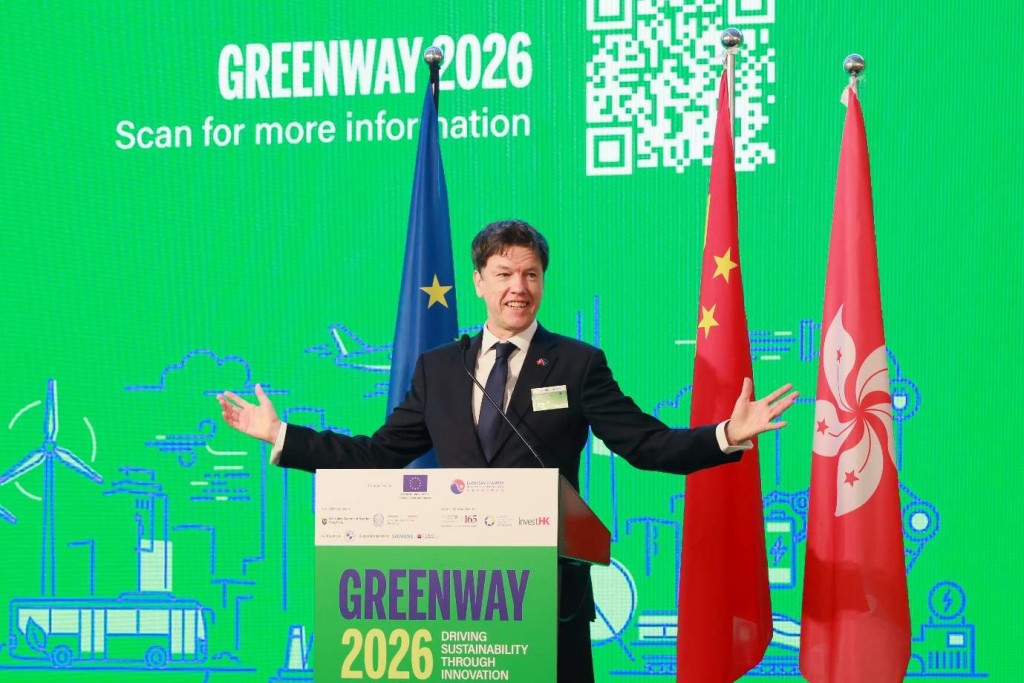
European companies will continue to invest in Hong Kong across sectors, including sustainable aviation, green shipping, and smart city planning, particularly in supporting the development of the Northern Metropolis, said Harvey Rouse, Head of the European Union Office to Hong Kong and Macao.
ADVERTISEMENT
SCROLL TO CONTINUE WITH CONTENT
Speaking at the "Greenway 2026 – Driving Sustainability Through Innovation" forum on Tuesday (June 23), Rouse highlighted the deep economic ties and green cooperation between the two regions. The forum, co-organized by the EU Office and the European Chamber of Commerce in Hong Kong, brought together more than 300 leaders from government, business, and civil society to explore ways to accelerate the green transition.
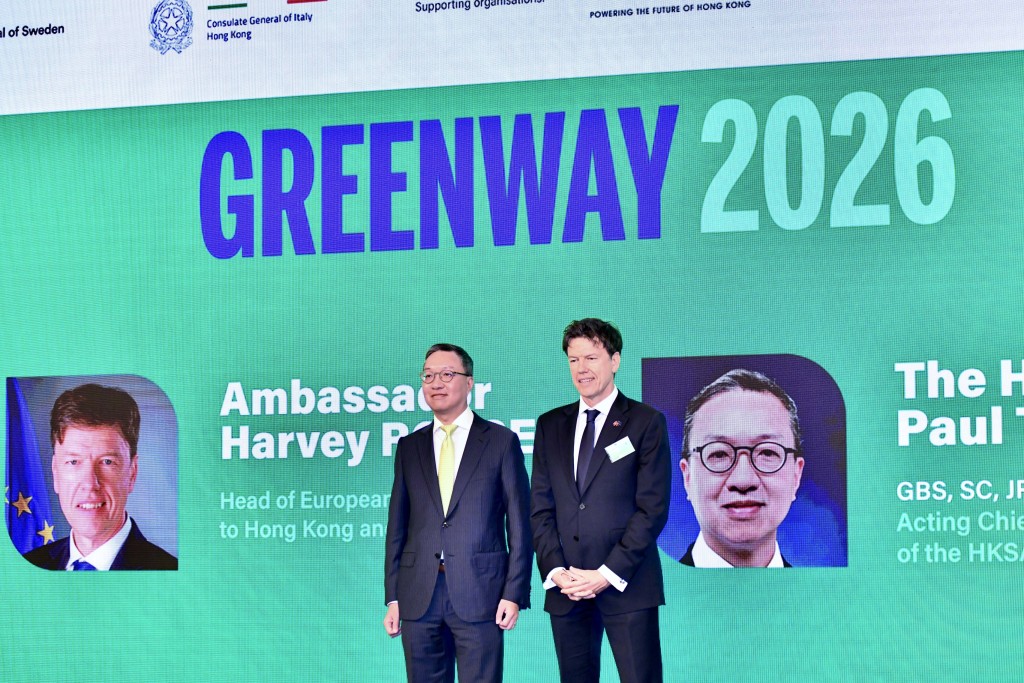
Paul Lam and Harvey Rouse jointly open the forum.
In his opening remarks, Paul Lam Ting-kwok -- the Acting Chief Executive as John Lee Ka-chiu is visiting Fujian -- said that innovation to promote sustainability will play a crucial role in Hong Kong’s future development.
He stressed Hong Kong's goal of achieving carbon neutrality by 2050 and highlighted three specific examples, namely green and sustainable finance, Sustainable Aviation Fuel (SAF), and clean energy and hydrogen power, to demonstrate the city's capability in sustainability.
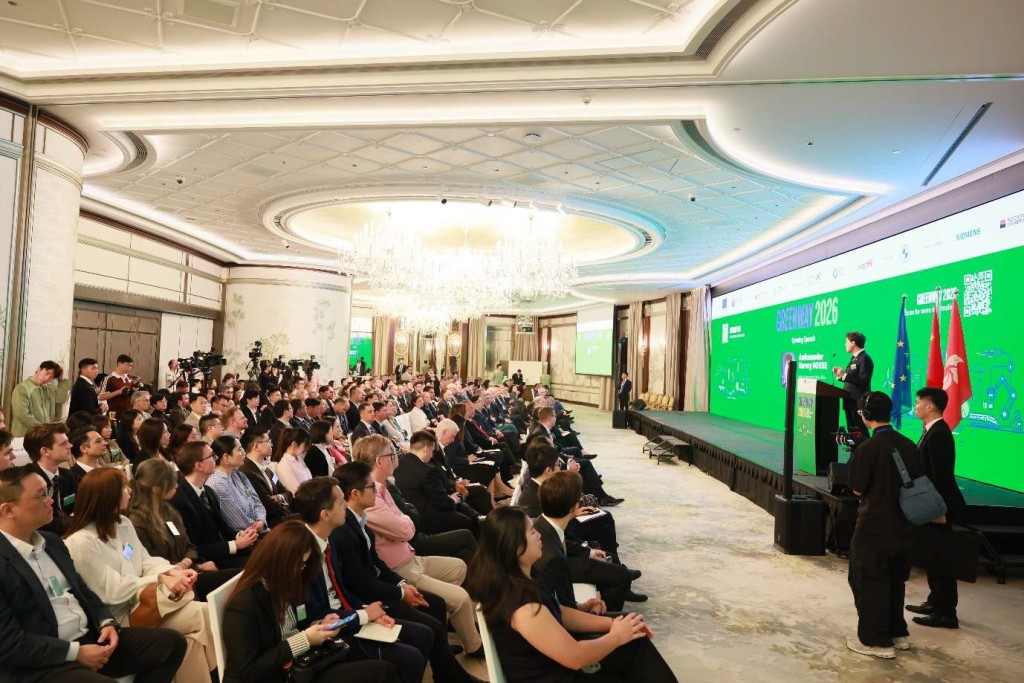
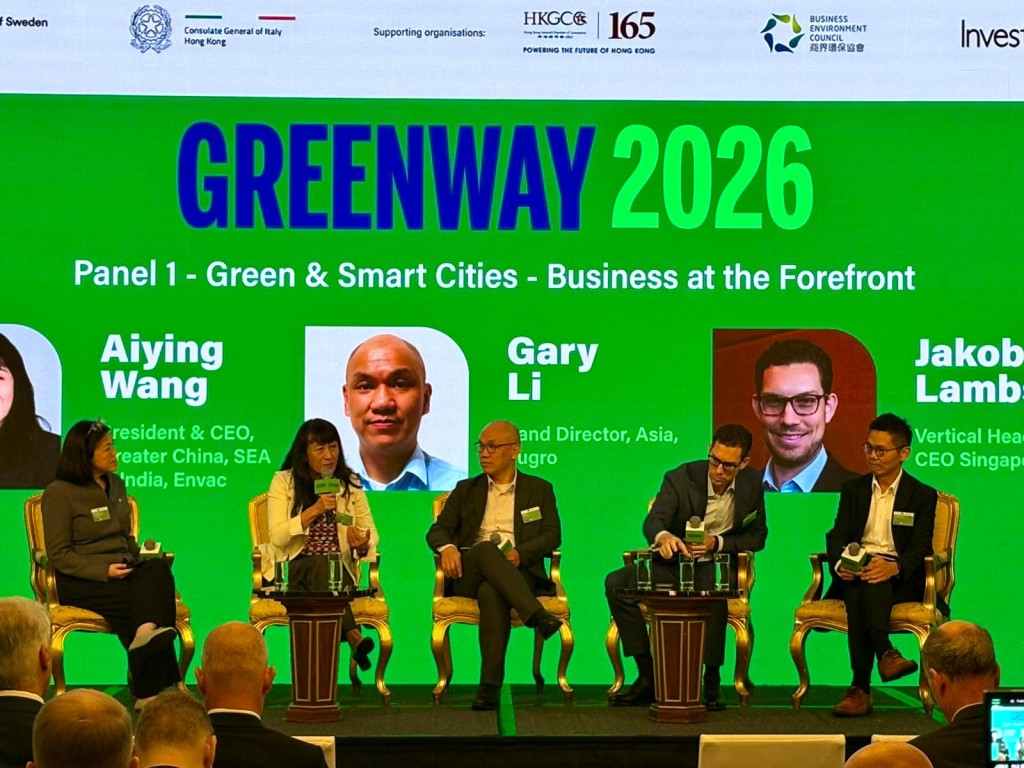
This year’s edition of the forum featured four themed panel discussions focusing on building smart, eco-friendly cities, advancing sustainable mobility, financing the green transition, and empowering Hong Kong’s innovation with cutting-edge EU technology.
According to Lam, Hong Kong has led Asia in arranging international green and sustainable bond issuances for eight consecutive years, accounting for about 40 percent of the regional total.
This figure echoes the government's ongoing effort to work closely with the industry to develop Hong Kong into a leading hub for green and sustainable finance, which was also stressed by Secretary for Financial Services and the Treasury Christopher Hui Ching-yu at the event. “We will keep building on our strengths—from our world-class green bond market and internationally aligned taxonomy, to our Core Climate platform,” Hui said.
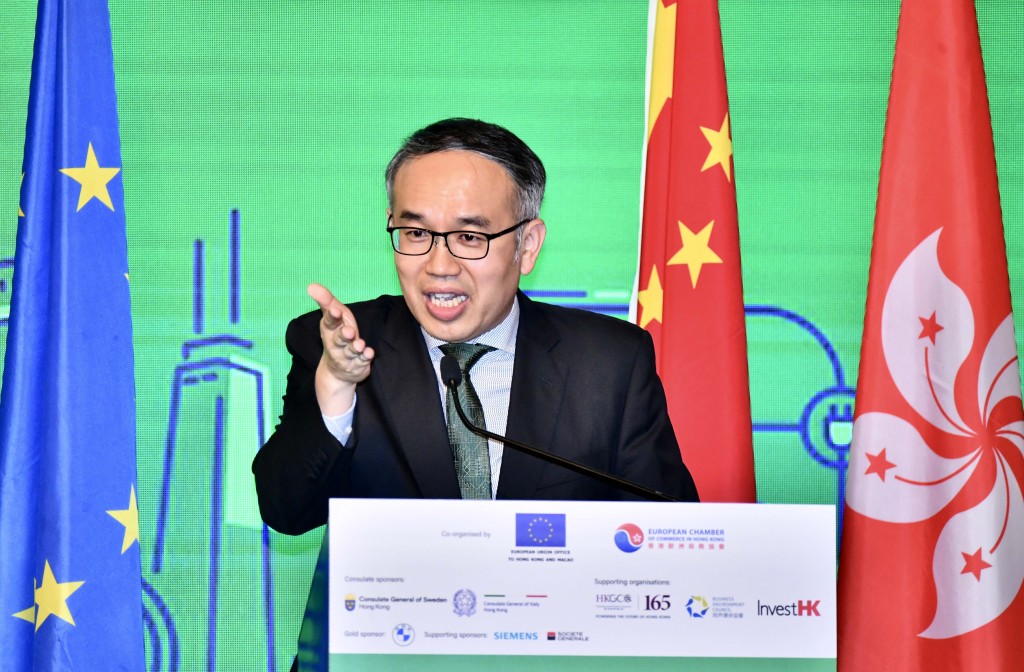
Christopher Hui
The government has also announced the successful pricing of approximately HK$27.6 billion worth of green bonds and infrastructure bonds under two programs, including a EUR750 million eight-year green tranche priced at 3.119 percent.
As of August 31, 2025, the government had also issued around HK$240 billion worth of green bonds.
Beyond finance, Hong Kong is targeting major transport sectors to slash carbon emissions. The second area Lam highlighted lies in Sustainable Aviation Fuel (SAF), which can reduce lifecycle emissions by more than 80 percent compared with conventional aviation fuel.
In early May, the government supported EcoCeres, a local enterprise, in signing a Memorandum of Understanding with the Dongguan Government to build SAF production plants in Dongguan, a key city in the Guangdong-Hong Kong-Macao Greater Bay Area.
Lam also pointed out that the Inter-departmental Working Group on Using Hydrogen as Fuel has given agreement-in-principle to 38 hydrogen energy trial projects, covering applications in the areas of transport, infrastructure, and hydrogen gensets at construction sites.
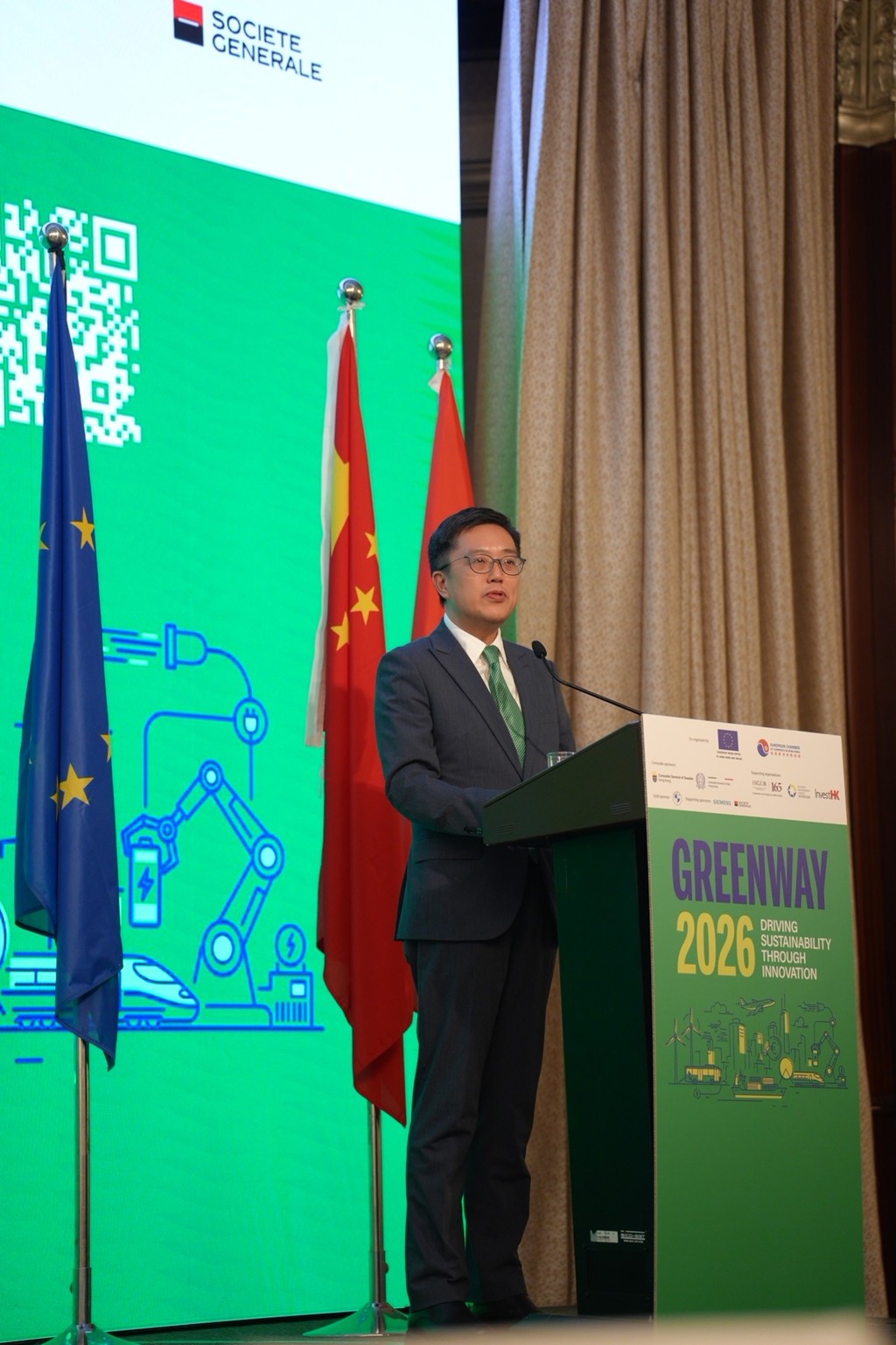
Kevin Choi
Permanent Secretary for Innovation, Technology and Industry Kevin Choi Kit-ming said Hong Kong recognizes European enterprises as vital partners in engineering the global green transition, and noted that the city has robust government backing, world-class talent, and deep synergy.
EU companies in Hong Kong are already highly active in waste management and water desalination, and they will soon launch initiatives for airplane recycling, Rouse noted, while reiterating that the European Union remains a global leader in climate cooperation.
“EU companies bring expertise, investment, and innovative solutions that are helping support Hong Kong's green and digital transformation,” Rouse said.
He emphasized that European companies can contribute world-class expertise in sustainable urban planning, smart infrastructure, energy efficiency, mobility, and digital technologies to the development of the Northern Metropolis.
The EU remains one of Hong Kong's leading investors, with 93 billion euros in foreign direct investment (FDI) stock—exceeding its combined investment in South Korea, Thailand, and Vietnam.
The region is also one of Hong Kong's largest trading partners, with total trade in goods and services exceeding HK$617 billion, while the EU is the largest foreign business community in Hong Kong with 8 percent growth last year.