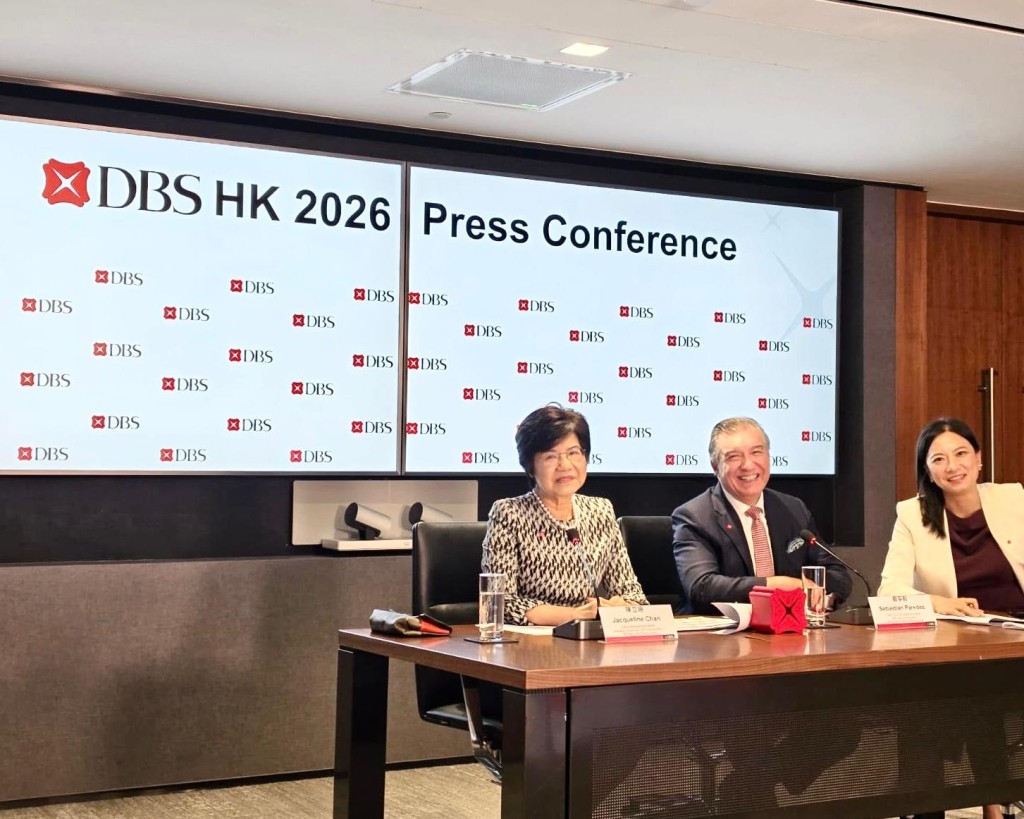
As the fourth largest retail bank in Hong Kong by assets, DBS Hong Kong reported a 23 percent year-on-year increase in net profit to a record HK$6.3 billion for the first half of 2026, driven by broad-based income growth and lower credit costs.
Total income rose 14 percent to HK$11.9 billion, with net interest income climbing 16 percent to HK$6.9 billion, supported by a 4 percent loan increase and 9 percent deposit growth — marking the bank's first half-year loan growth after several years of Chinese company deleveraging. Net interest margin expanded by 15 basis points to 1.9 percent.
Non-interest income also posted solid growth, up 11 percent to HK$5 billion, led by a robust 38 percent surge in wealth management income.
CEO Retirement Announcement
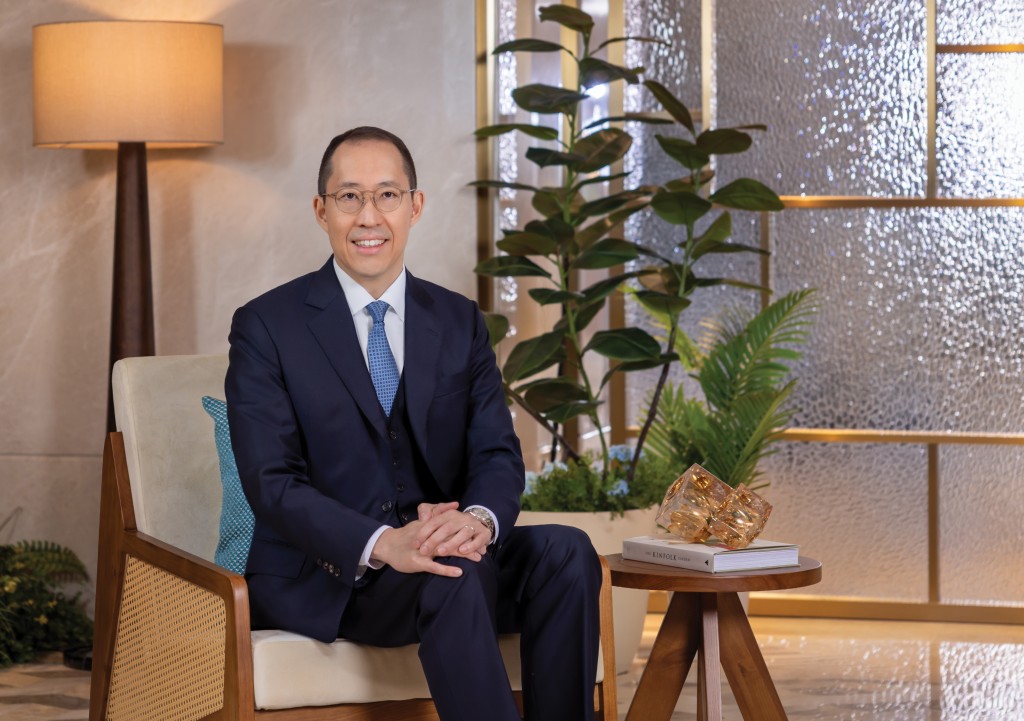
During the earnings call, chief executive Sebastian Paredes, who will retire on March 1, 2027, after 16 years with DBS Group and 14 years leading the Hong Kong operation, shared his personal plans:
"I made Hong Kong my home," Paredes said, noting that he would spend most of his time in the city after retirement, with only a few months of travel abroad each year.
He will transition to a senior advisor role, continuing to advise the bank's boards for Hong Kong, China, Taiwan, and Indonesia on strategy, client relationships, and geopolitical risk navigation.
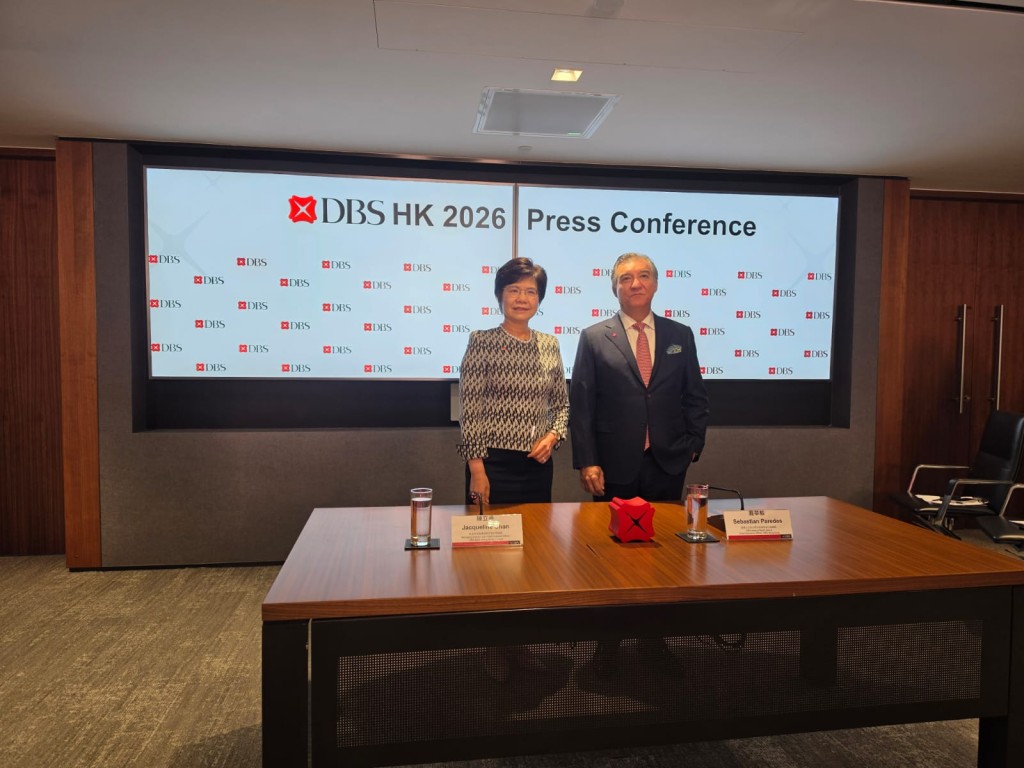
From left, Jacqueline Chan Nap-shan, managing director and chief financial officer, and Sebastian Paredes.
A Global Perspective That Adds Value
Paredes brings a truly international background to his advisory role. Having lived and worked across South America, Europe, Africa, and Turkey — in addition to Asia — he has developed a deep understanding of global markets and geopolitical dynamics. This breadth of experience, he noted, will be particularly valuable as DBS navigates an increasingly complex international landscape.
"As geopolitical situations arise, I'll probably be a very useful advisor for the board and for the executives," he said, adding that he has already assured his management team that they can always reach out to him for advice, friendship, and support.
Passion for Corporate Social Responsibility
Throughout his tenure, Paredes has been a strong advocate for corporate social responsibility, embedding community engagement into the bank's culture. He has championed initiatives focused on financial literacy, environmental sustainability, and social inclusion, believing that banks have a responsibility beyond profit-making. He intends to remain active in these areas after retirement, continuing to contribute to the communities he has long served.
Hong Kong's Strategic Importance
DBS established its significant local presence through the acquisition of Dao Heng Bank in 2001. Paredes emphasized that the bank's business is built on a strong local foundation, with the majority of clients being Hong Kong residents — mainland Chinese customers represent less than 30 percent of its wealth management business.
He noted that Hong Kong's role as the world's number one wealth management center continues to strengthen, with favorable tax policies attracting family offices and asset managers.
Interest Rate and Loan Outlook
Paredes expects low single-digit loan growth of 2 percent to 4 percent for the full year, continuing over the next 2 to 3 years. While the bank's budgeting cycle includes a possible interest rate hike in mid-2027, he personally believes rates will remain at current levels for the next 18 months, citing recent US inflation data.
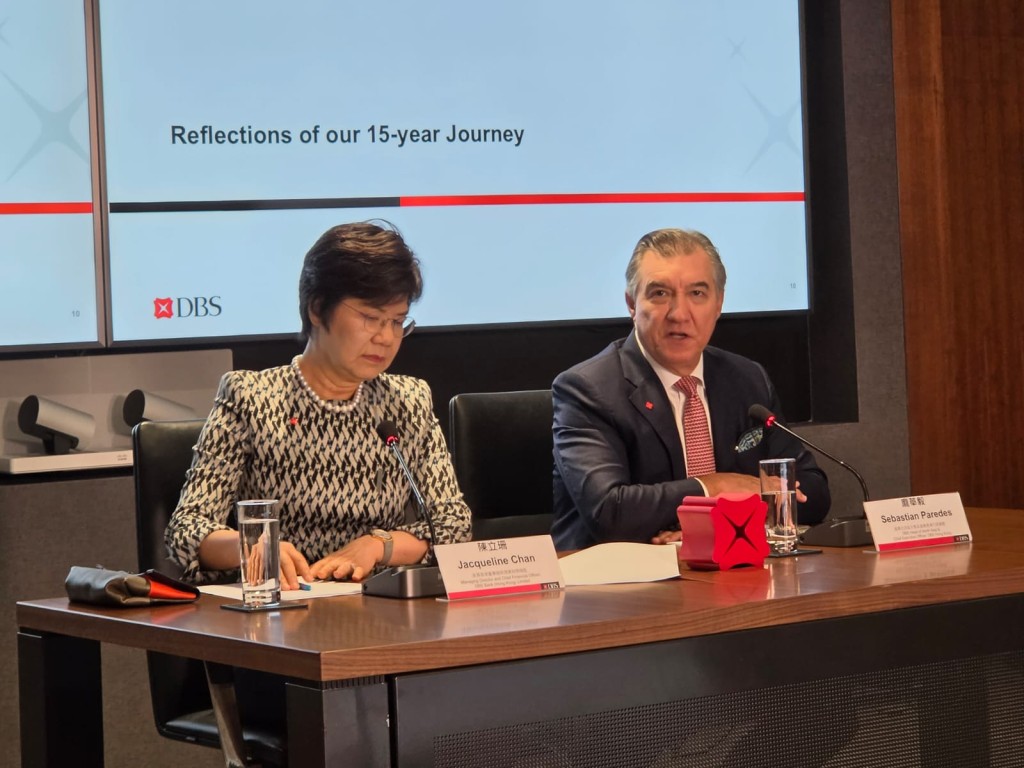
From left, Jacqueline Chan Nap-shan, managing director and chief financial officer, and Sebastian Paredes.
AI and Technology Strategy
"I am not a believer in using technology to reduce headcount. I am a believer in using technology to improve the livelihoods of employees and customers," Paredes stated.
He described Generative AI as one of the most transformative technologies and emphasized the bank's focus on reskilling employees to become "managers of AI," taking a contrarian position to those predicting widespread job cuts.
Real Estate Exposure
On the Hong Kong property market, Paredes noted that residential real estate is showing signs of recovery, supported by an influx of executives from mainland China and abroad, along with growing visitor numbers. Luxury retail has rebounded, though the mass retail segment continues to struggle. The office market remains mixed, with Central well-supported and inventory below 10 percent, while other areas like Kowloon Bay have yet to find a floor.
The bank's real estate loan-to-value ratios remain conservatively managed, and exposure in the US has been gradually reduced.