
Read More
The public consultation period for Hong Kong’s first-ever five-year development plan officially concluded today.
ADVERTISEMENT
SCROLL TO CONTINUE WITH CONTENT
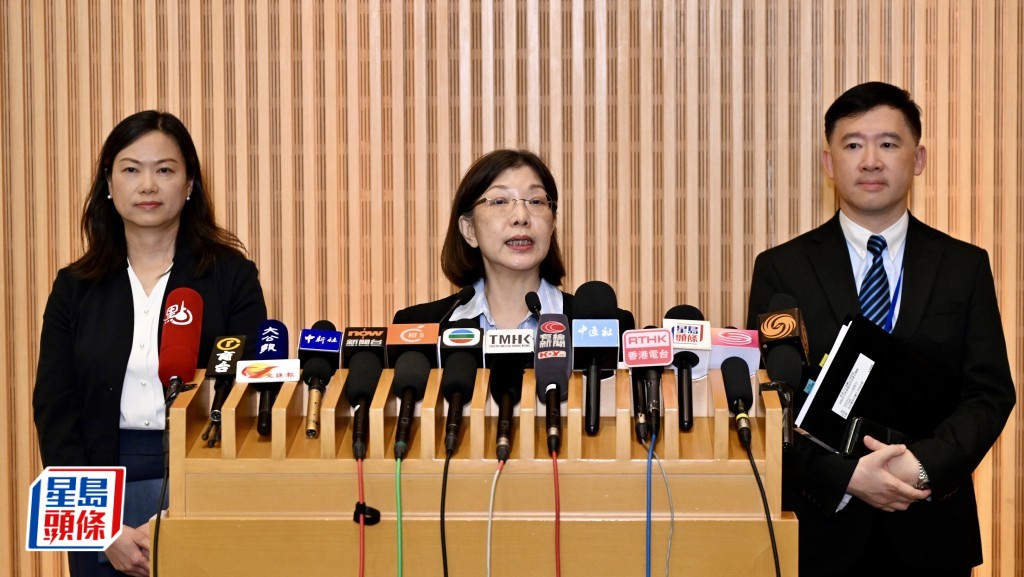
Secretary for Constitutional and Mainland Affairs Janice Tse Siu-wa met with the media at the government headquarters to summarize the findings of the public exercise.
She was accompanied by Permanent Secretary for Constitutional and Mainland Affairs Maggie Wong Siu-chu and Under Secretary for Constitutional and Mainland Affairs Clement Woo Kin-man.
The minister revealed that the local community responded enthusiastically during the two-month consultation, which began in mid-June, indicating deep public interest in the city's future direction.
She announced that the government aims to formally release the official five-year plan this September.
Artificial intelligence aids data analysis
To process the massive volume of public feedback, the government is utilizing artificial intelligence tools to categorize and analyze all submissions.
Officials hosted more than one hundred consultation sessions, with the Chief Executive personally chairing about thirty of them to gather opinions from lawmakers, business leaders, and political representatives.
Additionally, officials visited neighboring cities in the Guangdong-Hong Kong-Macao Greater Bay Area to explore deeper regional cooperation. In total, the administration received over sixteen thousand written submissions.
Over 80 percent of the feedback came from individual citizens, who primarily focused on day-to-day livelihood concerns such as housing, healthcare, education, and social welfare.
The remaining submissions came from political parties, business chambers, professional bodies, and think tanks.
The minister praised the professional quality of these group submissions, noting that they reflected deep research and a proactive vision for the city.
Focus on strategic industries and regional growth
The analyzed feedback showed a clear consensus on aligning Hong Kong's development with national strategic plans.
Many stakeholders suggested that Hong Kong should nurture emerging strategic industries, leverage its professional services sector, and accelerate its transformation into an international innovation and technology hub.
In the financial sector, there was explicit backing for building a robust commodity trading ecosystem and launching a wider variety of Renminbi products to strengthen Hong Kong's status as a global offshore Renminbi hub.
A large volume of feedback also supported accelerating the development of the Northern Metropolis.
Respondents advocated for focusing on three planned university towns and the Lok Ma Chau Loop technology zone to create an integrated hub for research and development. Furthermore, citizens voiced strong interest in deepening cross-border cooperation in areas relating to talent, education, and logistics.
Two-tier indicators to guide progress
To monitor the success of the five-year plan, the government will implement two distinct categories of performance indicators, mirroring the design of the national development strategy.
The first category consists of binding indicators, covering areas such as environmental protection and food security. These are hard targets the government must achieve through firm policy and resource allocation.
The second category consists of predictive indicators, which focus on economic innovation and market-driven sectors.
While the government will provide guidance for these economic areas, their ultimate success will rely on market dynamics and cannot be calculated with absolute precision.
The minister concluded that the five-year plan is a major milestone that serves as an organic part of the national fifteenth five-year plan, helping Hong Kong actively integrate into and serve the country's broader development goals.