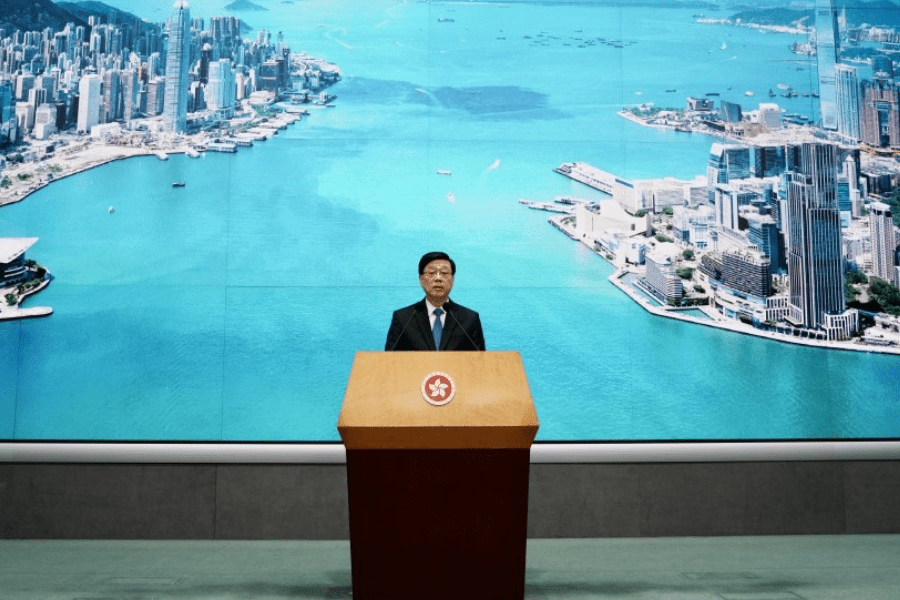
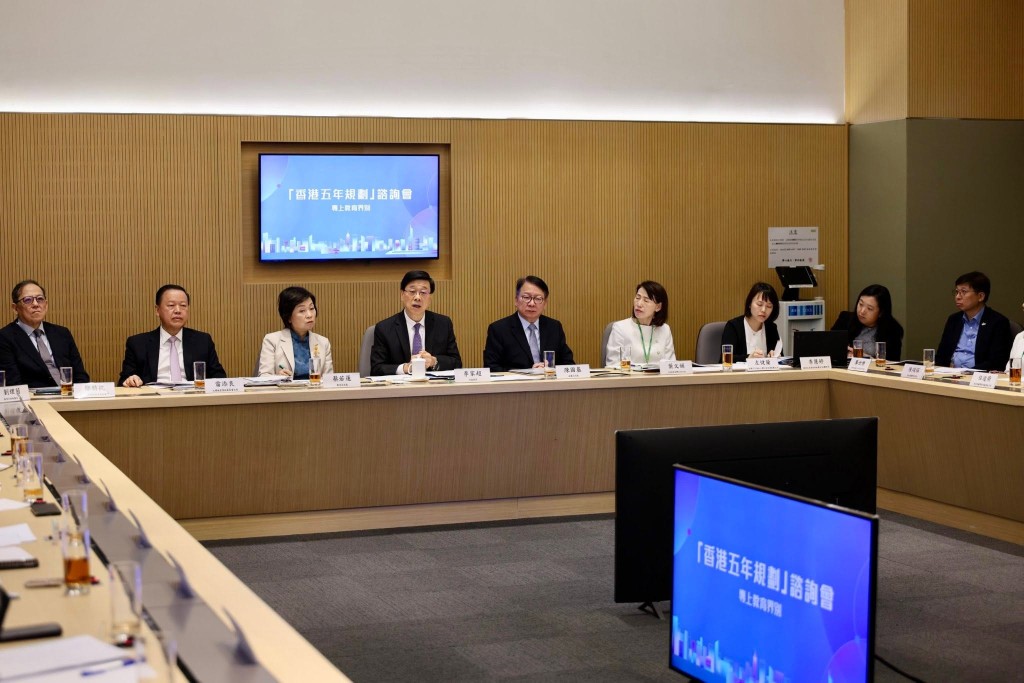
Chief Executive John Lee Ka-chiu said on Tuesday that the proposed mechanism for issuing certificates to classify criminal cases as involving national security is aimed at reducing legal disputes and enhancing legal clarity.
His remarks came after the Security Bureau and the Department of Justice proposed on Monday introducing subsidiary legislation to set out a classification mechanism for “other offences endangering national security under the law of the HKSAR” under the Hong Kong National Security Law and the Safeguarding National Security Ordinance.
Speaking ahead of the Executive Council meeting on Tuesday morning, Lee emphasized that the move aims to strengthen legal clarity, adding that each case will be handled prudently.
He said the issuing of certificates would be exercised with “rigor and seriousness,” adding that the Chief Executive has a special duty to safeguard national security.
Lee said many cases involving national security may involve sensitive intelligence and materials that are often accessible only to the Chief Executive, particularly in cases related to espionage.
He added that it is appropriate for the Chief Executive to exercise the certification power, stressing that the proposed legislation does not involve creating any new criminal offence, penalty or enforcement power.
In line with international practice: Ronny Tong
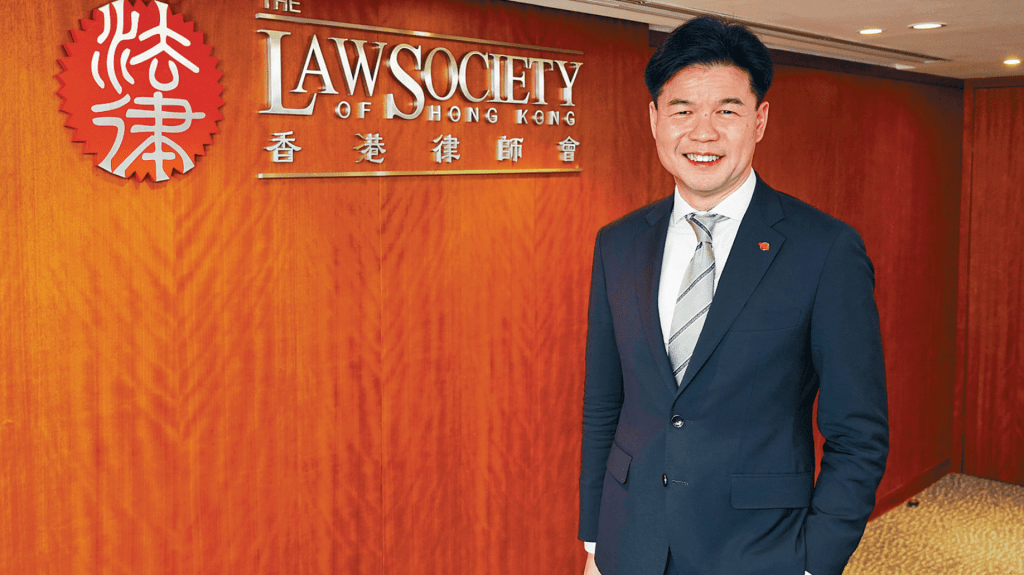
Executive Councillor and veteran barrister Ronny Tong Ka-wah expressed a similar view, saying on a radio program that the proposal simply clarifies procedural arrangements when a criminal case is found to involve national security.
On the Chief Executive’s power to issue certificates, Tong said the power is already provided for under the Hong Kong National Security Law and the Safeguarding National Security Ordinance.
He cited a decade-old United States Supreme Court precedent, saying that entrusting the executive branch with determining what constitutes a national security threat is in line with international practice.
“National security decisions often involve highly sensitive intelligence, even state-level secrets, which may not be suitable for disclosure in court,” Tong said.
He stressed that the final determination of guilt or innocence remains with the judiciary, and described the proposed amendment as necessary.
Addressing concerns that a certificate could suddenly be issued midway through a trial, requiring a case to be reassigned to a designated national security judge, Tong said such a scenario was highly unlikely.
He said Hong Kong’s criminal procedure requires both the prosecution and defense to have access to evidence early in the process.
However, if police investigations uncover sensitive national security information, the Chief Executive could issue a certificate at that stage, after which national security procedures would apply, Tong added.