Read More









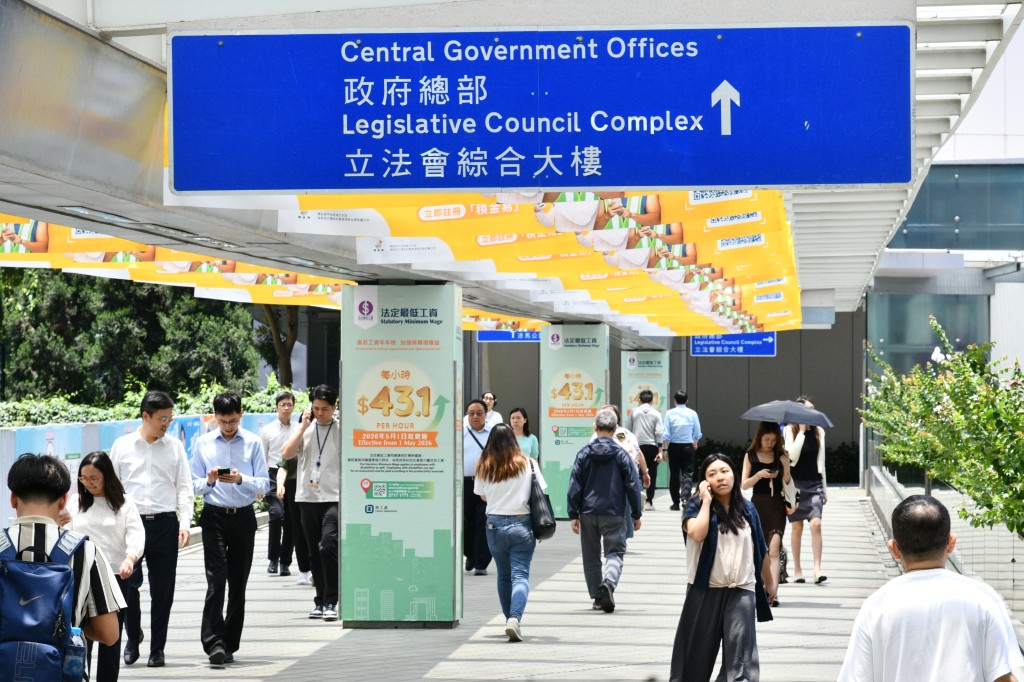
Following the release of the latest civil service pay trend survey indicators, a prominent union leader is urging the Hong Kong government to boost the proposed salary increase for junior staff to match the middle tier, citing the city's robust economic recovery and rising living costs.
The union has also expressed reservations about a new performance appraisal mechanism slated for October that could impose a strict quota on underperforming staff.
The preliminary net indicators from the annual pay trend survey suggest salary increases of 4.12 percent for senior civil servants, 2.64 percent for middle-ranking staff, and 1.17 percent for junior workers.
In an interview with Sing Tao Headline, The Standard's sister publication, Hong Kong Civil Servants General Union chairman Fung Chuen-chung noted that while the union respects the government's statistical mechanism, the suggested bump for the lowest band is insufficient to cover basic increases in living expenses.
Pointing to the city's strong economic momentum—highlighted by a 5.9 percent gross domestic product growth in the first quarter, rising tourist numbers, and a positive stock market—Fung argued that the government's revenue is expected to grow further alongside a stable consolidated surplus.
To address these financial pressures, the union is proposing that the pay raise for junior civil servants be elevated to match the 2.64 percent recommended for the middle tier.
Furthermore, Fung highlighted that this 2.64 percent figure merely offsets the forecasted annual inflation rate of 2.6 percent.
Considering a previous pay freeze and the current economic prosperity, he suggested an additional discretionary increase of at least 0.5 percent on top of the base rate for both lower and middle-ranking employees.
He expressed hope that the Chief Executive and the Executive Council would provide extra consideration for these workers, noting that civil service salaries have lagged behind the private market after deviating from the standard pay adjustment mechanism for three of the past six years.
Aside from salary adjustments, the government is planning to roll out the first phase of an optimized civil service performance appraisal mechanism this October.
The initial phase is expected to affect approximately one-third of civil service grades, which is believed to include the disciplined services.
However, Fung voiced reservations regarding a proposed mandate that would require at least five percent of staff to receive a performance rating of level four or below, a grade that would disqualify them from receiving their annual salary increments.
He argued against implementing fixed quotas for evaluation levels, maintaining that promotions should be granted organically to those who perform well, while underperforming staff should be directed toward further training rather than being penalized by a rigid statistical distribution.