
Read More
A targeted intervention initiative has successfully reduced trauma symptoms among parents by 41 percent and boosted children's resilience by 21 percent in at-risk households, according to recent figures released by the WEMP Foundation.
ADVERTISEMENT
SCROLL TO CONTINUE WITH CONTENT
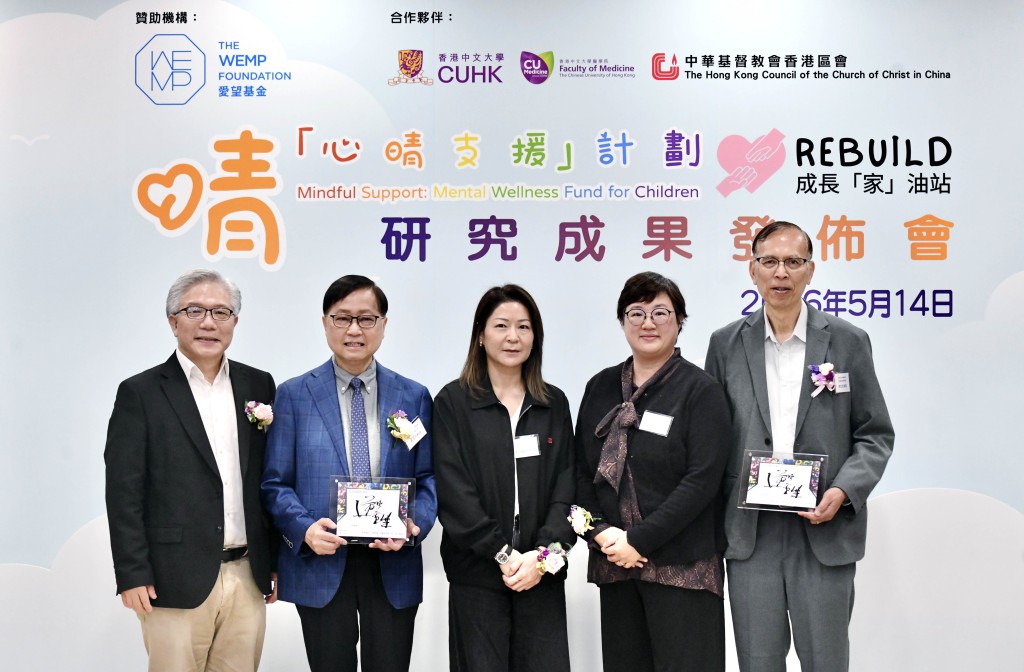
Sponsored by the WEMP Foundation since April 2023, the Mindful Support program assists high-risk families in the New Territories East and North who are grappling with emotional distress, severe financial pressure, or the complex challenges of raising children aged up to six with special educational needs (SEN).
Following its three-year implementation, WEMP Foundation Chief Executive Officer Alex Mo Tik-seng reported that the initiative has served more than 280 families.
The program provides an average subsidy of HK$20,000 to HK$30,000 to fund a six-month, short-term intervention.
Organizers noted that over 60 percent of participating caregivers face severe mental health challenges like depression and anxiety, and a similar proportion of them involve children requiring special educational support.
To overcome barriers like social stigma and poverty, the outreach team employs highly flexible solutions. These include distributing supermarket vouchers, covering infant care fees, and actively encouraging parents with mental illnesses to resume their psychiatric clinic visits.
Considering traditional support services often require longer waiting times and complex applications, he described the Mindful Support program as an effective lifeline for families on the brink of collapse.
Future expansion to more families
Once families achieve stability, they transition into a medium-to-long-term "Rebuild" phase designed alongside experts from the Chinese University of Hong Kong.
This phase provides trauma-focused therapy, positive parenting education, and one-on-one mentoring.
Data from recent cases revealed that alongside the drop in trauma symptoms, parents' overall stress and depression levels improved by 33 percent, while behavioral problems among preschoolers dropped by 35 percent.
"These are not miracles," Mo said. "They are the outcomes of cross-disciplinary, family-based, evidence-based efforts."
Looking ahead, the WEMP Foundation hopes to continue to promote the "family-based, early intervention, short-term intensive, long-term protection" intervention model to safeguard the mental health of more young children and their families.
From severe autism to mild
The program’s profound impact is evident in the lives of its beneficiaries.
One mother recalled her despair when her two-year-old son, diagnosed with moderate-to-severe autism, was dismissed from his pre-nursery class.
Facing unaffordable private therapy costs locally, she received foundation funding for intensive training in mainland China.
After two years of consistent support, the five-year-old has been re-diagnosed with only mild autism and has developed a deep passion for Chinese calligraphy.
She pointed to the motto her son wrote, " All things in their being are good for something," which moved her deeply.
Glimmer of hope after daughter's suicide
Another beneficiary, a grandmother, was forced to raise her grandson alone after his mother abandoned him at birth.
Initially struggling to afford help, financial aid from the program enabled the boy, who suffered from severe language delays, to receive critical speech therapy.
When the boy's mother tragically died by suicide years later, the program intervened again, providing the emotionally shattered grandmother with crucial psychiatric treatment to combat severe depression and help her confidently re-enter society.
"I used to never leave the house. Now I can stand here and share my story," she said, adding her condition has improved a lot after eight months of medication.