Read More


Night Recap - May 21, 2026
3 hours ago

ImmD crackdown targets moonlighting domestic helpers arresting 17
19-05-2026 17:52 HKT


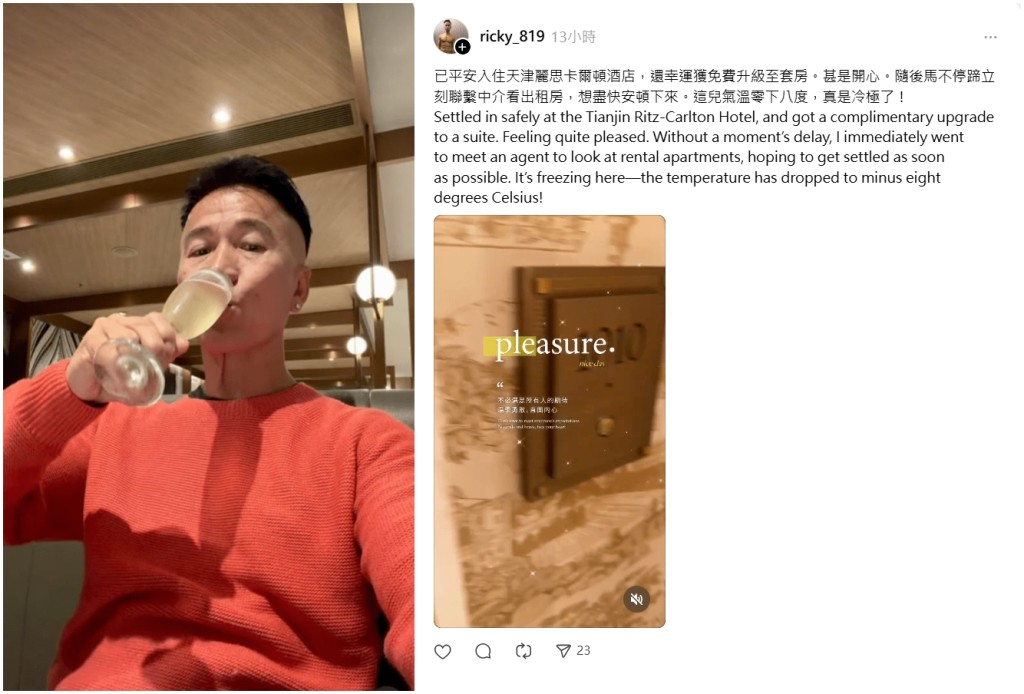
The Constitutional and Mainland Affairs Bureau said on Wednesday that the Hong Kong government’s Tianjin liaison office director Ricky Cheng Chun-sang had personally paid for his flight upgrade and hotel accommodation during his recent posting to Tianjin, stressing that no public funds were involved.
Cheng, who is employed under the post-retirement service contract scheme, had earlier posted on social media that he was “lucky” to receive a complimentary upgrade to a suite when staying at the Ritz-Carlton Tianjin, and that he was “quite pleased” about the arrangement.
In a separate post published last May, he also shared that he had accepted the arrangement by a TurboJET executive to travel in a private cabin from Hong Kong to Macau.
The social media posts sparked online criticism, with some netizens questioning whether Cheng, as a public officer, had improperly accepted private benefits. The posts have since been deleted.
Responding to media inquiries, the bureau said Cheng bore the additional cost of the upgraded flight when he traveled to Tianjin to assume his new role, as well as his accommodation expenses during his stay, adding that the expenses did not involve the use of public funds.
It was understood that Cheng is a senior member of the hotel group concerned, which resulted in the room upgrade.
As for the private cabin arrangement on the TurboJET service to Macau, the bureau said it was still looking into the incident and would “seriously follow up” if any illegality or irregularity was found.
The Beijing Office of the Hong Kong Special Administrative Region Government has also reminded Cheng to be mindful of public perception when sharing personal experiences on social media.
Cheng was previously the director of the Hong Kong government’s Fujian liaison office before taking up his new post in Tianjin.
Under the Civil Service Code, civil servants are required to ensure that no actual, perceived, or potential conflict of interest arises between their public duties and private interests. Where such conflicts exist, they must be declared to supervisors as soon as possible.
The code also stipulates that civil servants must not use their public office to seek private gain for themselves or others, nor directly or indirectly solicit or accept any advantage that may affect, or be perceived to affect, the discharge of their duties.
The Prevention of Bribery Ordinance strictly prohibits corruption involving public officers. While entertainment is not classified as an advantage under the ordinance, civil servants are required to avoid accepting excessively lavish, generous, or frequent entertainment that may cause embarrassment in the performance of their duties or damage the reputation of the government.
Read more: Tianjin-based HK official's posts on free upgrades spark scrutiny