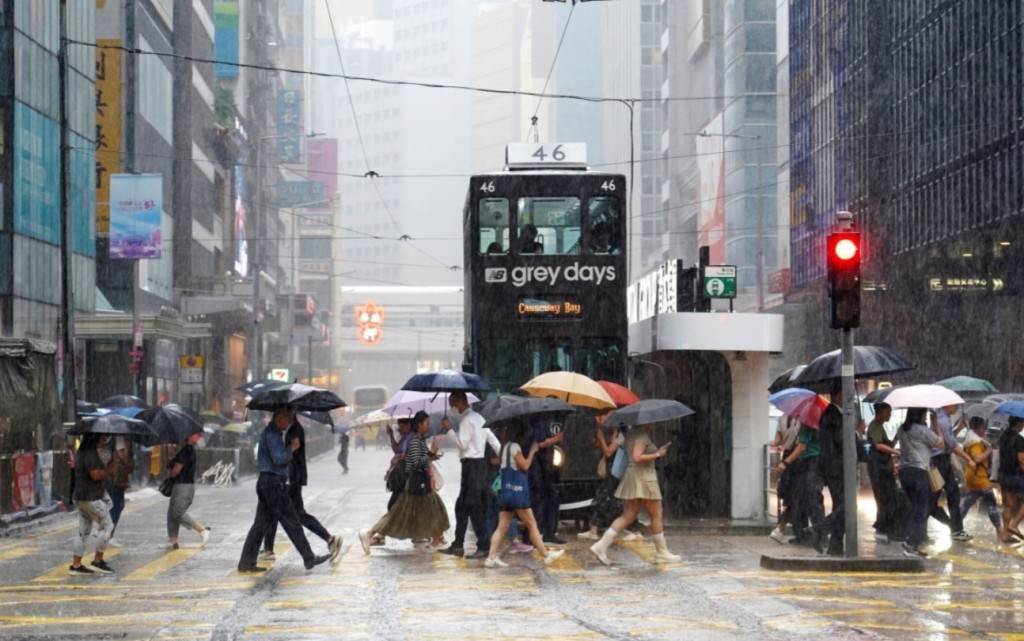
Despite the approach of the traditional Lidong, or "start of winter," on November 7, Hong Kong is set to experience unseasonably warm temperatures, with forecasts predicting highs near 30 degrees, highlighting the impacts of global warming on local weather patterns.
The city experienced a fleeting taste of autumn earlier this week when temperatures dropped to a yearly low of 18.4 degrees on Tuesday, with some parts of the New Territories dipping to 17 degrees.
However, the Hong Kong Observatory reports that a thick cloud band covering southern China will gradually thin out, leading to clearer skies and drier conditions.
This shift will cause temperatures to climb steadily, reaching a low of 25 degrees and a high of 29 degrees by October 31, with some areas like Sheung Shui hitting 30 degrees on Halloween.
Looking ahead, the Lidong or "start of winter," on November 7, one of the 24 solar terms in the Chinese calendar, will feel far from wintry.
Minimum temperatures are expected to hover between 23 degrees and 24 degrees, with highs reaching 28 degrees to 29 degrees, more akin to late summer than early winter.
The Observatory’s nine-day forecast indicates that an easterly airflow will influence Guangdong’s coastal areas by early to mid-next week.
Next Monday and Tuesday, temperatures will range from 23 degrees to 27 degrees with mostly cloudy skies and rain, accompanied by east to northeast winds at force 4 to 5.
By Wednesday and Thursday, temperatures will rise slightly to 24 degrees to 28 degrees, with brief periods of sunshine.
Halloween on October 31 will bring partly sunny skies but continued warmth, with temperatures between 25 degrees and 29 degrees.
While Hong Kong enjoys this prolonged warmth, other parts of the world are already facing early winter conditions.
Northern China has seen a sharp drop in temperatures due to strong cold air masses, with cities like Zhengzhou and Luoyang in Henan province experiencing their first snowfall of the season on Monday.
Meteorologists suggest that a potential "weak La Niña" phenomenon this autumn and winter could increase the likelihood of colder-than-average weather in some regions, contrasting sharply with Hong Kong’s persistent heat.