Read More







Night Recap - July 27, 2026
4 hours ago




Ocean Park cable car sends passengers on swing as typhoon winds blow
26-07-2026 18:05 HKT



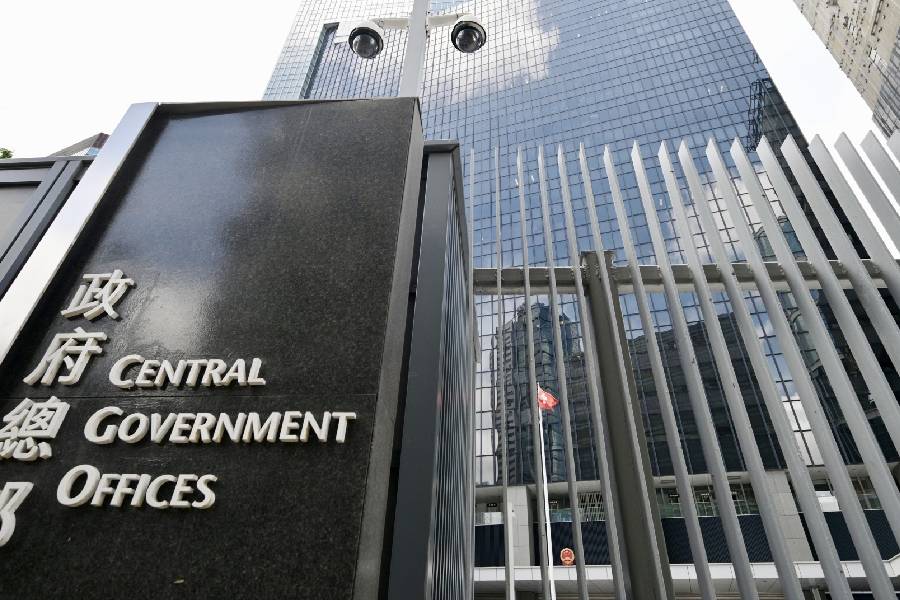
The government on Friday issued a strong rebuke of the United Kingdom’s six-monthly report on Hong Kong covering January to June 2025, condemning it as a politically motivated attempt to undermine the city’s law-based governance.
The government accused the UK of making baseless claims and interfering in China’s internal affairs, emphasizing that Hong Kong, as an inalienable part of China, operates under the Central People’s Government with a high degree of autonomy under the “One Country, Two Systems” principle.
The government clarified that the Sino-British Joint Declaration solely addressed China’s resumption of sovereignty over Hong Kong and grants the UK no authority to intervene post-1997, urging London to respect international law and cease meddling.
Safeguarding rights and freedoms
The HKSAR government affirmed its unwavering commitment to protecting the rights and freedoms of Hong Kong residents, enshrined in the Constitution and the Basic Law.
Both the Hong Kong National Security Law (HKNSL) and the Safeguarding National Security Ordinance (SNSO) explicitly ensure that human rights, including freedoms of speech, press, publication, association, assembly, procession, and demonstration, are upheld in accordance with the Basic Law and international covenants like the ICCPR.
However, these rights are not absolute, as the ICCPR allows restrictions for national security, public safety, or public order.
The government stressed that journalists must adhere to responsible journalism standards, acting in good faith and with accurate information, to enjoy these protections, noting that Hong Kong’s media landscape remains vibrant despite legal obligations to comply with the law.
Defending National Security Laws
The government vehemently rejected the UK’s criticisms of its national security laws, arguing that enacting such legislation is a sovereign state’s inherent right, aligned with international practices, including the UK’s own 14 national security laws.
The HKNSL, implemented in 2020, swiftly restored order after the 2019 “black-clad violence,” enabling residents to regain freedoms disrupted during that period.
The 2024 SNSO further strengthened these mechanisms, supporting economic growth and human rights. The government dismissed the UK’s portrayal of law enforcement actions as undermining freedoms, calling it a distortion of Hong Kong’s constitutional duties and the positive impacts of these laws, which have helped the city rank as the world’s freest economy in 2025 and third in global competitiveness.
Upholding judicial independence
Hong Kong’s commitment to an independent judiciary was underscored as a cornerstone of its legal system, protected by Articles 2, 19, and 85 of the Basic Law, which ensure courts operate free from interference.
Judges, selected for their professional qualities by an independent commission, uphold justice impartially, as affirmed by the Judicial Oath.
The government refuted claims that national security laws compromise judicial independence, emphasizing that all cases, including those under the HKNSL, are handled based on evidence and legal principles, regardless of a defendant’s background. The Department of Justice, under Article 63, conducts prosecutions free from interference, ensuring fair trials.
The government criticized the UK’s comments on ongoing cases, such as that of Jimmy Lai, as attempts to pressure the judiciary, potentially constituting an obstruction of justice.
Combating absconders and extraterritorial enforcement
The HKSAR government defended the extraterritorial application of the HKNSL and SNSO, calling it necessary and consistent with global practices.
The Hong Kong Police are obligated to pursue individuals who endanger national security, including absconders hiding abroad who collude with foreign forces.
The government rejected the UK’s criticism of these measures as hypocritical, noting that the UK itself employs similar tactics against wanted criminals.
Such actions by the police are lawful and essential to combat threats to national security, ensuring accountability for those who violate Hong Kong’s laws, regardless of their location.
Strengthening national education
The government emphasized the importance of national education in fostering students’ understanding of China’s history, culture, Constitution, and Basic Law, cultivating a sense of national identity.
Schools are tasked with maintaining a safe, politics-free environment, and teachers serve as role models in nurturing responsible citizens. National security education, a global norm, supports Hong Kong’s educational goals without compromising academic freedom, which remains a valued cornerstone of the city’s higher education sector.
Universities continue international exchanges while integrating national security education, enjoying autonomy in curriculum design to provide diverse learning opportunities, reinforcing Hong Kong’s commitment to both education and security.