Read More

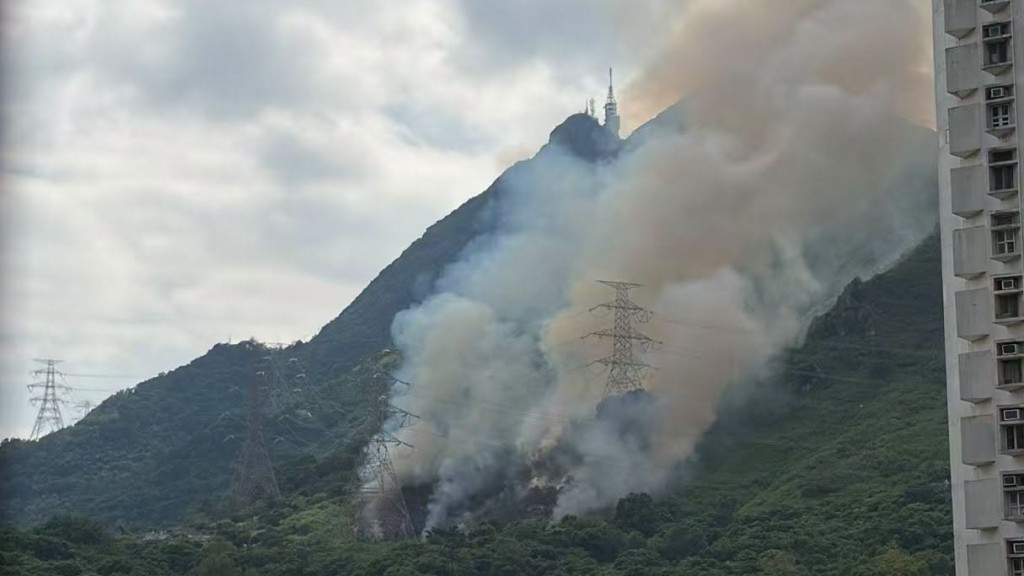
Por Lo Shan hill fire erupts in Tuen Mun
45 mins ago

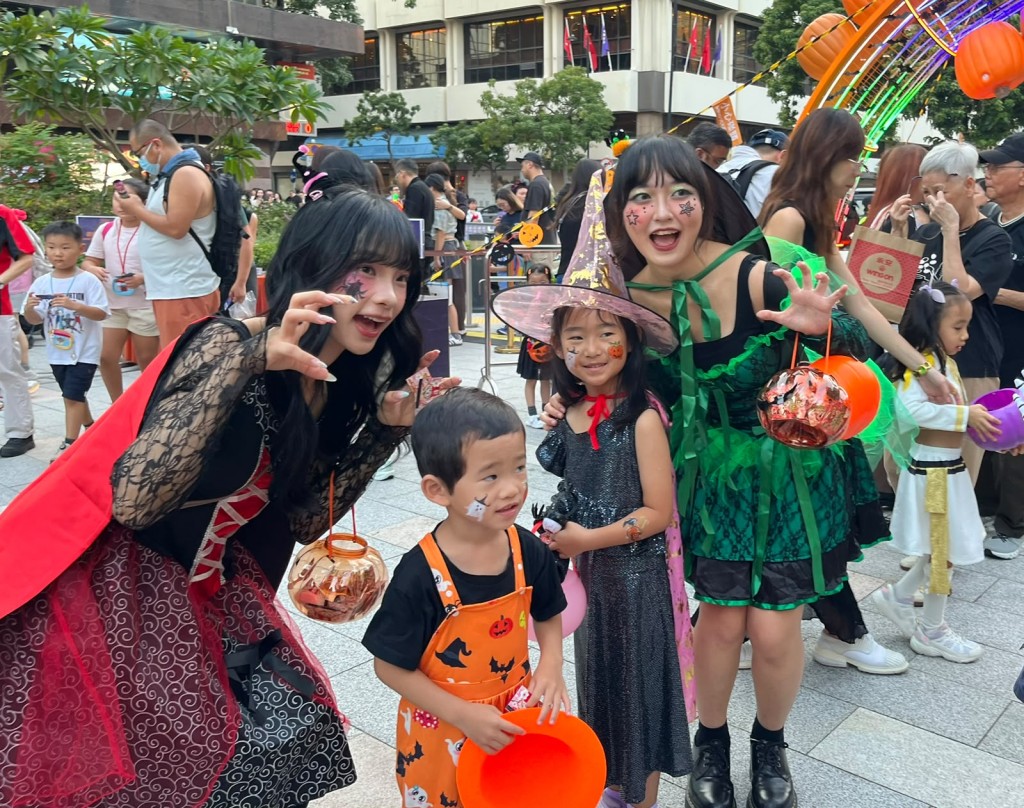
Lan Kwai Fong sees crowds ahead of Halloween
19 hours ago





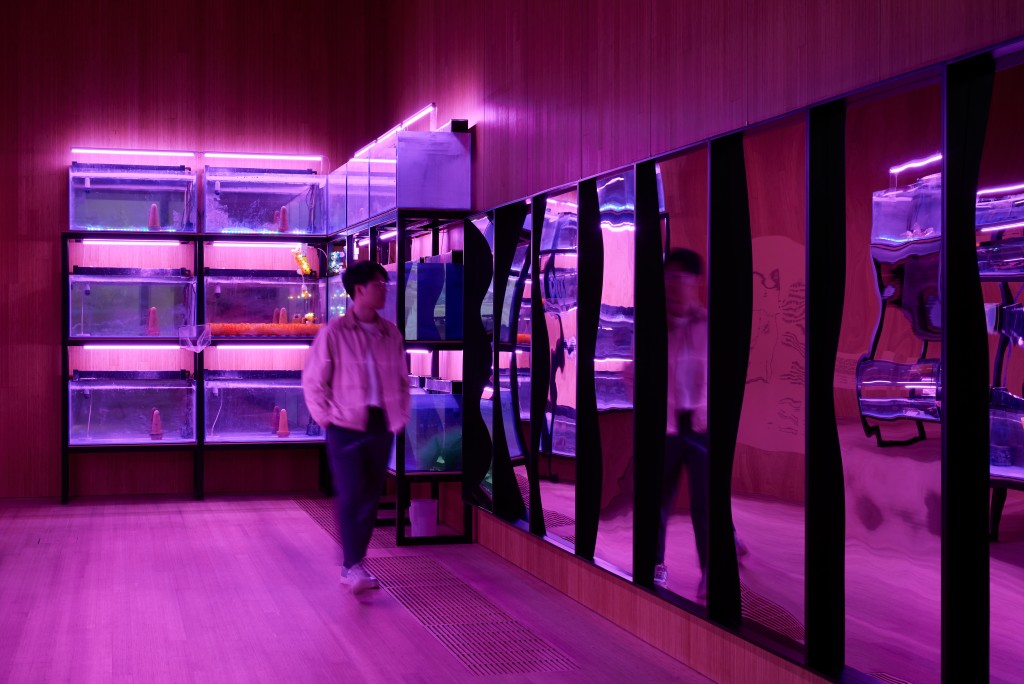
Hong Kong artist Trevor Yeung invites art enthusiasts to a fishless aquarium and a defunct fountain in a Venetian courtyard at his solo exhibition at M+, exploring the relationships between humans and aquatic ecosystems through the concept of detachment.
Co-presented by M+ and the Hong Kong Arts Development Council (HKADC), the exhibition, “Trevor Yeung: Courtyard of Detachments,” opens this Saturday (Jun 14).
It also marks a recontextualized return of Yeung’s exhibition, which represented Hong Kong as a Collateral Event at the 60th Venice Biennale and attracted over 200,000 visitors—a historic high for the event.
Raised and based in Hong Kong, Yeung draws inspiration from his surroundings—pet shops, his father’s seafood restaurant, public fountains, feng shui arrangements, and even his childhood pet fish.
Upon entering the exhibition, visitors are transported to an abandoned pet fish shop illuminated by purple lights. Mirrored walls reflect their presence into the installation, casting them as participants within the scene, perhaps as a fish, a customer, or a fish seller.
Without water in the tanks, the installation in Cave of Avoidance (Not Really), rows of empty fish tanks, marked by dried algae and water stains, evoke a sense of absence and attachment.
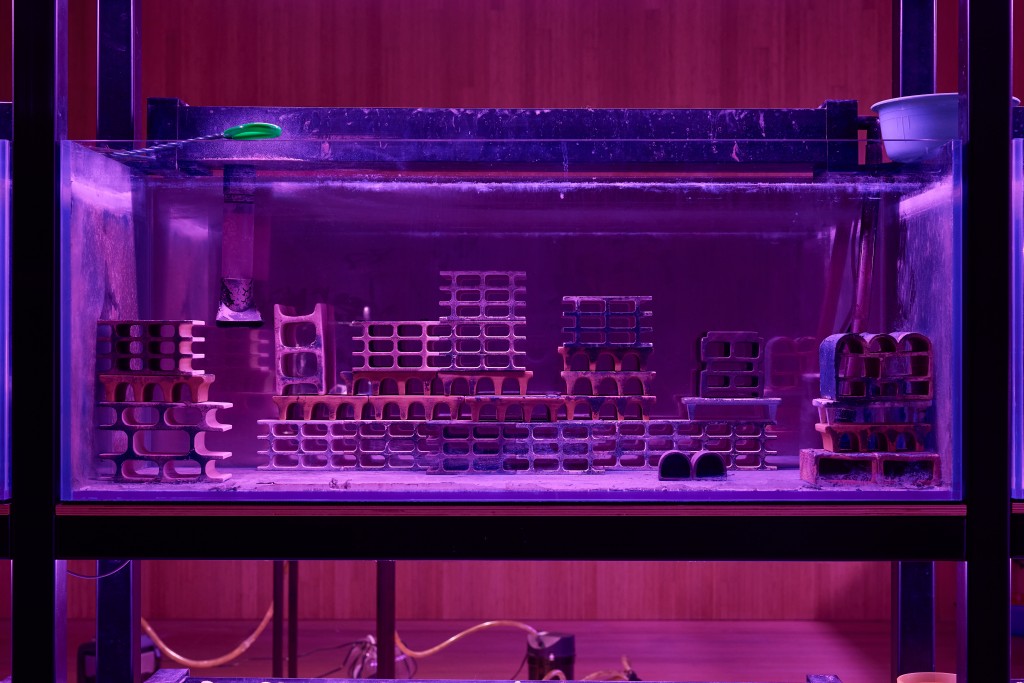
Behind the racks of tanks stands the artwork Little Comfy Tornado (After Typhoon), featuring a broken filtration system that once regulated the delicate environment fish require to survive, which serves as a warning about the consequences of neglect.
“Every fish tank, every aquatic system, is a microcosm of society,” Yeung explained. “While many of my works feature fish, it doesn’t really matter if we’re talking about fish in the end.
The point is to reflect on how you navigate your relationships with attachment.”
From salts that accumulated on the exhibition walls in Venice (Salty Lover (Hong Kong)) to clusters of fungi (Night Mushrooms), other works in this room use specific materials to embody resistance and defiance.
In the second part of the exhibition, Yeung invites visitors to rest and reflect in a Venetian-style courtyard setting.
At its center stands the artwork Pond of Never Enough (Under Construction). This boarded-up fountain, once operational during the Venice Biennale, is now defunct and suspended in time.
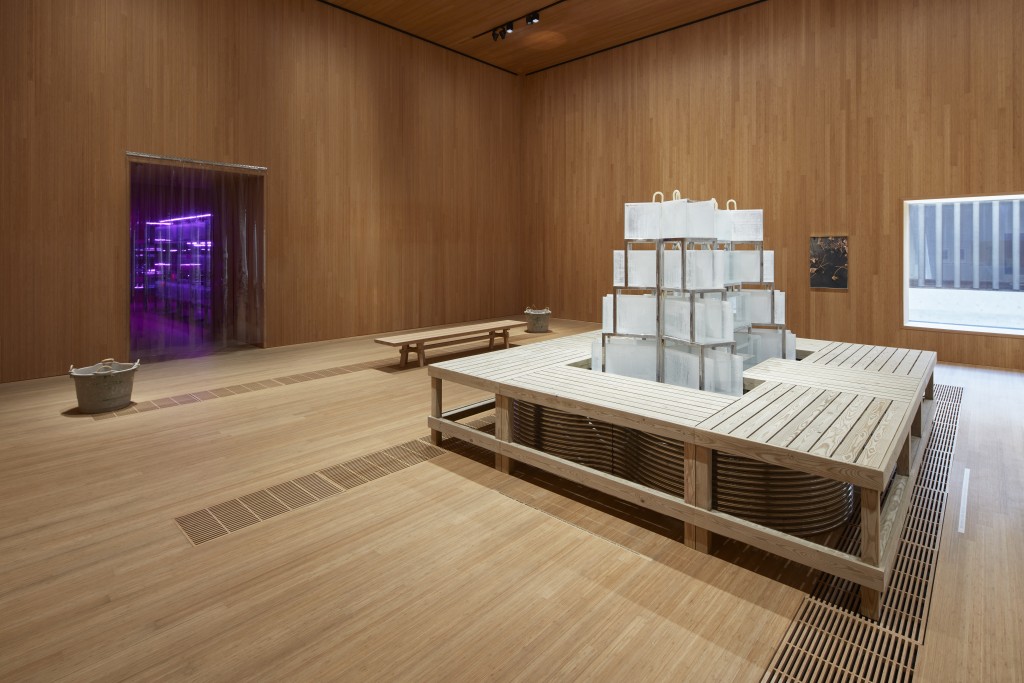
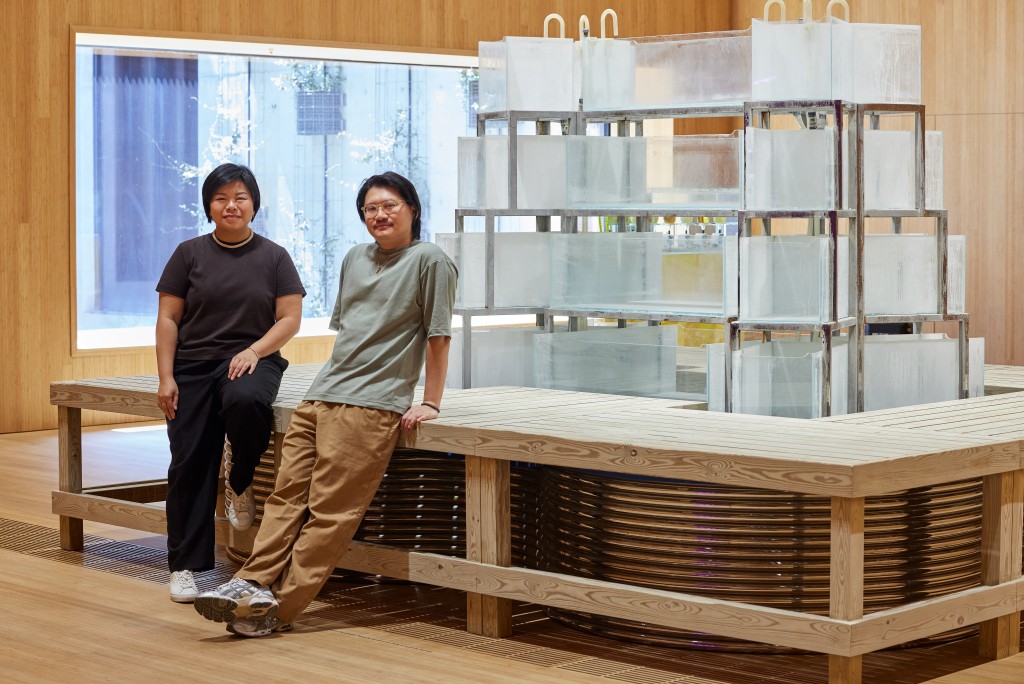
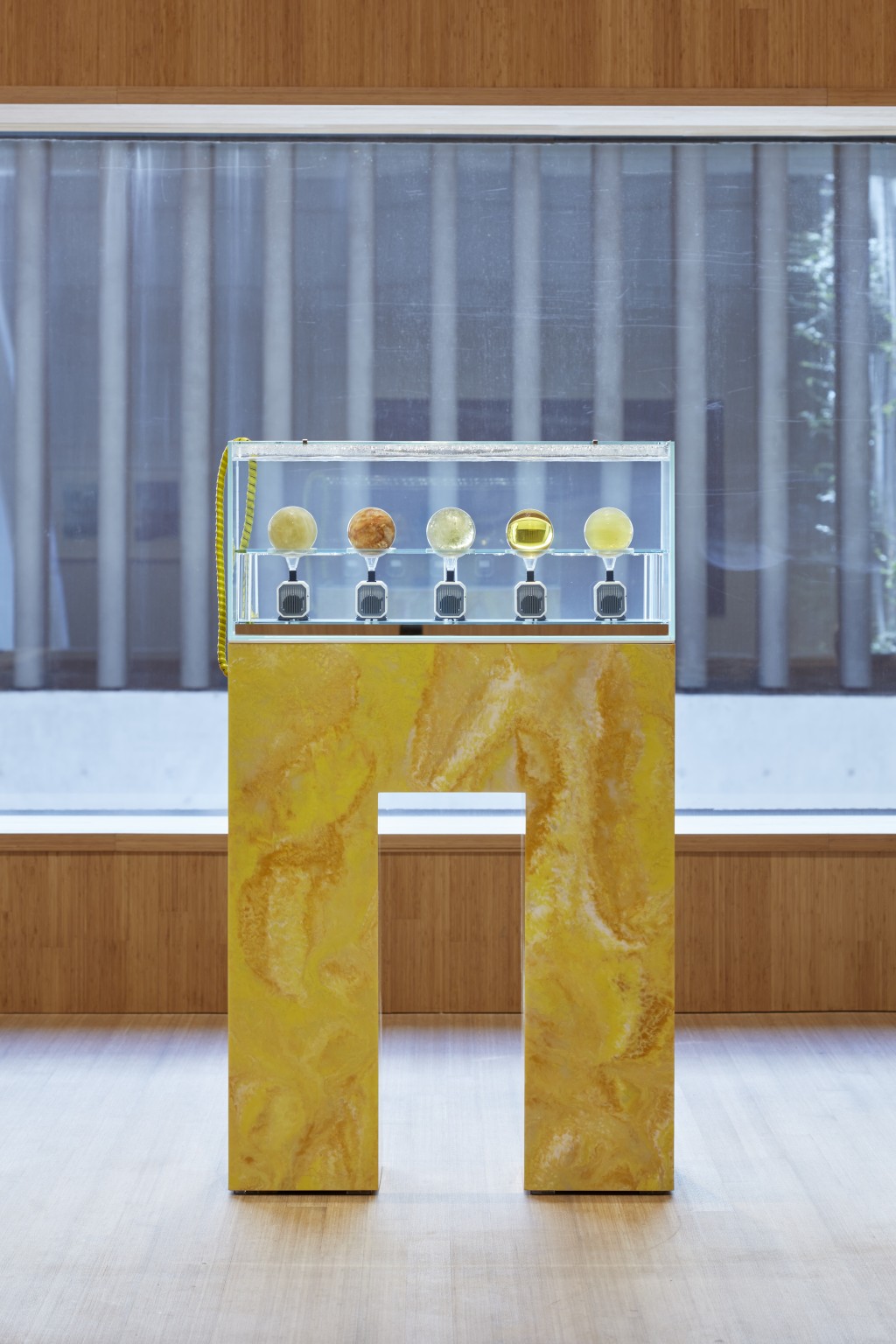
“I hope visitors will find moments of recognition in these melancholic spaces and resonate with what remains after loss,” Yeung said.
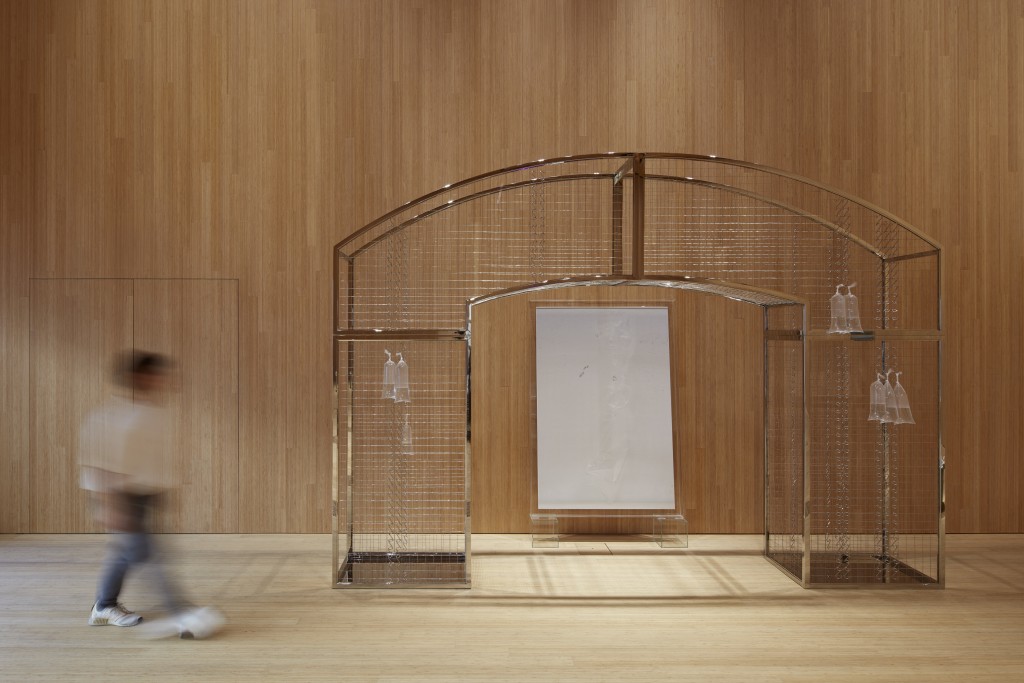
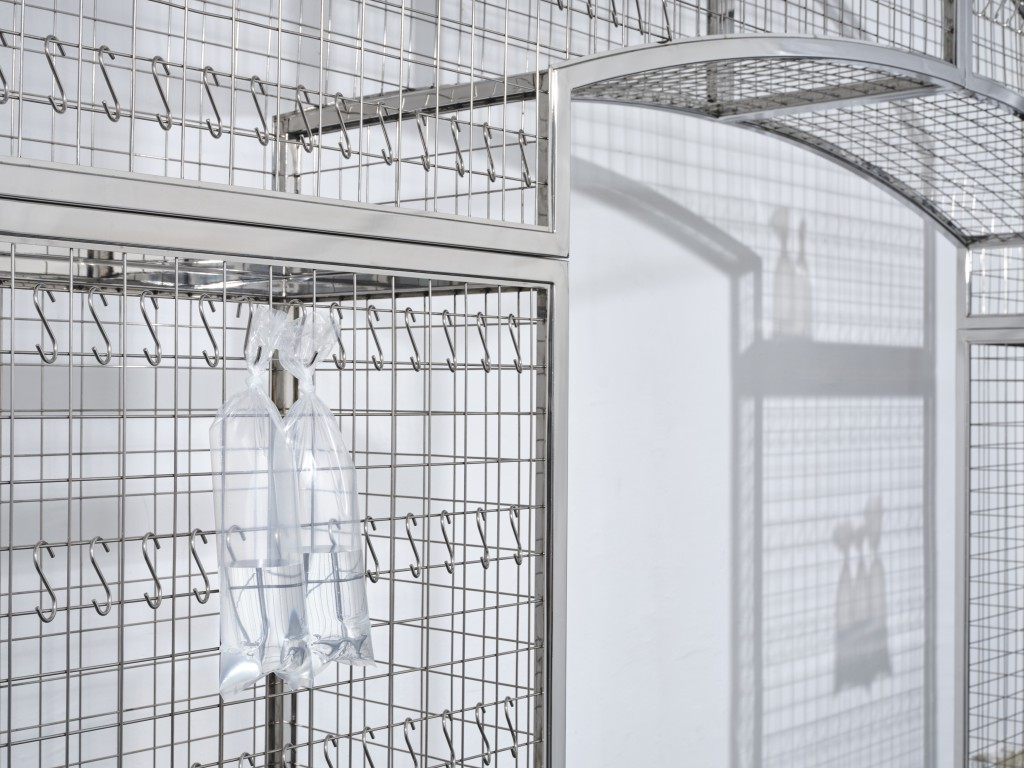
Inspired by the Couple in Bubbles photograph in the first room, the artwork Gate of Instant Love resembles a hanging display in a pet fish shop. However, the empty plastic fish bags subvert the excitement of bringing home a new pet fish.
Yeung also reflects on the cycles of decay and rebirth through the motif of the wilting lotus—a plant that thrives even under challenging conditions, as showcased in photographs (Pondering Ponds) and sculptures (Mx. Tried-My-Best).
Additionally, a free public talk titled “Where Did All the Water Go: Displaying Trevor Yeung’s Lived Installations in a Museum Setting” will be also be held.
(Judy Cui)