





Read More






Night Recap - September 4, 2026
23 hours ago

Leslie Cheung 70th birthday exhibition brings the legend back to fans
03-09-2026 19:26 HKT

Louis Koo and production house sued for $149 million over unpaid loan
03-09-2026 17:07 HKT


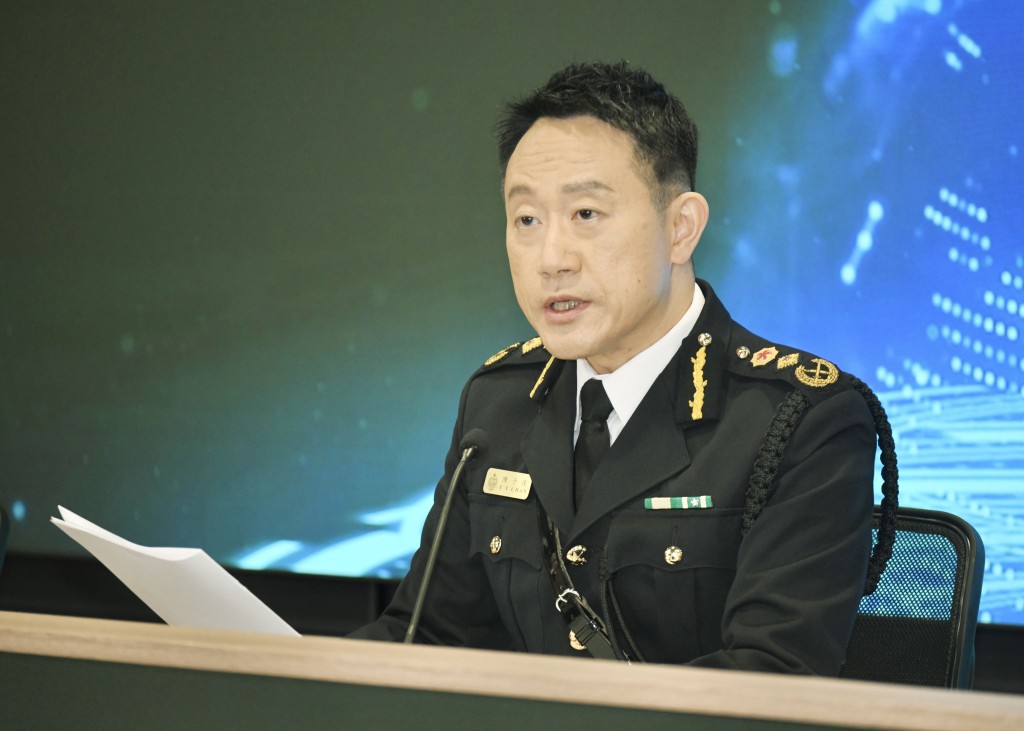
Hong Kong Customs is undergoing a digital transformation to go “smart,” leveraging artificial intelligence (AI) and big data analytics to improve the detection of high-risk travelers and goods, Commissioner Chan Tsz-tat revealed in an exclusive interview with Sing Tao Daily, The Standard’s sister publication.
With massive daily passenger and cargo flows across sea, land, and air ports, the department has traditionally relied on frontline officers' experience and intelligence analysis.
However, Chan emphasized that the future lies in AI-driven risk assessment.
"Once we fully harness big data capabilities, AI will help us identify high-risk individuals and shipments with greater precision," he said.
Smarter passenger screening at busy checkpoints
Using the bustling Lo Wu Control Point as an example, Chan explained that AI-powered image analysis technology will enhance the department's ability to flag suspicious travelers.
Currently processing an overwhelming volume of passengers daily, the new system aims to optimize efficiency while maintaining security.
To support this shift, Customs is developing the "Smart Customs Information Technology Infrastructure,” equipped with AI computing capabilities. Legislative Council funding for the project has already been approved.
Expanded data for cargo risk assessment
On the cargo front, Chan highlighted the upcoming third phase of the Trade Single Window initiative, set to launch next year, which the Commerce and Economic Development Bureau is encouraging businesses to submit in advance electronic cargo data, including cargo manifests and import or export declarations.
This expansion will allow Customs to assess risks based on over 30 sets of data, a significant upgrade from the current eight. With enhanced big data analytics, the department will be able to conduct more accurate cargo screenings and strategically select shipments for inspection, said Chan.
(Marco Lam)