Read More











The Chinese University of Hong Kong (CUHK) 's four-year medicine program under the new Graduate Entry Track (GET) has completed the first round of interview, with about 300 applicants vying for 25 spots.
GET is a separate admission channel for applicants already obtaining an internationally recognized degree.
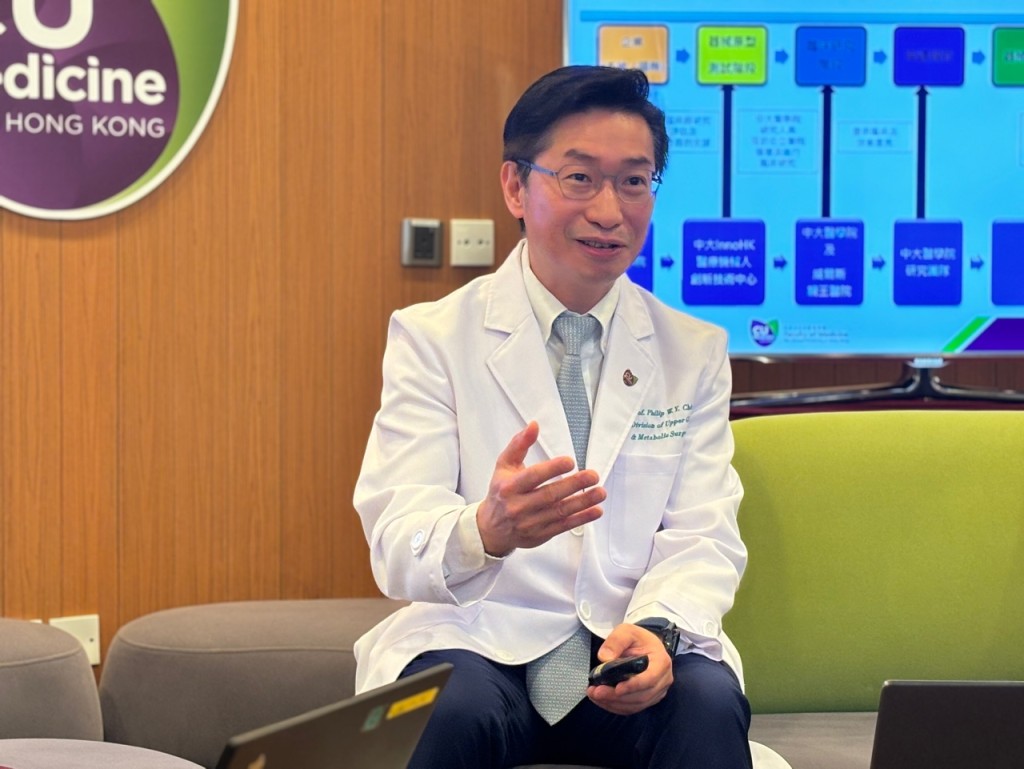
Speaking on a radio program on Sunday, CUHK's Dean of Medicine Philip Chiu Wai-yan revealed that the applicants' first degrees were closely related to medicine, including biological sciences, chemistry, and biology.
He stated that several applicants are graduates with outstanding academic records from renowned institutions, including Imperial College London and the University of Cambridge.
Despite the pressure to condense the six-year undergraduate medical curriculum into a four-year program, Chiu expressed confidence in the students' abilities to become exceptional doctors.
The university is set to enroll a total of 325 medical students in the upcoming academic year starting in September, including the 25 spots in the GET program.
Meanwhile, the university's new teaching-research complex is expected to be completed in 2027 and accommodate approximately 800 to 1,000 research team members. Chiu anticipated that it would enhance teaching capabilities and increase enrollment capacity.
Regarding the use of AI technology in the medical field, Chiu mentioned that the school has been integrating it into clinical applications and research for the past few years, and it has recently been incorporated into the curriculum for medical training.
While acknowledging AI's role in improving diagnostic capabilities, he stressed that doctors are ultimately responsible for decision-making, believing patients prefer communicating with real doctors as AI cannot yet replace human empathy.
However, considering the availability of existing AI mobile applications, Chiu pointed out that AI may be accepted as a medical partner in society within the next 10 to 20 years.