Read More




Morning Recap - October 7, 2026
6 hours ago


Abby Choi's remains found in soup pots with carrots, court hears
05-10-2026 13:53 HKT


The government will implement strategic measures to reduce costs and enhance productivity on a “ready-to-go” basis starting this year, focusing on advanced technologies and innovative materials, Secretary for Development Bernadette Linn Hon-ho said.
In a blog post yesterday, Linn outlined the government’s four key strategies to lower construction costs -- optimizing procurement models, leveraging advanced technology, streamlining approval processes, and reviewing design standards.
One of the standout innovations is the introduction of a crane remote control system in the construction of the District Court at Caroline Hill Road, Linn said.
Developed in collaboration with the Building Technology Research Institute and the Architectural Services Department, this system utilizes Internet of Things technology to allow crane operators to control cranes from the ground.
“This system eliminates the need for operators to climb up and down cranes, which can be as high as 50 to 60 stories, saving significant time and improving safety,” Linn said, quoting a crane operator.
The ground-based control cabin is equipped with high-definition cameras, providing clearer views and reducing blind spots, Linn added.
The government is also promoting the adoption of this system in nearby private development projects, with plans to expand its use across more public and private sector initiatives.
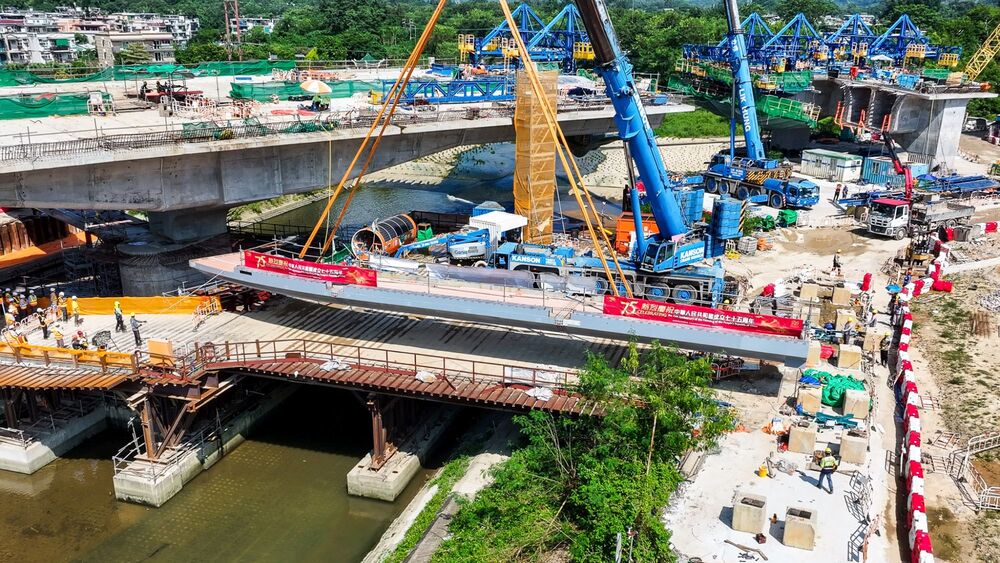
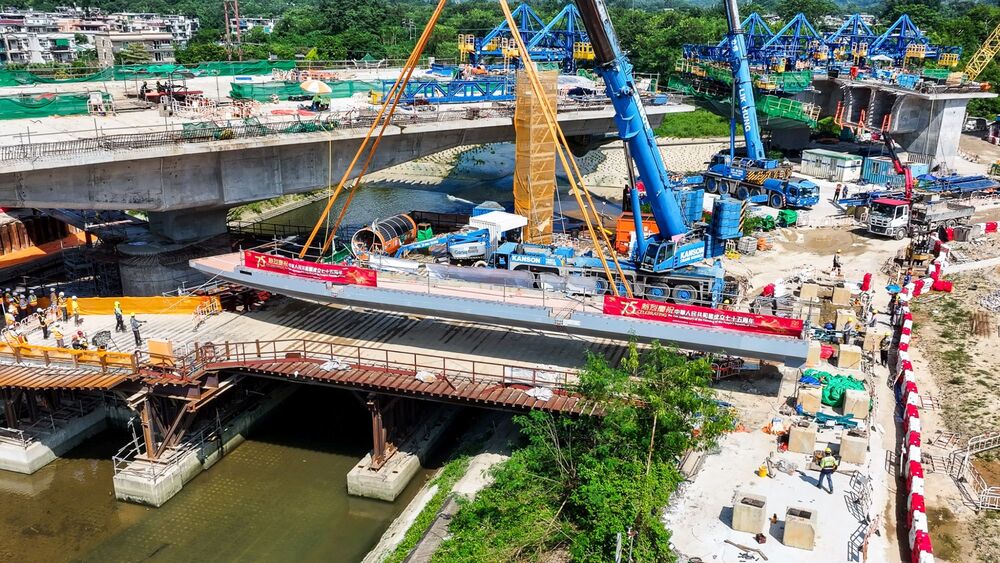
In another groundbreaking move, the Civil Engineering and Development Department has introduced ultra-high-strength S960 steel in the construction of two footbridges along the Fanling Bypass Eastern Section.
This marks the first global application of S960 steel in bridge construction.
S960 steel, produced domestically in mainland China, nearly triples in strength compared to the commonly used S355 steel, and has slashed the construction costs of the bridges by 30 percent.
The department has also signed a memorandum of understanding with the Hong Kong Polytechnic University to deepen research and application of S960 steel to facilitate wider industry adoption, Linn added.
Additionally, the project has employed the Horizontal Bridge Rotation Method, a first in Hong Kong, which has shortened the construction period by one year.
This innovative technique has also minimized construction risks and reduced disruptions to nearby railway operations.
Linn said her bureau and its affiliated departments will continue adopting new materials and technologies, paving the way for their application in future infrastructure projects.
(Ayra Wang)