Read More
There is no separation of powers in Hong Kong, Chief Executive Carrie Lam Cheng Yuet-ngor declared, and the executive, legislature and judiciary are accountable to the central government through her under the Basic Law.
ADVERTISEMENT
SCROLL TO CONTINUE WITH CONTENT
Lam's remarks echoed words from Secretary for Education Kevin Yeung Yun-hung on Monday.
Yeung made the point about rule in Hong Kong after the Education Bureau advised publishers of liberal studies textbooks to delete the phrase "separation of powers" from references to the SAR system.
Lam said yesterday that powers are all delegated from the central government rather then being decentralized from Beijing, so it was not true the three powers in Hong Kong were equal.
"Basic Law Article 48 also states that the chief executive can appoint or remove judges, and some work of the Legislative Council also has to be approved by the chief executive," Lam added.
"This proves the unique political position of the chief executive in this political structure."
She said many had mistakenly thought the chief executive only headed the executive branch, but "I am held responsible to the central government as well as the Hong Kong SAR."
While various judges, including chief justices, have mentioned separation of powers in judgments and speeches, Lam said that referred to division of work between the three branches and said they should cooperate and ensure checks and balances.
While the three can check and balance each other, she said, "in the end they are still held responsible under the central government, via the chief executive."
Her explanation had legal scholar Johannes Chan Man-mun asking: "How do the three powers check and balance each other if there is no separation of powers?"
And as powers are delegated by Beijing, he said, Lam was trying to confuse the power relationship between Beijing and the SAR with the one within the SAR.
"Separation of powers is a governance model within a territory, which has nothing to do with how the central government delegates or decentralizes its power to the SAR," he argued. "No one doubts Hong Kong politics is 'executive-led,' but that does not mean the executive can perform the duties of the legislature and judiciary."
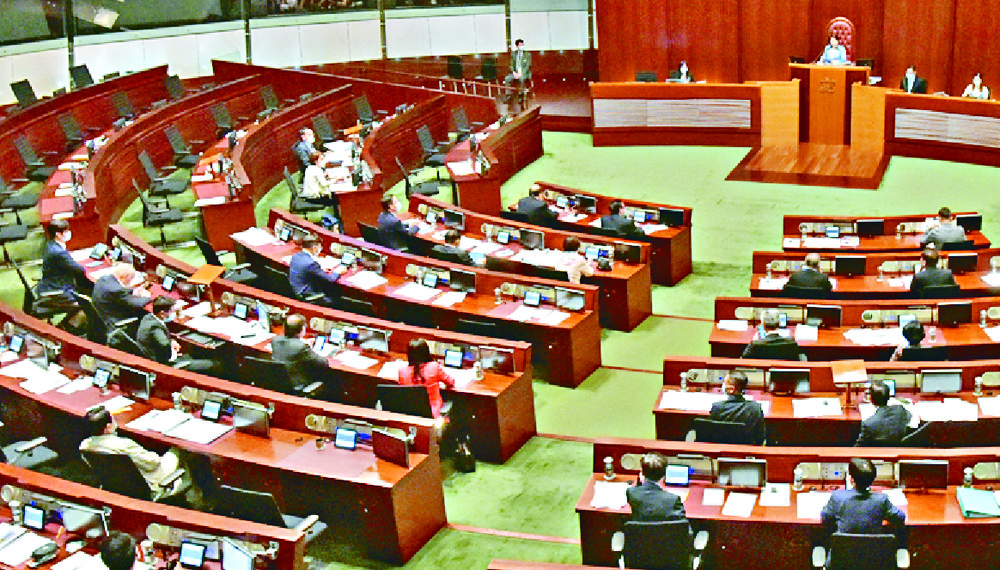
Legal sector legislator Dennis Kwok Wing-hang said Lam's remarks were "ludicrous" and a maneuver to disrespect the judiciary.
"I think people can see very clearly whether it is a change of stance by the SAR government or if people really misunderstood over the past two decades," he said.
But pro-establishment legislator and lawyer Junius Ho Kwan-yiu said Lam's words were "inspirational."
He added: "The Basic Law clearly states that the chief executive heads the SAR, while judges are appointed by the chief executive and bills passed by Legco only take effect after the chief executive signs them.
"This shows that the executive branch leads the other two powers."
There has been much debate over Hong Kong's governance.
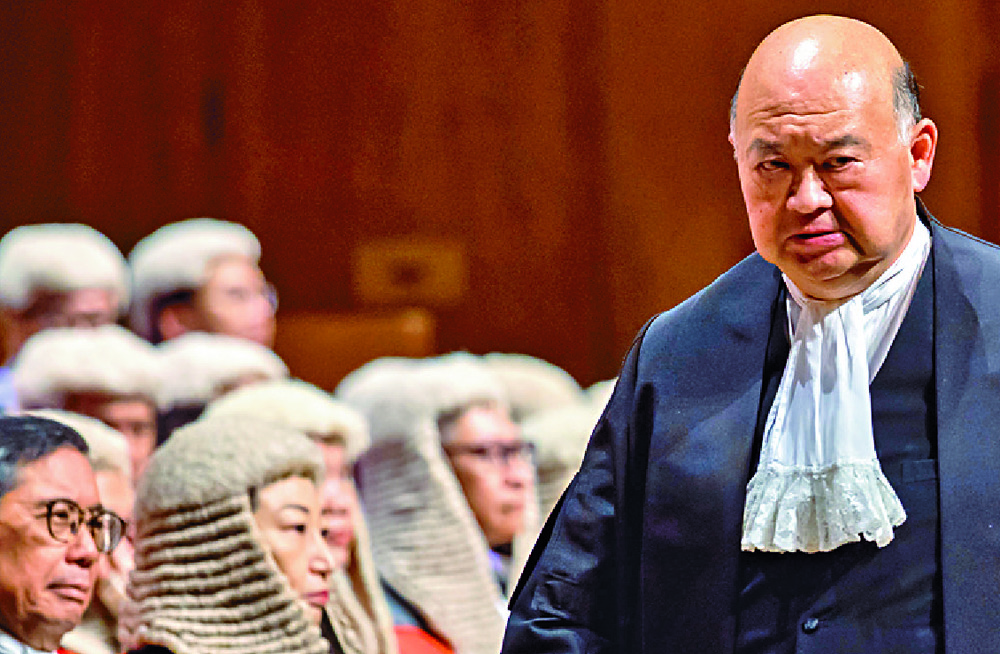
In 2014, Chief Justice Geoffrey Ma Tao-li said the Basic Law "sets out clearly the principle of the separation of powers between the legislature, the executive and the judiciary."
And former chief justice Andrew Li Kwok-nang said in 2001 that judicial independence was the core of separation of powers.
The Education Bureau had put online a 2011 seminar when Patrick Chan Siu-oi, then a permanent judge of the Court of Final Appeal, talked of a "separation of powers" to avoid abuse.
But those words had gone from the website yesterday.
michael.shum@singtaonewscorp.com
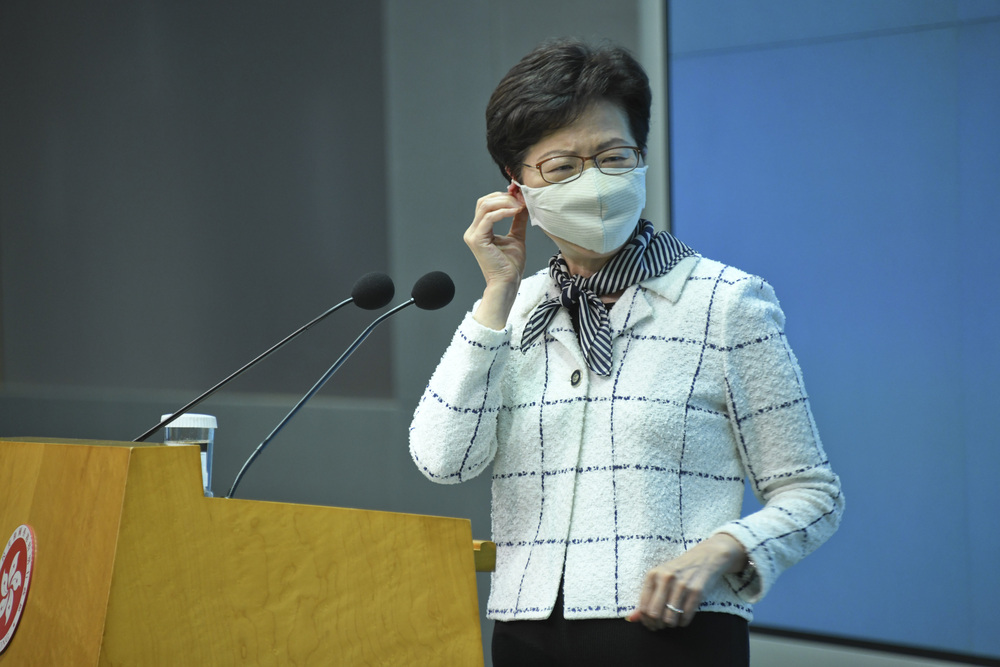
Carrie Lam says the executive, judiciary and legislative branches are accountable to the central government through her under the Basic Law.SING TAO, BLOOMBERG